
What's Hiding Under Those Rocks?
Okay, I need to tell you about something that genuinely blew my mind when I read about it. You know those fields of loose rocks and rubble you see scattered across mountain slopes? The kind you'd happily hike across without giving them a second thought?
Turns out, some of them are hiding a massive secret.
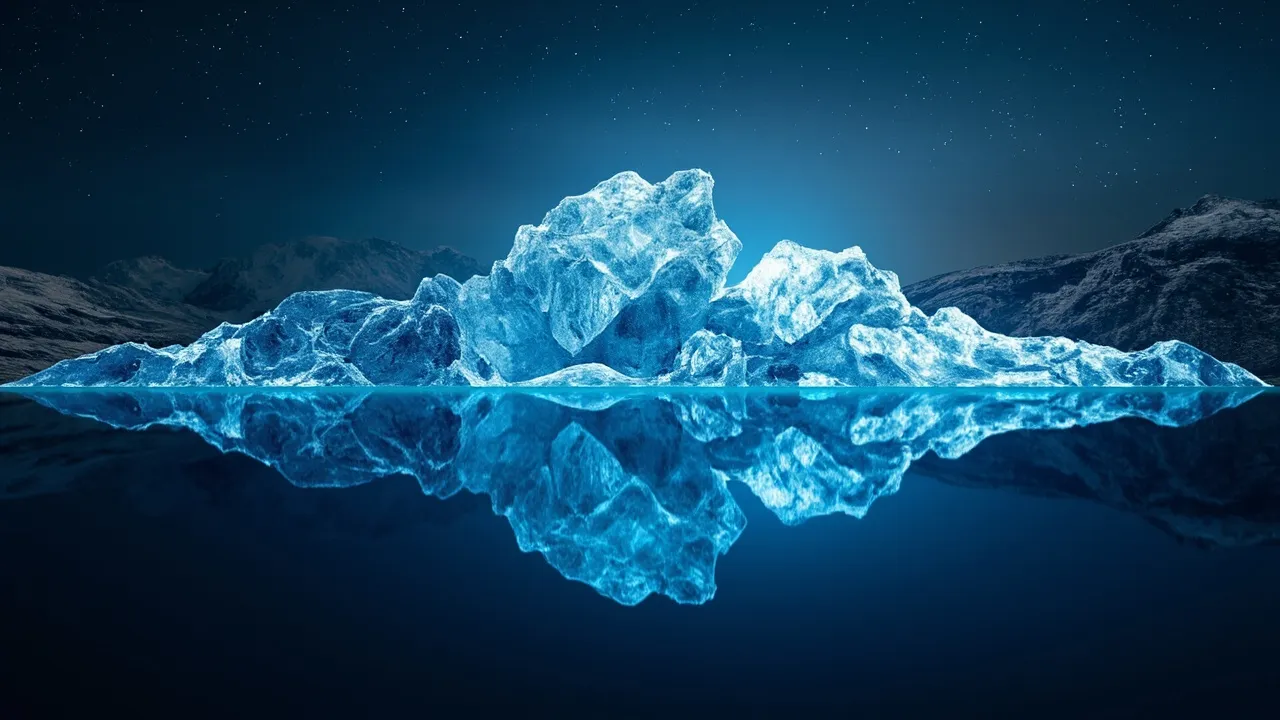
Deep beneath the surface of these rocky landscapes, there's often pure ice. And I mean a lot of ice.
University of Utah geologists recently took a close look at one of these hidden ice reservoirs beneath Mount Timpanogos near Salt Lake City. What they found was pretty remarkable.
The Numbers Are Wild
The Timpanogos Rock Glacier—which sounds like something out of a fantasy novel, honestly—contains approximately 1.5 million cubic meters of frozen water. Let me put that in terms that actually mean something:
- That's about 600 Olympic swimming pools worth of ice
- Or roughly the same volume as the Great Pyramid at Giza
- And get this—it's 83% ice with only 17% loose rock
"We walked across loose rocks or rubble and you don't realize there could be 120 feet of ice buried beneath your feet," said Leif Anderson, a glaciology professor who worked on the study.
One hundred twenty feet. That's like a twelve-story building stacked vertically in ice, completely invisible unless you knew where to look.
So How Did Scientists See Through the Rock?
This is the cool part. The research team used a device called a gravimeter—essentially a super-sensitive scale that can detect tiny differences in density. Rock is dense. Ice is not. So when you drag this instrument across a rock glacier, you can literally see where the lighter ice sits beneath the heavier rock layer.
Over six field trips, researcher Bronson Cvijanovich took gravity measurements at 232 different points across the glacier, creating a kind of gravity map. After months of computer processing and some fancy math (specifically Bayesian statistics, if you want to get technical), they reconstructed a 3D image of the hidden ice.
It's basically like giving the mountain a CT scan.
These Glaciers Are More Modern Than You Think
Here's something I found really surprising: these rock glaciers aren't leftovers from the Ice Age. They actually formed after the major glaciers disappeared, over thousands of years.
The process is fascinating. In the Wasatch Mountains, the mountains themselves are slowly eroding. Rock and debris tumble down the slopes and pile up on top of persistent snow patches. That debris layer acts like a blanket, protecting the snow underneath from melting during summer. Year after year, layer after layer, you get this hidden ice core covered by rubble.
"In the Wasatch, the mountains themselves are eroding and burying the snow, and that's why the rock glaciers exist," Anderson explained.
Pretty wild, right? The mountains are essentially creating their own ice reservoirs.
This Has Big Implications
Now here's where it gets really important. The team studied one rock glacier, but Utah has hundreds more. Using what they learned from Timpanogos, they calculated that the roughly 836 rock glaciers in Utah alone could contain significant amounts of frozen water.
And worldwide? There are approximately 50,000 known rock glaciers. Together, they might hold around 48 gigatons of water—enough to fill 400,000 Olympic swimming pools.
That's a lot of hidden ice.
As climate change makes traditional snowpack less reliable, these underground ice reserves could become increasingly valuable. They represent a kind of natural water storage system that's been sitting there all along, quietly and patiently, underneath piles of seemingly insignificant rocks.
The Bottom Line
Next time you're hiking through the mountains and you see a field of loose boulders and rubble, maybe pause for a moment. That rocky surface you're standing on might be covering something ancient and precious—dozens of feet of ice that took centuries to accumulate.
It's a good reminder that nature still has plenty of secrets, even in places we've explored for generations. Sometimes the most important things are the ones we can't immediately see.