
The Oldest Room on Earth
Picture this: a warehouse in tropical Darwin, Australia. Not exactly glamorous, right? Rows of dusty filing cabinets, maybe some old equipment gathering cobwebs.
But tucked away in this unremarkable building are some of the most important scientific specimens on the planet—cylindrical cores of rock drilled from hundreds of meters underground. And inside those cores? The fossilized remains of organisms that lived 1.7 billion years ago.
Yeah, let that number sink in for a moment. These tiny creatures were alive before animals existed, before plants, before basically anything you can see with your naked eye today. They were the pioneers of complexity, and they've been hiding in plain sight all along.
The Great Cellular Divide
Here's something that genuinely blows my mind whenever I think about it: all life on Earth fits into just two categories. Two. After billions of years of evolution and millions of species, everything boils down to one of two fundamental cell types.
On one side, we have prokaryotes—bacteria and their cousins, the archaea. These are the simple ones. Tiny, no-frills cellular machines that have been rocking the single-celled life for nearly four billion years. They don't have a nucleus, no fancy organelles, nothing fancy at all. Just pure, stripped-down biological machinery.
On the other side are eukaryotes. That's us. That's your dog, your houseplants, the mold on last week's forgotten leftovers, everything. Eukaryotes have complex cells with a nucleus (that thing holding your DNA), and specialized structures called organelles that handle different jobs. Mitochondria (the power plants), and in the case of plants, chloroplasts for photosynthesis.
The jump from prokaryote to eukaryote? That's the biological equivalent of upgrading from a bicycle to a spacecraft. And it happened just once in Earth's entire history—every complex life form on this planet, from mushrooms to whales, descended from that single revolutionary event.
The Oxygen Question
For the longest time, scientists assumed eukaryotes needed oxygen from the get-go. After all, almost all complex life today uses oxygen for energy through a process called aerobic respiration. It's efficient. It's powerful. It lets you do all the wonderful things cells do.
But here's where it gets interesting. Recent discoveries threw a wrench in this theory. Scientists found eukaryotes that can survive without oxygen—living perfectly happy in environments where we assumed they couldn't exist. Plus, the geological evidence suggested that when these first eukaryotes were evolving over a billion years ago, oxygen was probably pretty scarce in many places.
So was the oxygen theory all wrong? Were our earliest complex ancestors actually anaerobic freaks?
That's exactly what the Australian fossils help answer.
Digging Through Ancient Seas
The research team did something pretty clever. Instead of looking for big, flashy fossils (good luck finding those in billion-year-old rocks), they focused on microscopic remains. They crushed up samples from those old drill cores, dissolved them, and carefully examined whatever was left behind.
The results? More than 12,000 fossils. Twelve thousand! Each one a tiny snapshot of life from an ancient inland sea that covered much of northern Australia when our planet was a very different place.
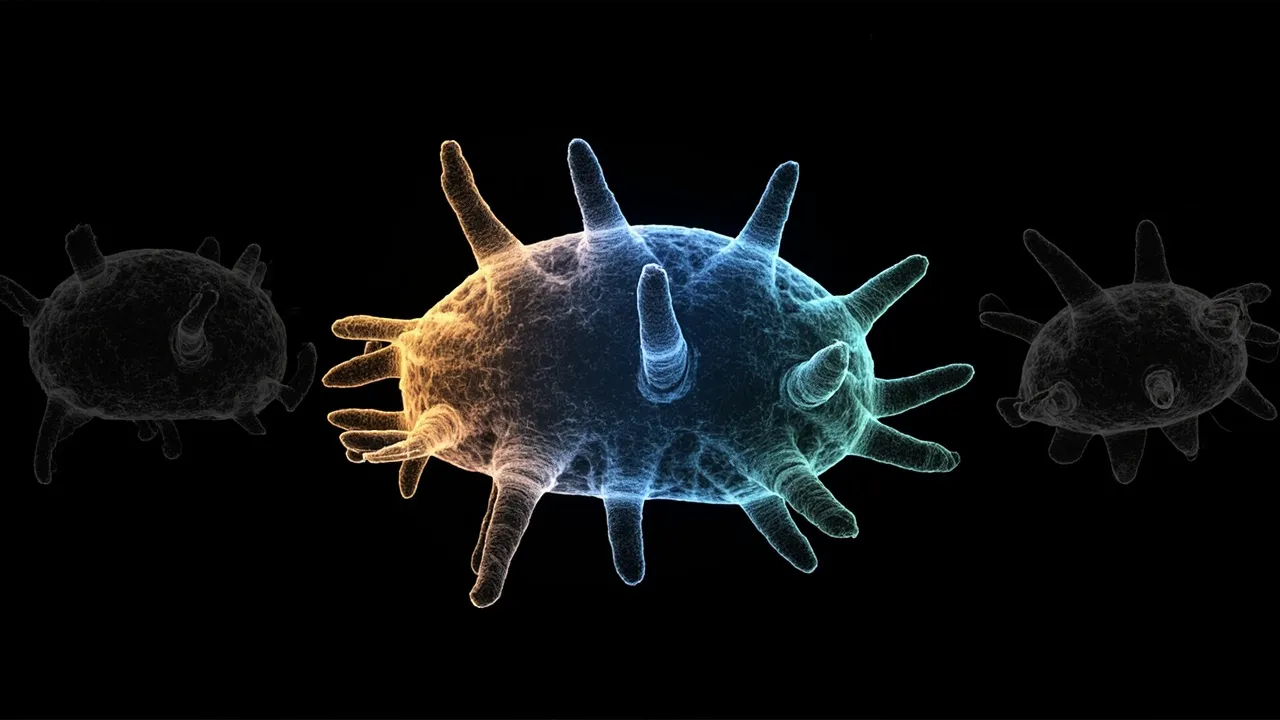
These fossils showed clear signs of eukaryotic complexity—structures that simple bacteria couldn't produce. They were the real deal: early members of the club that eventually led to every complex organism on Earth.
The Smoking Gun
Here's where it gets really fascinating. The researchers didn't just study the fossils—they studied the rocks themselves. By analyzing the chemistry of the mudstones, they could figure out whether oxygen was present in that ancient seawater when these organisms died.
And the pattern that emerged was crystal clear: every single eukaryotic fossil came from rocks that showed evidence of oxygen. The oxygen-free samples? Nothing but simple, primitive prokaryotes.
Not one exception. Not one outlier. The correlation was perfect.
This tells us something profound: even the very first eukaryotes, the oldest known examples of complex cellular life, were dependent on oxygen. It wasn't something they evolved later as a backup mechanism. Oxygen was there from the very beginning of the eukaryotic story.
Why Does This Matter?
You might be wondering why we should care about what some microscopic organisms were doing 1.7 billion years ago. Fair question.
Here's why: that single evolutionary leap from simple cells to complex ones is the reason any of us exist. Without that transition, Earth would still be ruled by bacteria. No animals, no plants, no fungi—just an endless microbial soup slowly chugging along for billions more years.
Understanding what triggered that leap helps us understand our own origins. It tells us what conditions made our existence possible. And honestly? There's something deeply humbling about realizing that your entire being traces back to specific environmental circumstances over a billion years ago.
Plus, if life evolved here, could it evolve elsewhere? Understanding the requirements for complex life—whether it's oxygen levels, specific chemistry, or other factors—brings us one step closer to knowing if we're alone in the universe.
Looking Forward
The team plans to keep studying these ancient microfossils, squeezing out every bit of information they can about our earliest ancestors. Each new discovery adds another piece to a puzzle that's still far from complete.
But here's what I find most beautiful about this research: it reminds us that massive discoveries can come from the most unexpected places. Dusty warehouses, old drill cores, rocks that mining companies dismissed as uninteresting. Sometimes the secrets of life's history are hiding right under our noses, just waiting for someone curious enough to look closer.
And in a world that often feels chaotic and random, there's something reassuring about knowing that our existence has deep roots—roots that go back 1.7 billion years, to tiny cells in an ancient Australian sea, breathing in the oxygen that would eventually make all complex life possible.
Source: ScienceDaily