
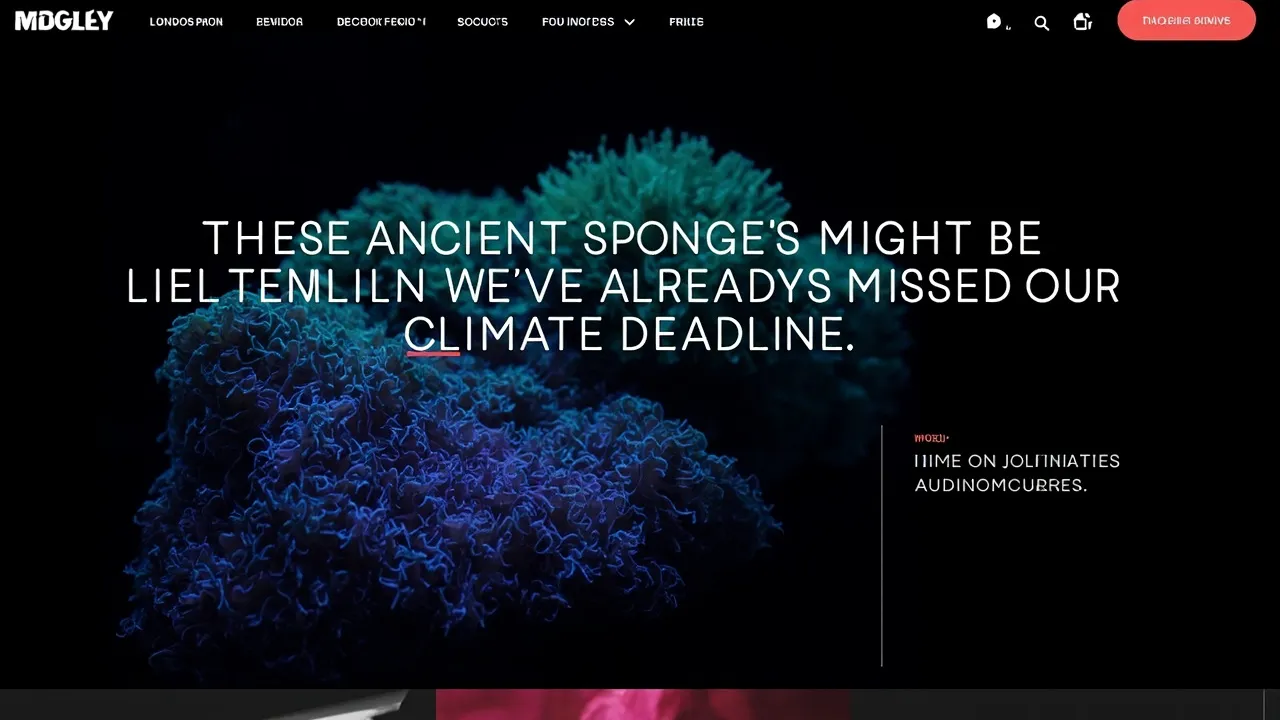
Okay, So... We Might Be in Trouble
Here's something wild: scientists have been listening to sea sponges. Not like, having tea with them or anything. But these ancient little creatures that cling to underwater caves in the Caribbean? They've been quietly recording our ocean's temperature history for hundreds of years.
And honestly? What they're telling us isn't great news.
The 1.5°C Number Everyone Keeps Talking About
If you've paid any attention to climate news over the past decade, you've definitely heard "1.5 degrees Celsius." It's that magic number—the threshold the 2015 Paris Climate Accords set as the absolute maximum warming we could afford before things get really, really bad for our planet.
Keep temperatures below that point, and we might avoid the worst flooding, droughts, and ecosystem collapses. Cross it, and we're basically playing climate roulette with the future of humanity.
Pretty important number, right?
Enter: The Humble Sea Sponge
Here's where things get interesting. A team from the University of Western Australia's Oceans Institute decided to study something kind of unusual—six sclerosponges, which are basically ancient sea sponges that grow at a mind-bogglingly slow pace. We're talking a fraction of a millimeter per year.
But here's the cool part: because they grow so slowly and have been hanging out in those Caribbean caves for centuries, they've essentially been locking away climate data in their limestone skeletons. Scientists can analyze the strontium to calcium ratios in these sponges and basically read their "growth rings" to figure out what ocean temperatures were like way back when.
Like tree rings, but underwater and much, much older.
So... What Did They Find?
The team created an ocean temperature timeline dating all the way back to the 1700s. That's centuries before we had reliable thermometer readings—back when "measuring ocean temperature" meant some poor sailor hauling up buckets of seawater.
And their conclusion? According to these sponges, we likely crossed that 1.5°C threshold back in 2020. Not sometime in the future. Not in the 2030s or 2040s. We may have already blown past it six years ago.
Lead researcher Malcolm McCulloch put it bluntly to the Associated Press: "Basically, time's running out."
Yikes.
But Wait—Not Everyone's Convinced
Now, before you spiral into climate despair, it's worth noting that other scientists are raising their eyebrows at this research. One expert told LiveScience that relying on sponges from just one region to represent the entire globe's thermal complexity "begins credulity." That's scientist-speak for "that seems a bit hard to swallow."
The IPCC, which is basically the gold standard for climate data, currently estimates we're hovering around 1.2°C of warming—not quite at that 1.5°C mark yet. And some researchers want to see more data before completely rewriting our understanding of the timeline.
Here's My Take (as someone who's definitely not a climate scientist but pays attention)
Whether these specific sponges are 100% right or not, I think the bigger picture is what should keep us up at night. Even if this particular study needs more verification, the trend is clear. We're trending upward. We're getting warmer. And the margin for error is shrinking fast.
What struck me most about this research wasn't necessarily the specific numbers—it was the reminder that nature has been keeping records all along. These ancient sponges didn't ask to be climate archivists. They just lived their slow, quiet lives while inadvertently documenting what's been happening to their ocean home.
The question isn't really "are these sponges right?" anymore. It's "what are we going to do about it?"
The sea sponges have been telling their story. The question is whether we're finally ready to listen.