
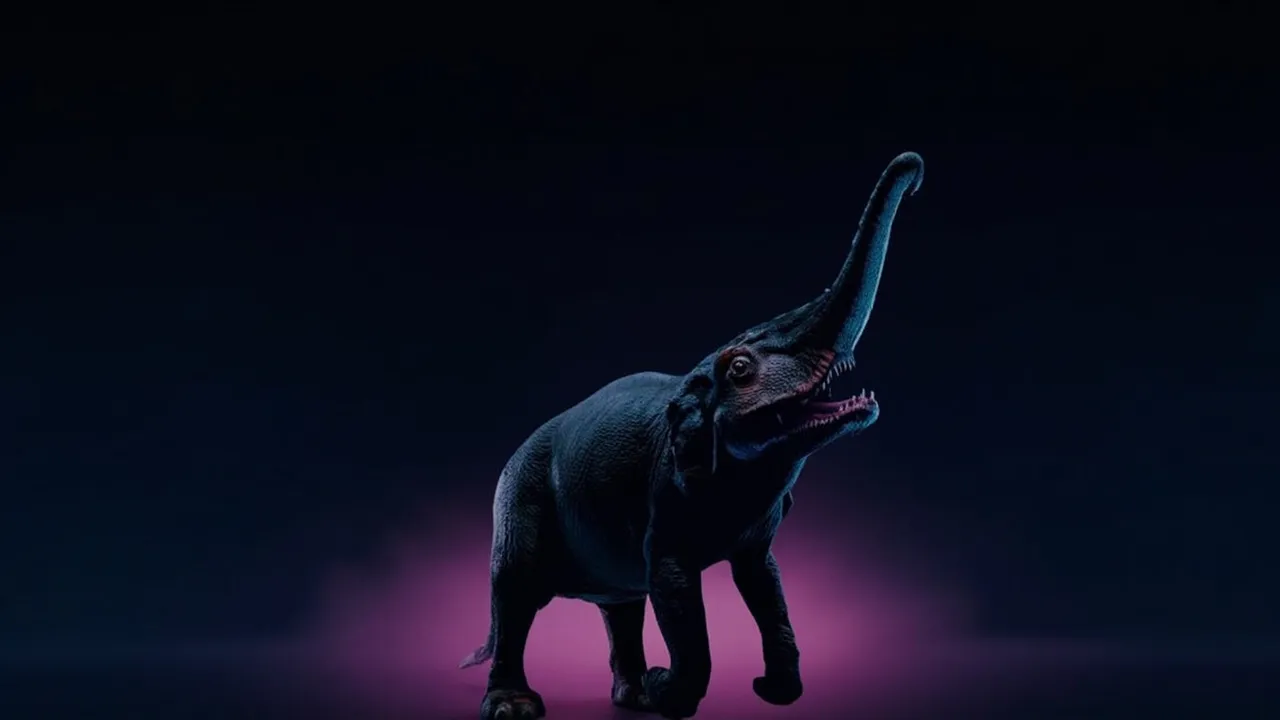
The Standing Giants
I've always loved imagining what it would be like to travel back in time and see a dinosaur in the flesh. But honestly? I never pictured these giant plant-eaters doing anything particularly graceful. I mean, we're talking about animals that weighed as much as trucks, with necks longer than a school bus. Graceful wasn't really the vibe.
But here's the thing – new research suggests these gentle giants might have been more spry than we ever imagined. Some long-necked dinosaurs (the ones we call sauropods) could actually rise up onto their hind legs and hang out there for decent stretches of time. Especially when they were young, they could pull off this standing trick with relative ease.
The key phrase there is "when they were young."
What the Scientists Did
Researchers from Brazil, Germany, and Argentina got together to figure out exactly how these dinosaurs managed this balancing act. Their approach is pretty clever – they essentially put dinosaur bones through a virtual stress test using the same kind of engineering software that's used to test whether bridges and buildings can hold up under pressure.
They focused on the femur (that's the thigh bone) and wanted to understand how much stress these bones experienced when the dinosaur shifted all its weight onto its back legs.
"Think of it like when you're doing a wall sit," explains Julian Silva Júnior, a postdoctoral researcher and the study's first author. "Your muscles are working hard to keep you in that position. The same thing happened with these dinosaurs, except they weighed thousands of times more than any human."
The team created detailed digital models of femurs from seven different sauropod species, representing different evolutionary branches and body sizes. They ran two types of simulations: one looking at the external forces (gravity and body weight pushing down) and another examining the internal forces (the muscles pushing back against the bones).
The Two Stars of the Show
Two South American dinosaurs really stood out in the research: Uberabatitan from Brazil and Neuquensaurus from Argentina. Both lived about 66 million years ago, right at the end of the dinosaur age.
Now, here's where it gets interesting. These weren't even the biggest dinosaurs ever – not even close. Adult Uberabatitans reached about 26 meters (roughly 85 feet), which is impressive but not record-breaking. Neuquensaurus was considerably smaller. Even so, we're talking about animals roughly comparable in size to modern elephants.
What made these two special was their bone structure. They had particularly robust femurs that were excellent at spreading out and dissipating the stress created when they stood upright. Their bones were like nature's own shock absorbers.
Why Growing Up Was Hard (Even for Dinosaurs)
Here's the part I find most relatable, weirdly. As these dinosaurs got bigger and heavier, the standing-up trick became way harder.
The researchers found that juvenile Uberabatitans were beautifully built for standing on two legs. Their bones could handle the stress comfortably. But adults? They carried so much more mass that their femurs would have experienced similar stress levels to much larger sauropod species.
"They had more robust femurs and could dissipate stress better," Silva Júnior notes. "The bigger ones had very large muscles and even giant femurs, but not enough to support their weight. That doesn't mean they couldn't stand up, but they probably chose the best time to do so, because it must have been an uncomfortable position."
Honestly, I love that way of thinking about it. Even these massive creatures had their limits. They weren't just standing up whenever they felt like it as adults – it was a deliberate choice, probably saved for special occasions.
So Why Bother Standing at All?
You might be wondering: what's the point of a dinosaur going through all that stress just to stand on its hind legs? The researchers suggest several possible advantages:
Reaching high snacks: These were plant-eaters, and standing up let them reach leaves and vegetation high in trees that smaller animals couldn't access. Imagine having a whole buffet that nobody else can reach.
Looking intimidating: Standing tall would make these already massive animals even more imposing to predators. Not exactly a "hey, watch me do a trick" moment, but more of a "don't even think about it" kind of pose.
Finding love: Standing upright might have been part of mating displays. In the dinosaur world, being able to rise up might have signaled fitness and strength to potential mates.
Baby-making reasons: The posture might have helped with reproduction in some way that we'll probably never fully understand.
What This Tells Us
This research is a great example of how paleontology is evolving. Scientists aren't just digging up bones anymore – they're using cutting-edge engineering tools to understand how these ancient animals actually lived. By simulating forces on digital bone models, they can test hypotheses that would be impossible to explore any other way.
What's also fascinating is how this connects to what we know about living animals. Modern elephants occasionally rise onto their hind legs (usually to reach acacia trees), and they're pretty good at it despite their size. It's not hard to imagine sauropods doing the same thing, especially the younger ones with their superior bone-to-weight ratios.
The Bottom Line
Here's my take: we should probably stop thinking of sauropods as lumbering, awkward giants. They were impressive, complex animals that could do things we're only now beginning to understand. The fact that they could stand upright – even if it got harder with age – suggests they were more agile and adaptable than their massive frames might indicate.
And honestly? There's something kind of endearing about the idea of a young dinosaur working really hard to stretch up and reach the tastiest leaves, while its parents looked on from a comfortable all-fours position, thinking "enjoy it while you can, kid."
The more we learn about dinosaurs, the more they start to seem like actual animals with actual limitations and adaptations – not so different from the creatures we share our world with today.
Source: ScienceDaily