
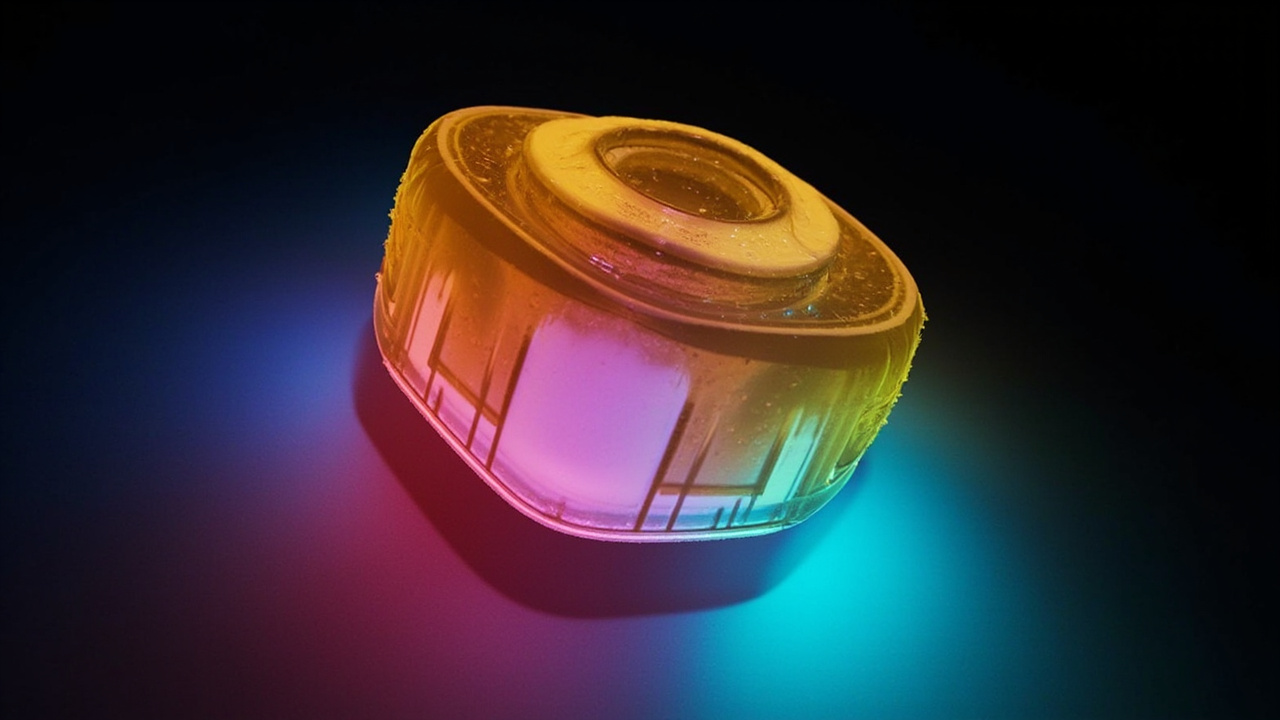
Okay, I need you to picture this with me.
You have a handful of those little metal staples you use to attach papers together. You toss them in a bag, shake it up, and somehow — magically, impossibly — that pile of individual staples becomes one solid, unbreakable mass. You can pull on it, tug at it, and it holds together like it's welded.
Now you give it a different kind of shake, and it just... falls apart. Returns to being a pile of harmless little staples.
Sounds like magic, right? Well, a team of researchers at the University of Colorado Boulder just made this a reality, and I genuinely cannot stop thinking about it.
What's the Secret? The Shape of the Building Blocks
Here's where it gets interesting. The team, led by Professor Francois Barthelat (who runs something called the Laboratory for Advanced Materials & Bioinspiration — how cool is that name?), has been studying how the shape of tiny particles affects what happens when you bundle billions of them together.
Think about sand, for instance. Each grain is smooth and rounded, kind of like a tiny ball. When you pile sand together, it doesn't really lock into itself — the grains just slide past each other. That's why sand flows like a liquid when you pour it.
But what if you changed the shape of those grains?
The researchers used computer simulations to test thousands of different shapes, looking for one that would maximize what scientists call "entanglement." And the winner? A two-legged shape that looks suspiciously like... a staple.
Yes, the same little metal clips holding your documents together.
Why Staple-Shaped Particles Are Kind of Amazing
When you have billions of these tiny staple-shaped particles tangled together, something magical happens. They interlock with each other in complex ways, creating a network of connections that makes the whole mass surprisingly strong.
"Entangled granular material using the staple-like particle demonstrates both high strength and toughness at the same time," explained PhD student Saeed Pezeshki.
Here's the thing about strength and toughness — they're usually opposites. Think about glass: it's strong (hard to break) but not tough (it shatters easily). Rubber is tough (it can absorb impacts) but not particularly strong. Getting both at once is really rare in nature.
But these staple-particle materials? They apparently nail both properties simultaneously. That's a big deal.
The Real Party Trick: Reversibility
Now here's where this gets really wild.
These materials can be reversed.
Apply gentle vibrations to the bundle, and the staples interlock more tightly, making the material stronger. Crank up the vibrations, and the whole network comes undone, returning to a loose collection of individual particles.
In seconds. From solid to separate. And back again.
Professor Barthelat described holding these materials as feeling "very remote and exotic." Which, honestly, is a perfect way to put it. It's not quite a liquid, not quite a solid. It's something in between — something that can toggle between states based on a simple input.
So What Could We Actually Use This For?
The applications are honestly pretty exciting when you start thinking about them.
Sustainable Construction: Imagine building a bridge or a building with materials that could be taken apart instead of demolished. These staple-particle materials could potentially be disassembled and reused at the end of their lifespan. No wrecking balls required. Just the right vibrations to make everything come apart so you can use the materials again elsewhere. That's a pretty compelling vision for more sustainable engineering.
Swarm Robotics: One of the researchers mentioned talking with colleagues who think this could be used for robots that entangle together to perform tasks, then disentangle when done.
"I was talking with other students who believe this technology can be used in swarm robotics — where small robots can entangle, do a task and then disentangle when they are done," said Pezeshki.
He even pointed out that this sounds a bit like the T-1000 from Terminator 2 — the liquid metal robot that could liquefy itself to slide under doors and reform on the other side. (I love that a real scientific paper probably had someone bring up Terminator at some point.)
Nature's Been Doing This All Along
Here's something that makes this research even more fascinating: entanglement isn't some newfangled human invention. Nature has been using this principle for millions of years.
Bird nests are a perfect example. Each twig and fiber is weak on its own, but woven together, they create a surprisingly sturdy structure. Your bones work the same way — hard mineral components tangled up with softer proteins create something that's both strong and resilient.
The CU Boulder team basically reverse-engineered this principle, figured out what shape of building block makes it work best, and now we're looking at potentially engineering materials with the same properties.
The Bottom Line
We're still probably years away from seeing this technology in actual buildings or robots. But the fundamental discovery — that staple-shaped particles can create materials with this remarkable combination of strength, toughness, and reversibility — is genuinely significant.
Sometimes the most revolutionary materials don't come from exotic chemicals or complex manufacturing processes. Sometimes they come from rethinking something as simple as the shape of a building block.
And honestly? I can't wait to see where this goes.
Source: ScienceDaily