
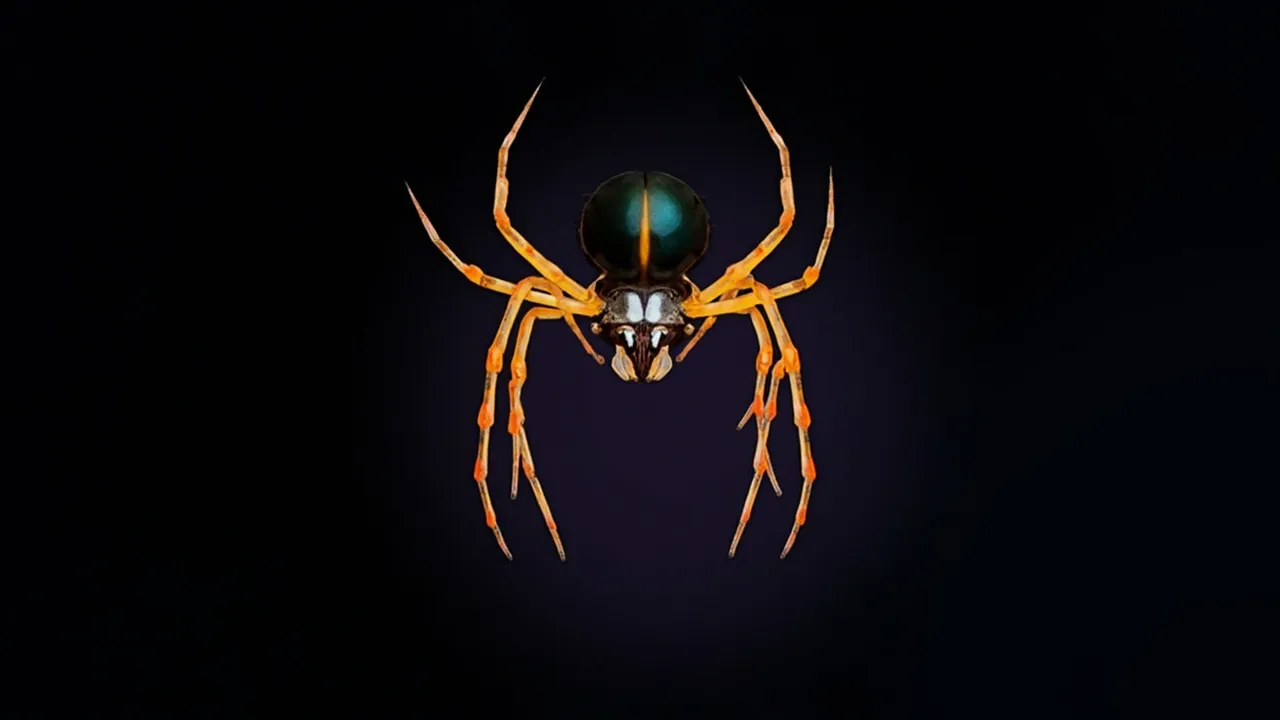
Wait, Dads Take Care of Kids in Nature?
Let's be honest here — when we think about animal parenting, the "mom takes care of the babies" story usually comes to mind first. And honestly, that's pretty accurate for most of the animal kingdom. Paternal care? That's rare. Like, really rare.
So when researchers started looking into harvestmen — those eight-legged creatures that look like spiders but are actually their distant cousins — they found something that completely flip-turned their expectations.
These little guys are cranking out examples of dad-focused parenting.
"We're talking about a group that accounts for more than half of all independently evolved paternal care in arthropods," explained lead researcher Glauco Machado. "That's huge."
What the Heck Are Harvestmen, Anyway?
If you've ever seen a harvestman in your house, you probably thought "spider" and backed away slowly. I know I have. But here's the thing — harvestmen aren't actually spiders. They're arachnids, sure, like spiders and scorpions, but they're in their own separate order. Think of them as the black sheep of the arachnid family.
There are over 6,900 known species of harvestmen worldwide, and they come in some seriously weird shapes. Some look like they've been flattened by a steamroller. Others have ridiculous spines and horns. They're the punk rockers of the arachnid world, honestly.
And apparently, they're also surprisingly good dads.
The Scientific Detective Story
Here's where things get interesting. The research team wanted to understand how paternal care evolved in these creatures. Did it start with moms, and dads just... picked up the slack? Or did dad-care evolve completely independently?
To answer this, they needed data. Lots and lots of data. But here's the problem — traditional scientific research is slow. Really slow. Publishing a single observation about parental care in a species can take years of work.
So the team did something clever. They turned to iNaturalist, a popular app where everyday people can photograph and upload observations of plants and animals from literally anywhere on Earth.
The results? Absolutely wild.
From 1936 to 2025, scientific literature had documented parental guarding behavior in just 80 species of harvestmen. After searching through iNaturalist for two days (yes, you read that right — two days), the researchers found observations that more than doubled that number. Sixty-two new records from citizen scientists around the world.
"I would never be able to do this by visiting museums around the world," Machado said. "It would be very expensive, very time consuming. But here we conducted the search in only one week."
What Did They Actually Discover?
Okay, here's where it gets science-y but stick with me — it's genuinely cool.
The researchers found that parental care in harvestmen has a complicated family tree (pun absolutely intended). It didn't just evolve once and spread. Instead, it's appeared, disappeared, and reappeared multiple times throughout their evolutionary history.
This is called "evolve and loss" — basically, nature trying different things over millions of years.
But here's the really fascinating part: maternal and paternal care evolved differently.
Maternal care only evolved from species that didn't show any parental care. Simple enough.
But paternal care? It took two completely different evolutionary paths. Sometimes it evolved directly from species with zero parental care. Other times, it evolved from species where moms were already guarding the eggs.
When paternal care evolved from maternal care, the researchers think this might be tied to something called "enhanced fecundity" — basically, females prefer males who are already good at caring for eggs. Think of it like nature's way of swiping right on the responsible guys.
Why Should You Care (Pun Intended)?
Look, I know this sounds like one of those "science for science's sake" studies. But hear me out.
Understanding how parenting behaviors evolve helps us understand ourselves. Human fathers don't just appear out of nowhere — this behavior has deep roots stretching back millions of years to our distant arthropod ancestors.
Plus, there's something genuinely hopeful about this story. These researchers weren't operating out of some mega-funded lab. They were a team, many working in the Global South, who leveraged free technology and everyday people's observations to make a major scientific breakthrough.
Citizen science isn't just a buzzword anymore. It's changing how we do research.
The Unsung Heroes: Taxonomists
Here's a part of the story that doesn't get nearly enough attention. Even with all these amazing observations from citizen scientists, someone still has to figure out what species they're looking at, whether the caregiver is male or female, and whether this is actual parental care or just something that looks similar (like mate guarding).
That job falls to taxonomists — the scientists who identify and classify species.
"I think taxonomists' role in modern science is more important than ever," Machado emphasized. "We cannot preserve a species that doesn't have a name."
And honestly? He's right. Every species we discover, every name we give them — that's the foundation for everything else we learn.
What Can You Do?
Here's the beautiful thing about this story: you can help.
Next time you're outside, take a photo of an interesting bug or spider-like creature. Upload it to iNaturalist. Add a location. You might just be contributing to the next big scientific discovery.
These harvestmen have been carrying on their weird little lives for millions of years, with some fathers surprisingly devoted to their offspring. And now, thanks to a global community of curious people armed with smartphones, we're finally starting to understand their story.
Pretty cool, right?
Source: ScienceDaily, "Spider-like creatures help uncover the surprising origins of fatherhood" — https://www.sciencedaily.com/releases/2026/07/260712011737.htm