
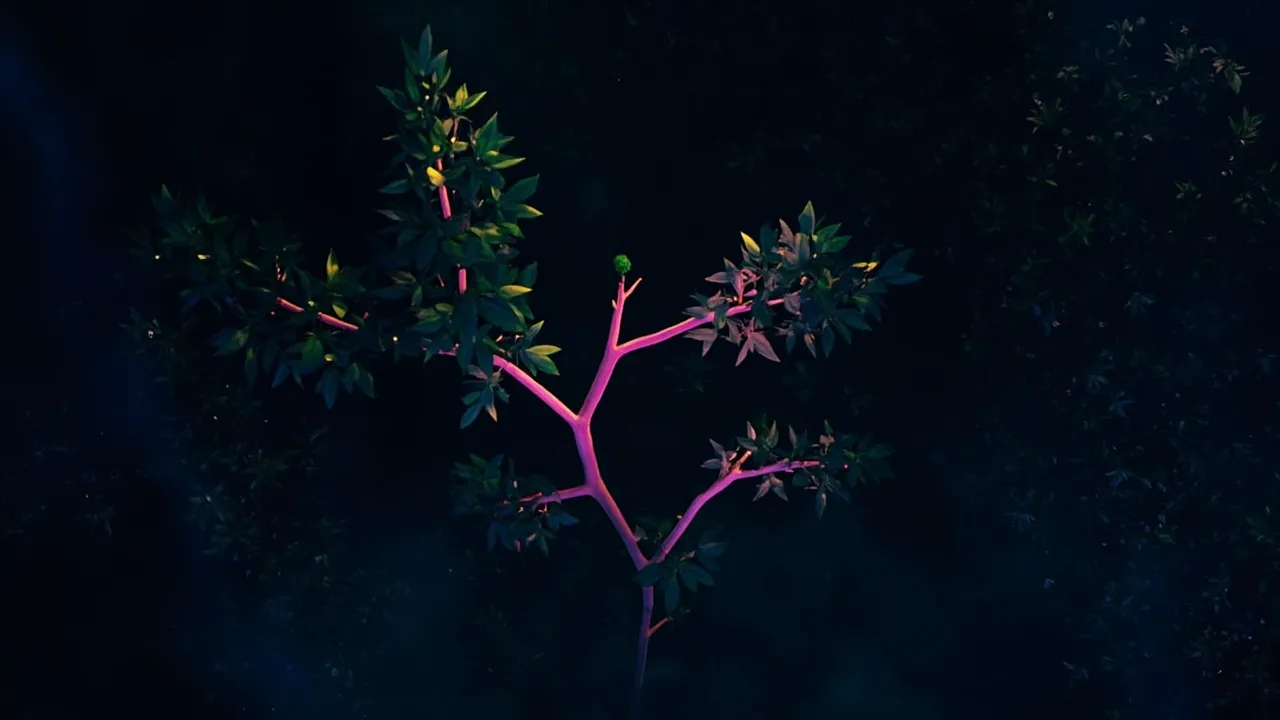
The Mysterious Case of the Tree That Wouldn't Bubble
Back in the early 1800s, Alexander von Humboldt—a famous explorer and naturalist—was poking around in the tropics when he stumbled onto something strange. He stuck a leaf in water, expecting to see little oxygen bubbles forming (a normal sign of photosynthesis), but nothing happened. The leaf just sat there, stubbornly silent, even in full sunlight.
How rude of it.
But here's the thing: the leaf wasn't broken. It was just doing things differently. Humboldt had accidentally discovered one of nature's cleverest survival tricks, and scientists are still uncovering just how remarkable it really is.
Night Shift Workers
Most plants are daytime creatures. They soak up sunlight, gulp down carbon dioxide, and release oxygen—the classic photosynthesis package. But this process comes with a catch: those tiny pores (called stomata) that let CO2 in also let precious water escape. It's like leaving your windows wide open during a desert sandstorm.
Some plants, though, have figured out a workaround. They wait for nightfall.
These clever trees keep their stomata shut tight during the scorching daylight hours, then open them up once temperatures drop. They collect CO2 all night long, chemically stash it away (as something called malic acid), and then use it for energy the next day when the sun comes up.
Scientists call this strategy CAM photosynthesis—short for Crassulacean Acid Metabolism. (Yes, it's named after the Crassula plant family. No, I don't know why plants get the boring names either.)
A Family of Overachievers
Now, here's where things get really interesting. A team of researchers from the University of Vienna decided to investigate CAM photosynthesis in a specific family of tropical trees called Clusia—and what they found was absolutely wild.
The Clusia genus contains the only known trees on Earth that use CAM. That's already pretty special, but here's the kicker: different Clusia species don't all use CAM the same way. Some are hardcore about it, some only break out the night-time strategy when things get stressful, and some do a weird hybrid approach.
It's like discovering that members of the same family all speak the same language, but in completely different accents.
The researchers wanted to understand why. So they did something cool: they sequenced and compared the genomes of three Clusia species with different CAM strategies.
The Copy-Paste Evolution
What they discovered is pretty fascinating from an evolutionary standpoint.
All three species turned out to be ancient polyploids—which means at some point way back in their family tree, something caused their genomes to get duplicated. Think of it like复印 (photocopying) your entire recipe book, then doing it again. Suddenly you've got double the genetic material to work with.
But here's the thing about having extra copies: they're not just sitting around doing nothing. Over millions of years, these duplicated genomes got reorganized, reduced, and rewired. Some gene copies were lost. Others got deactivated. And some took on completely new jobs.
"The genomes have not simply multiplied; over millions of years, they have been reorganized, reduced and functionally rewired," explained study leader Wolfram Weckwerth.
This genetic remixing is what allowed different Clusia species to develop their own unique approaches to CAM photosynthesis. Nature didn't invent CAM just once and spread it around—it's been reinvented multiple times within this single genus.
Three Trees, Three Strategies
To really understand what these genetic differences mean in practice, the researchers grew the trees in greenhouse conditions that mimicked their natural environment and tracked them throughout the day and night.
Here's what they found:
Clusia rosea is the overachiever. It goes all-in on CAM, packing away huge amounts of CO2 as malic acid every single night. This tree has clearly decided that water conservation is its top priority, no matter what.
Clusia minor is more of a wait-and-see type. It uses regular photosynthesis most of the time, but when things get stressful—dry conditions, harsh sunlight—it flips the switch to CAM mode. Smart budgeting.
Clusia major takes the middle road with a hybrid approach, using both regular photosynthesis and CAM depending on conditions. It's basically the Switzerland of the group—neutral and balanced.
These different behaviors weren't just observed; they were visible in the trees' gene activity and metabolism. The researchers could literally see the connection between the genome changes and the plants' day-to-day behavior.
Why Should We Care?
Okay, so we have some tropical trees with interesting water-saving tricks. Why does this matter for the rest of us?
Here's the big picture: CAM plants need dramatically less water than regular plants. Like, way less. While a typical crop might need to gulp down water constantly, a CAM plant can get by on a fraction of that amount.
In a world where climate change is bringing more droughts, more heat waves, and more water scarcity, that's a pretty valuable trait.
The new genomic information from this study could help researchers identify which specific metabolic processes make CAM plants so water-efficient. Down the road, that knowledge might help scientists develop new crop varieties that can thrive in arid conditions—the kind of conditions that are becoming increasingly common across many farming regions.
It's a long-term goal, for sure. But sometimes, understanding how nature solved a problem millions of years ago can give us the blueprints we need to solve our own.
The Takeaway
Plants are way more adaptable than we often give them credit for. When conditions get tough, evolution gets creative. The Clusia trees figured out how to shift their entire daily routine—essentially working the night shift—to conserve water and survive.
And now, by understanding how they evolved this ability, we might just be able to give our crops a helping hand.
So next time you see a plant looking peaceful in the sunlight, remember: some of them are saving their real work for after dark. And honestly? That's pretty relatable.
Source: ScienceDaily https://www.sciencedaily.com/releases/2026/09/260922005712.htm