
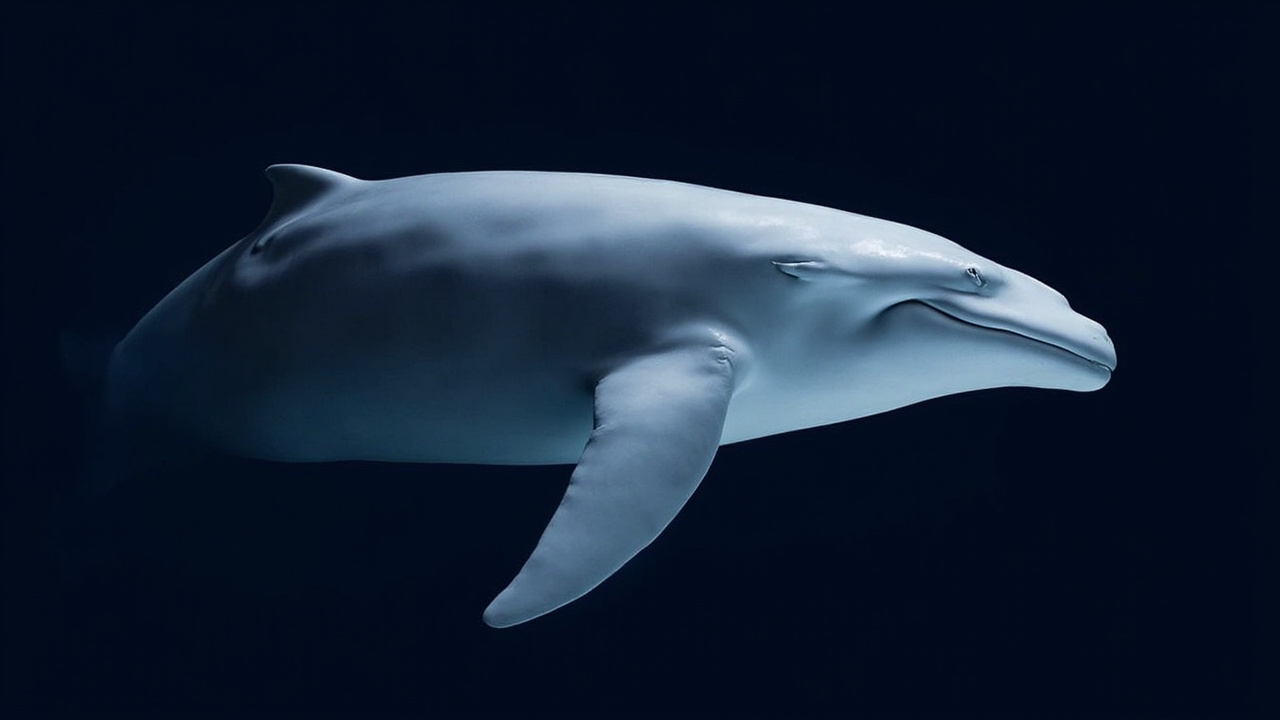
Main blog post with markdown formatting Okay, I have to share something that completely blew my mind this week. Scientists have been studying a group of beluga whales in Alaska for over a decade, and what they found out about beluga love lives is honestly kind of beautiful.
Here's the deal: belugas are notoriously hard to study. They live under Arctic ice, spend most of their time hidden beneath freezing waters, and honestly, they just don't make observation easy. But researchers from Florida Atlantic University and the Alaska Department of Fish and Game stuck with it for 13 years, collecting DNA samples from 623 individual whales. And the results? Absolutely fascinating.
You know how we assume male animals are the ones playing the field while females settle down? Yeah, that's not exactly how it works for belugas. Both male AND female belugas have been reproducing with multiple partners over their lifetimes. When researchers looked at sibling groups, they found that most siblings only shared one parent, not both. This means everyone's doing the relationship shuffle.
But here's where it gets really interesting. This population of belugas is relatively small — we're talking about 2,000 individuals, give or take. For a small, isolated group, you'd expect to see genetic problems: inbreeding, declining diversity, health issues. That's what typically happens in nature. But these belugas? They're doing great. Their genetic diversity is actually comparable to much larger populations, and it hasn't declined over time.
So what's their secret? Researchers think it's this constant partner-switching behavior. By regularly changing up who they mate with, belugas avoid producing too many closely related offspring. This keeps the gene pool healthier and prevents the kind of inbreeding that can doom small populations.
The lead researcher, Dr. Greg O'Corry-Crowe, described it as a "bet-hedging strategy." Basically, by not putting all your eggs in one basket (or all your eggs in one male), female belugas reduce the risk of accidentally mating with a low-quality partner who might have genetic issues. Smart, right?
And here's another thing that got me — beluga males aren't the dominant, controlling types you might expect. Despite being larger than females, they're only "moderately polygynous," meaning a few males might father more calves than others, but not by an overwhelming amount. The researchers think this might be because underwater, it's just harder for males to control access to females. You can't really corner someone in three-dimensional space the same way you might on land.
What's really cool is the long game aspect. Belugas can live up to 90 years. That's an incredibly long reproductive life. So male belugas aren't competing in some frantic, all-or-nothing mating frenzy — they're playing patient strategy. A few successful matings per year over decades adds up to a lot of offspring.
I love thinking about this. Here's this population of whales, isolated in Bristol Bay, Alaska, managing to maintain genetic health despite being small in number. And they do it through what essentially amounts to diverse and flexible romantic relationships. It's almost like nature built in a self-correcting mechanism.
The researchers caution that other beluga populations might be different. Some groups show bigger size differences between males and females, which could indicate more competitive mating systems. So this isn't necessarily universal beluga behavior. But still — the fact that these particular whales have figured out how to stay genetically healthy without human intervention is pretty remarkable.
It makes you wonder what else is happening in the ocean that we simply haven't seen yet. These animals have been solving problems we didn't even know existed, long before we started watching.
I don't know about you, but I'm going to look at belugas a little differently now. Next time you see one of those videos of belugas being all curious and friendly with humans, remember — you're looking at creatures with complex social and romantic lives, playing a genetic strategy game that's kept their species thriving for millennia.
Nature is honestly so much more interesting than we give it credit for.