
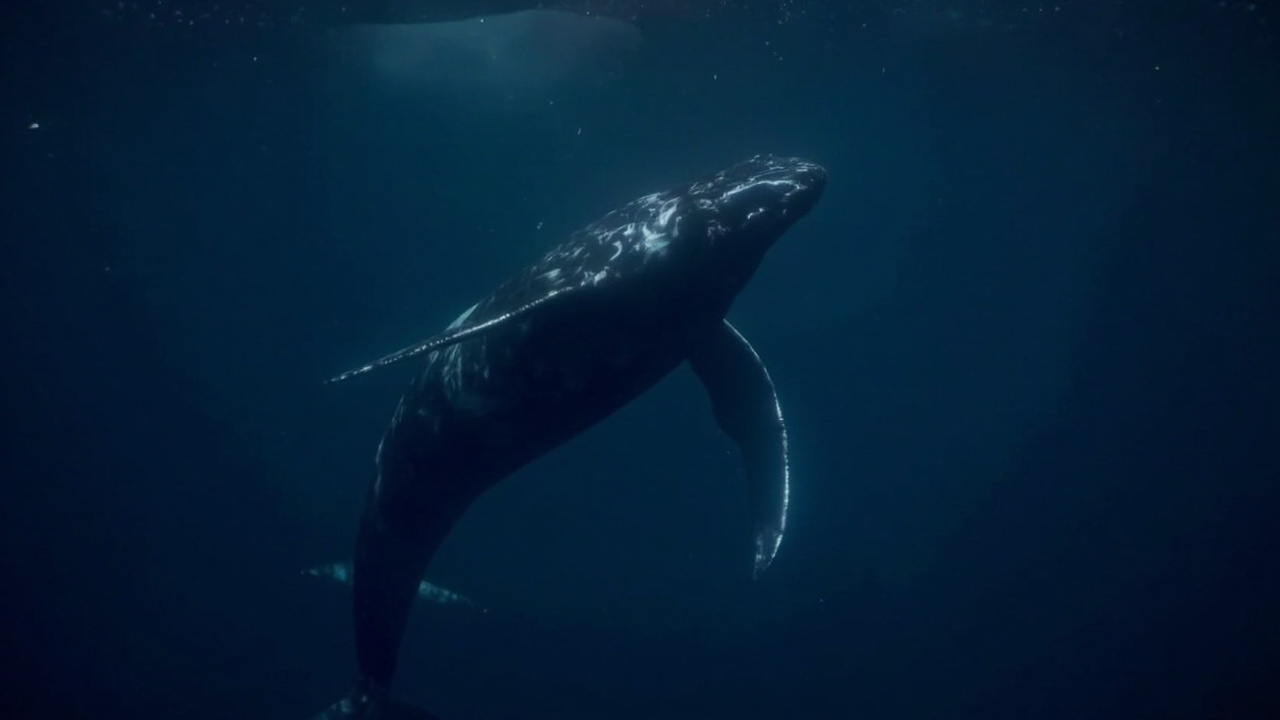
When a Whale Decides to Completely Change Its Life
Imagine waking up one day and deciding to move to the exact opposite side of the world. That's essentially what two humpback whales did, and scientists are absolutely fascinated by it.
For decades, researchers have assumed that humpback whale populations stick to their own neighborhoods. Australian whales breed in Australia. Brazilian whales breed in Brazil. They follow their ancestral routes like commuters on a familiar train line. But every once in a blue moon, apparently, one whale just says "nope, I'm going to the other side of the planet instead."
Tracking Whales Through Their Unique Tail Spots
Here's where it gets clever. Every humpback whale has a completely unique pattern of marks and scars on their tail flukes—kind of like underwater fingerprints. By comparing thousands of photographs taken over decades, scientists can actually identify individual whales across years and even continents.
In this case, researchers dug through nearly 20,000 photographs collected since 1984. Two whales stood out: one first spotted in Queensland, Australia in 2007 eventually showed up near São Paulo, Brazil in 2019. The straight-line distance? About 14,200 kilometers. That's roughly the distance from Sydney to London, and remember—the whale probably didn't travel in a straight line.
But here's the kicker: the second whale had been tracked for 22 years. Photographed in Brazil way back in 2003, it didn't turn up in Australian waters until 2025. That journey measured 15,100 kilometers—a new record.
This Happened Because of Regular People With Cameras
What's genuinely cool about this research is that it relied heavily on citizen scientists. Through a platform called Happywhale, everyday people—whale watchers, tourists, researchers—submitted their whale tail photos. Combined with professional research photos, these thousands of images created a searchable database that made this discovery possible.
Then researchers used artificial intelligence to compare patterns, followed by humans double-checking everything to make sure there weren't any mistakes. It's a perfect example of technology and human collaboration actually working together effectively.
Wait, How Rare Is This Actually?
Here's the reality check: out of nearly 20,000 identified whales tracked over 40+ years, only two made this extreme journey. That's 0.01 percent. So we're not talking about a regular commute here—this is genuinely exceptional behavior.
Yet scientists think even these rare crossings matter. When whales occasionally travel between distant breeding populations, they can mix up the genetic pool and even spread new whale songs across ocean basins. (Yes, whales have regional song styles that evolve, kind of like how music trends spread between countries.)
Why This Could Become More Common
Here's where climate change enters the picture. Researchers think that changing Antarctic ice patterns and shifting krill populations might actually encourage more whales to explore different migration routes in the future. As their traditional food sources move, so might the whales.
The researchers propose something called the "Southern Ocean Exchange" hypothesis: whales from different regions might occasionally bump into each other in shared Antarctic feeding areas, then return home by a completely different route. Some might like their new neighborhood so much they just... stay.
The Bigger Picture
What I find most interesting about this isn't just the whale journey itself—it's what it tells us about how much we don't know about ocean life. Despite decades of research, we're still discovering surprising behaviors from animals we thought we understood.
These whales remind us that nature is full of wanderers. Some beings just aren't content following the same path their ancestors traveled. And sometimes, that unconventional choice might be exactly what helps a species survive when everything else changes.
Pretty wild for a 40-ton ocean traveler, right?