
The Day Pirates Became Their Own Worst Enemy
You know that feeling when you really, really don't want to get caught with something incriminating? Most of us would just... hide the evidence in a drawer or maybe delete some emails. But pirates? They had a more... dramatic solution.
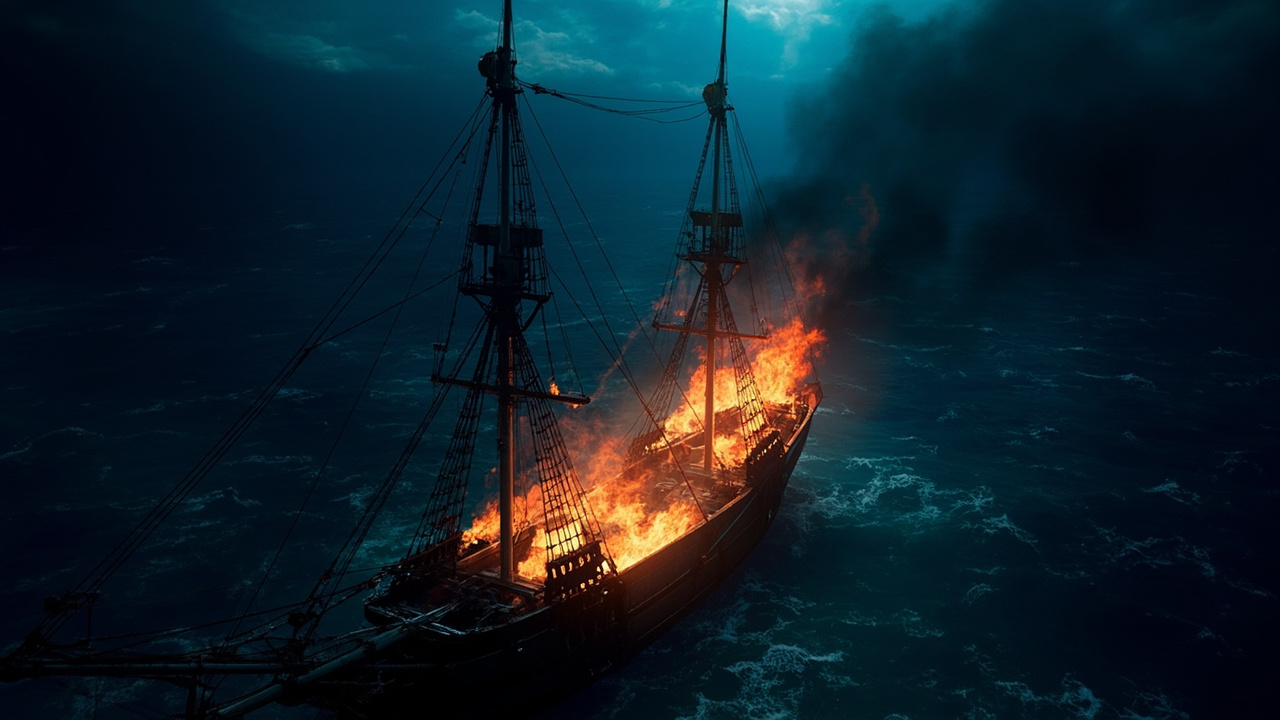
They burned the whole ship.
And I mean, can you blame them? When you're a wanted outlaw sailing the high seas with stolen treasure, a quick fire seems like a solid strategy. Sink the evidence, torch the hull, and disappear into legend. It worked for centuries. Until some archaeologists decided to ruin their day.
Meet Henry Avery: The Original Pirate King
Let me introduce you to Henry Avery, because if there was ever a pirate who deserved his own movie franchise, it's this guy. He wasn't just some random buccaneer with a hook hand and a parrot. Avery was basically the godfather of the entire Golden Age of Piracy.
Here's the wild part: this guy pulled off one of the biggest heists of the 17th century, walking away with gold, silver, diamonds, emeralds, and sapphires worth roughly $114 million in today's money. That's not chump change. That's "retire to a private island and never be seen again" money.
And get this — after his career of crime, he somehow convinced King William III to grant him a royal pardon. Then he apparently became a spy for the British Crown. That's one heck of a career pivot. From pirate to espionage? Move over, James Bond.
But before all that happened, Avery commanded a 46-gun ship called the Fancy. And according to researchers, that ship might have just been found in the Bahamas.
The Search Begins
A team of underwater archaeologists led by Sean Kingsley — who has explored over 350 shipwrecks and literally wrote the book on pirates — recently spent a year combing the waters around Nassau in the Bahamas. This wasn't just a casual snorkeling trip. They were hunting for remains of ships that had vanished centuries ago.
The Bahamas, for those who don't know, was basically the pirate capital of the world back in the day. We're talking Blackbeard, Calico Jack Rackham, Stede Bonnet — all these larger-than-life characters operating in those very waters. Yet as Kingsley put it, "nobody knows anything about this magical place." That changed with their expedition.
Finding the Impossible
Now here's where things get interesting. These researchers were granted permission to search Nassau Harbour — which apparently was the first time anyone had ever been allowed to dive there. That alone tells you something significant was probably down there.
When they finally got into the water, they found... a wooden skeleton. The burned hull of a ship. Still there after all these years.
And get this — it was held down by a pile of rocks used as ballast, and it had clearly been torched on purpose. You know, by the pirates who didn't want anyone finding their incriminating evidence.
But Wait, There's More
The team didn't just find a burnt hull. Oh no. They found the whole treasure trove of pirate life, including:
- Two rusty iron cannons
- A grinding stone for sharpening blades
- Rigging and bricks from the galley
- Wine bottles (because pirates apparently had refined taste)
- 25 lead musket balls piled up
- Clay pipes intricately sculpted with lions and unicorns — these were for the English pirate aristocracy, apparently
Can you imagine finding a pipe with a unicorn on it? These pirates had style.
Kingsley described the moment of discovery perfectly: "Suddenly, my heart starts pounding... There's wood on the seabed. Maybe this might be the Fancy that we've been looking for this whole time. You forget about time. You forget that you're diving. You're just focused on this moment."
Why Did Pirates Burn Their Ships?
Here's what fascinates me most about this story. Pirates were essentially criminals operating outside the law, which meant they had no legal protections. If authorities caught them, they were executed. Plain and simple.
So when the heat was on, destroying evidence made perfect sense. Burn the ship, and you erased any proof of piracy. No ship, no crime, right? Well, it didn't always work, but it was better than nothing.
The Fancy's crew apparently chose arson over arrest. They torched their own vessel to hide their secrets.
And for over 300 years, it worked.
What Happens Next?
The researchers aren't done. They believe more wrecks might be buried in the sediment — more artifacts, more stories, more pirate history waiting to be uncovered. Every little discovery adds another piece to the puzzle of who these people really were.
We're not just talking about treasure here (though that's obviously cool). We're talking about understanding a period of history that shaped the Caribbean and influenced countless stories, movies, and legends. From Captain Blood to Jack Sparrow, real pirates like Henry Avery inspired them all.
And now, thanks to this team's persistence, we might finally get to see what life was really like for the most wanted criminals of the 17th century.
My Take
I've always been fascinated by archaeology because it reminds us that history isn't just dates in textbooks — it's real people making real choices in real moments. Pirates weren't just movie villains. They were desperate, clever, and sometimes surprisingly sophisticated individuals navigating an incredibly dangerous world.
The fact that a burned ship can survive centuries underwater, waiting for someone patient enough to find it, is honestly kind of poetic. These pirates thought they were erasing their tracks forever. Instead, they were creating a time capsule that would eventually give us the most detailed look yet at their actual lives.
If this really is the Fancy, then we've just found the ship of the man who started it all. The pirate who kicked off an era. And honestly? I can't wait to see what else they uncover.
Source: https://www.popularmechanics.com/science/archaeology/a71501089/caribbean-pirate-ship-remains