
Okay, I need you to picture this with me.
You're a scientist looking at a 66-million-year-old T. rex rib. You've seen thousands of fossils. You know how this works — bones fossilize, sure, but soft stuff like skin, muscle, and blood vessels? Those rot away pretty quickly after death. That's just how decomposition works.
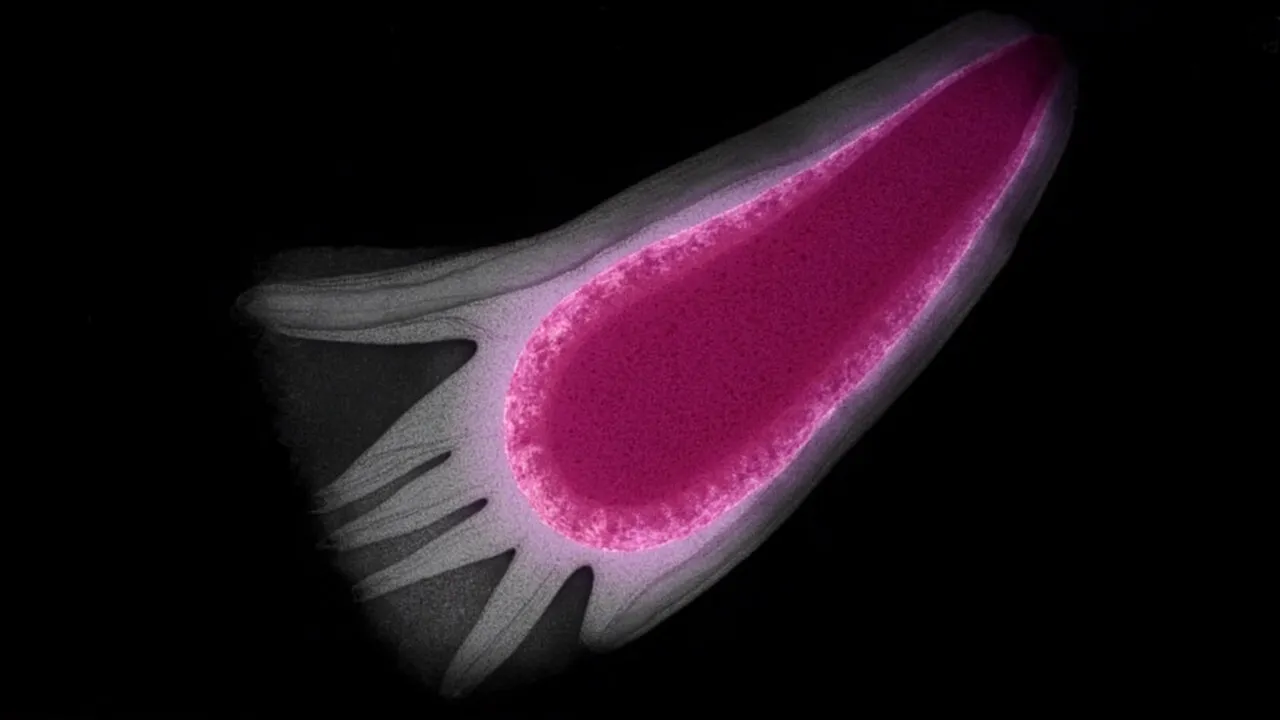
And then you peer inside Scotty's rib, and there it is: a network of fossilized blood vessels. Still intact. Still holding secrets from the moment this dinosaur was still alive.
Yeah, I'd probably lose my mind too.
Meet Scotty (No, Not That Scotty)
Scotty is officially the largest Tyrannosaurus rex skeleton ever discovered. Discovered in Saskatchewan's Frenchman River Valley by teams from the Royal Saskatchewan Museum, this beast lived approximately 66 million years ago — right at the very end of the dinosaur era, right before that famous asteroid wiped them all out.
For years, Scotty sat in museum collections, studied and admired for its impressive size. But nobody realized the real treasure was hidden inside one of its ribs.
The "Winning the Lottery" Discovery
When researchers first detected evidence of preserved blood vessels inside that rib, they couldn't quite believe it. One researcher, Mauricio Barbi from the University of Regina, called it "like winning the lottery."
And honestly? That's not an exaggeration.
Think about what has to happen for soft tissue to survive 66 million years. After Scotty died, the body ended up in a salty marsh. Those specific conditions — that exact chemical environment — slowed decomposition just enough to preserve what should have been long gone.
But here's what's really wild: those blood vessels weren't just preserved randomly. They were actively forming as part of a healing process when Scotty died. This dinosaur broke a rib, and its body was in the middle of repairing itself when its life ended.
How Do You See Inside a Fossil Without Breaking It?
This is where the science gets really cool.
The team used something called neutron imaging — specifically at Oak Ridge National Laboratory's facilities — to peek inside Scotty's rib without damaging it. Think of it like medical imaging, but way more powerful and specifically designed for materials science.
Why neutrons? Here's the simple version: neutrons are really good at detecting light elements, especially hydrogen. And what contains a lot of hydrogen? Soft tissues. Blood vessels. The stuff that usually disappears during fossilization.
They also used X-ray imaging, which works differently — it's better at showing heavier elements and denser structures. By combining multiple imaging techniques, the researchers built up a complete picture of what was going on inside that bone.
Jerit Mitchell, a doctoral candidate who was actually an undergraduate when this project started, first detected the blood vessels back in 2020 using a method called micro-CT scanning. Once they knew something was there, the investigation just kept expanding.
A Medical Record Written in Bone
Here's what the imaging revealed:
After Scotty's rib fractured (probably from some ancient battle or accident), iron-rich blood flooded the injured area. The healing process kicked in, and new blood vessels started forming — exactly what happens in your body when you get hurt.
But Scotty died before the healing was complete.
The fracture was still being repaired when this massive dinosaur took its final breath. We don't know what killed it — the injury might have contributed, or it might have been something else entirely. But for 66 million years, that healing moment sat frozen inside the bone, waiting for technology advanced enough to see it.
Why Does Any of This Matter?
Every fossil is "a tiny snapshot of the past," as one researcher put it. But most snapshots only show us bones — the framework of ancient life.
This? This is something else entirely.
Preserved blood vessels give us a window into actual biological processes. We can see how dinosaurs' bodies responded to injury, how their healing compared to modern animals, and what conditions allowed such delicate structures to survive.
Marcella Berg, one of the researchers involved, said something that stuck with me: "By piecing the clues together, we understand the past and how things could evolve in the future."
That really captures it, doesn't it? We're not just digging up old bones. We're reading the stories written in them.
What's Next?
The team is continuing to study Scotty and other fossils from the region using these advanced imaging techniques. They're looking at everything from fossilized amber to dinosaur scales, always searching for more of those rare preservation windows that let us see past the bones.
And honestly? I love that this story includes a graduate student who started as an undergraduate and kept pushing when something unusual showed up in his scans. Science doesn't always work that way — sometimes weird results get dismissed. But Mitchell kept digging, and now we're learning things about T. rex biology that nobody imagined possible.
Scotty is still teaching us secrets, even 66 million years later.