
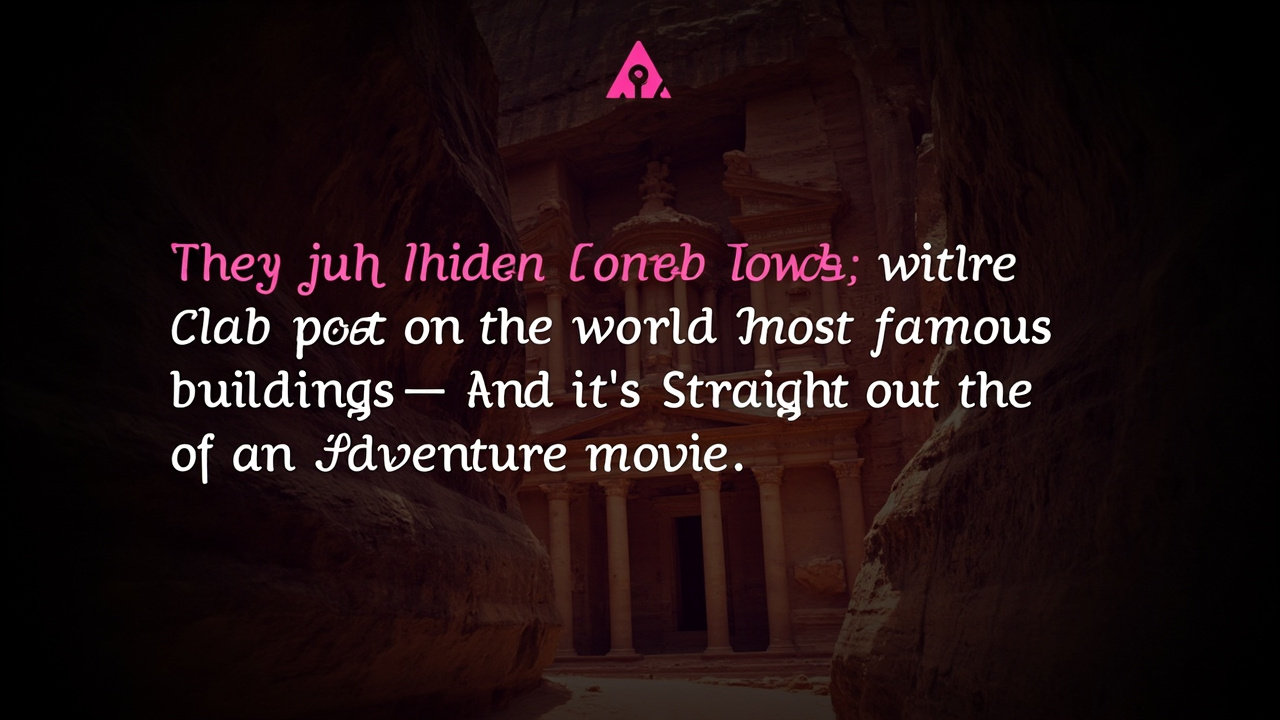
When Life Imitates (Indiana Jones) Art
You know that moment in Indiana Jones and the Last Crusade when Harrison Ford's character discovers ancient treasures hidden beneath famous monuments? Well, it just happened for real—except the archaeologists involved didn't need to outrun any rolling boulders.
Deep beneath the Khazneh (also known as "The Treasury"), that stunning carved facade you've probably seen in movies or vacation photos, a team of researchers recently found something genuinely mind-blowing: an untouched tomb containing the remains of 12 people from over 2,000 years ago, along with bronze, iron, and ceramic artifacts. The Discovery Channel documented the whole thing on their show Expedition Unknown, and honestly, it reads like an adventure novel.
Why This Matters More Than You'd Think
Here's the thing that makes this discovery absolutely wild: archaeologists have been studying Petra—this ancient Nabataean city carved into Jordan's red sandstone cliffs—for about 200 years. Two centuries. And nobody had found anything like this before. We're talking about one of the New Seven Wonders of the World, a place visited by thousands of tourists every year, and there was still this massive secret waiting underground.
The excavation team, led by archaeologist Pearce Paul Creasman, used ground-penetrating radar (basically a fancy underground scanner) to peek beneath the surface before they even started digging. It's the kind of smart detective work that proved there was actually something worth excavating down there.
What Makes This Find So Rare?
What shocked the researchers most wasn't just finding a tomb—it's that it was full. And I mean actually full, with everything still in place.
Most tombs at Petra that have been discovered over the years? Empty. Looted centuries ago. But this one? The skeletal remains were still articulated, meaning the bones hadn't been disturbed or scattered around. The deceased still had their burial goods with them. One person was even holding a ceramic chalice in their arms—which the team couldn't help but notice is pretty similar to the Holy Grail imagery from that Indiana Jones film. The universe has a sense of humor, apparently.
The researchers also found something unexpected: moisture damage on some of the bones. Turns out sandstone is porous, and the area experiences flooding, so water had seeped into this underground chamber over millennia. It's not ideal for preservation, but it also means the site has been undisturbed for a very, very long time.
Who Were These People?
This is where it gets really interesting. Josh Gates, the host of Expedition Unknown, pointed out that whoever was buried in this tomb must have been seriously important. The location alone—right near the main entrance to Petra, in what's essentially premium real estate in an ancient city—suggests these were high-status individuals.
The artifacts and remains could tell us so much about daily life in Petra and the Nabataean civilization that built this incredible city. We're talking potential insights into their burial practices, social hierarchy, craftsmanship, and trade connections. These bones and objects are literally keys to understanding a lost world.
What Comes Next?
The real work is just beginning. Researchers will carefully study the skeletal remains and artifacts to figure out who these people were, what they did, and why they were buried in such a prominent location. Every detail—from the composition of the ceramics to the isotopes in the bone—could reveal something new about Petra's history.
It's a reminder that even the most famous, thoroughly studied places on Earth still have secrets waiting to be uncovered. Sometimes you just need the right technology, the right approach, and the patience to look in places nobody has thought to look before.
And yeah, maybe a little bit of that Indiana Jones luck doesn't hurt either.