
When a Philosopher Emperor Became a Cold Case
Here's a question you probably never thought you'd ask yourself: what's the oldest, most reliable tool for collecting archaeological evidence? If you guessed "a scientist's fingernail," congratulations—you've just learned something genuinely surprising.
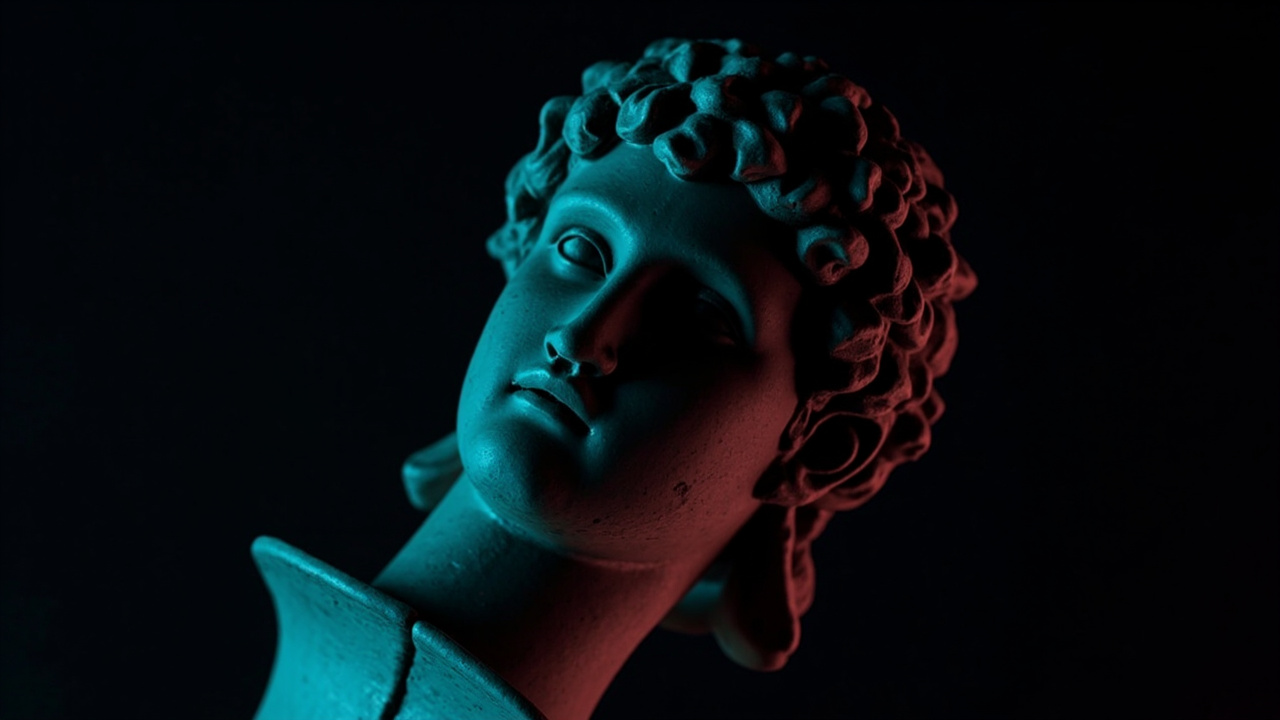
Back in 1967, a beautiful bronze statue got yanked from the ancient city of Boubon in southwestern Turkey. No official excavation permit. No paperwork. Just someone deciding that a 2,000-year-old representation of Marcus Aurelius—the famous stoic philosopher—would look great somewhere else. Over the next few decades, this headless statue bounced around like a cultural hot potato, eventually landing at the Cleveland Museum of Art in Ohio, where it hung out for years.
The Problem With Proof
Here's where things get tricky. Just because a scholar publishes research saying "hey, this is stolen property" doesn't mean everyone has to believe it. Jale İnan, a Turkish academic, made the connection back in the late 1970s, but scholarly papers and government requests weren't quite enough to convince the Cleveland Museum to give up their exhibit. The museum basically said, "Well, the seller seemed legit when we bought it, so we're cool."
It wasn't until 2021 that things got serious. The Manhattan District Attorney's Office teamed up with U.S. Homeland Security and Turkey's Ministry of Culture to launch an actual investigation. These weren't just art historians anymore—these were legal authorities with real power to compel action.
The Cinderella Test and the Fingernail Method
But here's the thing about proving ancient artifacts belong in specific places: the evidence needs to be scientific, not just historical. By 2023, a court ordered the statue seized, but the Cleveland Museum wasn't ready to surrender without a fight. They challenged Turkey's claim, demanding proof that would hold up under serious scrutiny.
So the investigators got creative. Really creative.
First, they made a silicon mold of the statue's foot and brought it back to Boubon. And guess what? It fit the original base perfectly. Like Cinderella's slipper, except with a 2,000-year-old bronze foot. That's pretty cool.
But the real smoking gun came from soil analysis. To prove the statue came from Turkey, they needed to match soil samples from the statue itself to soil from its original location. The challenge? You can't exactly drill into an ancient artifact without risking damage. So what did they do?
They scratched at the dirt with their fingernails.
I'm not exaggerating. Zeynep Boz, who heads Turkey's department combatting smuggling, literally described it as relying on "instinct" and using their fingernails to extract samples. It sounds like something from a heist movie, but it worked. Laboratory tests showed the soil matched perfectly with another statue that had been seized from the same site back in 1967.
The Victory
In February 2025, after 58 years, the statue came home. The Manhattan District Attorney announced the repatriation, and suddenly a piece of history was back where it belonged.
What I love about this story isn't just that good guys won (though they did). It's the reminder that sometimes the most effective solutions are the simplest ones. You don't always need cutting-edge technology. Sometimes you need observation, creativity, persistence, and yeah—occasionally, some good old-fashioned fingerprint-level detective work.
The headless Marcus Aurelius couldn't speak for itself, but the evidence did. And that's pretty powerful.