
markdown formatted blog content
Hey, Remember Amelia Earhart?
Okay, confession time: I was the kid who was obsessed with Amelia Earhart in middle school. I read every book I could find, watched every documentary, and genuinely believed we'd figure out what happened to her any day now. Cut to twenty-something years later, and well... we're still waiting.
But here's the thing that just made me unreasonably excited all over again.
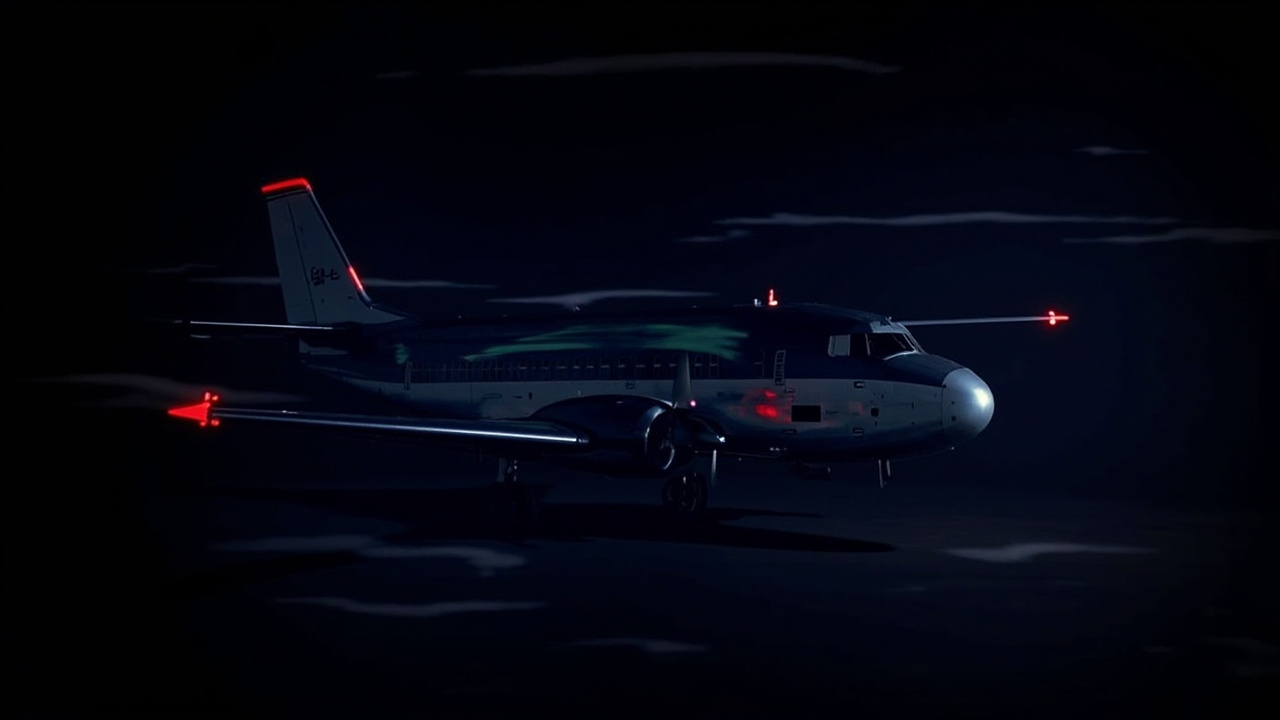
A team from Purdue University—yes, that Purdue, the one that helped fund Earhart's round-the-world flight in the first place—is planning a new expedition to Nikumaroro, a tiny speck of an island in the Pacific Ocean. Their target? Something called the Taraia Object, which was discovered in the island's lagoon back in 2020. And here's what makes my inner middle-schooler want to do a happy dance: they think it might actually be part of Amelia's Lockheed Electra 10E.
So What Even Is Nikumaroro?
Imagine the most remote place you can. Now add more remoteness. Nikumaroro is a coral atoll in the Republic of Kiribati that most people couldn't find on a map if you spotted them. It's about 1,600 miles southwest of Hawaii, and basically nothing lives there except birds, crabs, and the occasional research team.
But here's where it gets interesting. There's a theory—actually, a pretty well-supported one—that when Amelia and her navigator Fred Noonan missed Howland Island on July 2, 1937, they didn't just plummet into the open ocean. Instead, they might have made it to Nikumaroro's reef, where they eventually died after being stranded.
I know what you're thinking: That's a pretty big "might."
Fair point. But stick with me here.
The Evidence Is Actually Stacking Up
Now, I'm not usually one to get excited about "anomalies" and "debris sightings." We've had so many false hopes over the years that I basically approach every new Earhart story with the enthusiasm of someone who's been ghosted too many times.
But this time feels different. Here's why:
Those radio signals. Back in 1937, multiple organizations—including the U.S. Navy, Coast Guard, and Pan Am—recorded radio bearings from Earhart's transmissions. And they all seemed to converge on the same general area. You guessed it: around Nikumaroro.
The bones. In 1940, some bones were discovered on the island. A 2017 analysis compared them to Earhart's skeletal measurements and found they were more similar to hers than 99% of other individuals. Ninety-nine percent! That's not a typo.
The artifacts. We're talking about a women's shoe from the 1930s, a compact case, freckle cream (which, okay, is a weird detail but also very specific), and a medicine vial. These things don't prove anything on their own, but they're... suggestive.
That photograph. Three months after Amelia disappeared, someone took a photo of the Nikumaroro reef. Years later, researchers spotted something in it that looked an awful lot like landing gear from a Lockheed Electra. They call it the Bevington Object.
And then there's the big kahuna: the Taraia Object itself. This thing was first spotted in 2020, and it appears to have been sitting in the same spot in the lagoon since at least 1938. Which is... interesting timing, given that Amelia went missing in 1937.
Why Does Purdue Care So Much?
Okay, this is actually really sweet and I wasn't prepared for it.
Amelia Earhart had a genuine connection to Purdue University. Edward Elliott, who was Purdue's president back in the 1920s and 30s, brought her to campus as a career counselor for women. She lived in the women's residence hall part of each semester. She advised the aeronautical engineering department. She used the university's brand-new airport, which was the only college airport in the entire country at the time.
Purdue helped fund her Lockheed Electra through the Amelia Earhart Fund for Aeronautical Research. Major contributors like J.K. Lilly, Vincent Bendix, Western Electric, and the Goodrich and Goodyear companies all pitched in.
Here's the part that gets me: when Amelia took off on her final flight, she planned to donate the plane back to Purdue upon her return. She wanted it to help further scientific research in aeronautics. That plane never came back. But now, almost 90 years later, the university is still trying to solve the mystery—and possibly recover what was supposed to be theirs all along.
"We feel we have no choice but to move forward and hopefully return with proof," said Richard Pettigrew, executive director of the Archaeological Legacy Institute. Honestly? Same, Richard. Same.
What Happens Next?
The plan was originally for November 2025, but the team ran into some clearance issues with the government of Kiribati, so the expedition got pushed to summer 2026. They'll spend five days at Nikumaroro examining the Taraia Object, return to Majuro by mid-August, and head home shortly after.
If they confirm it's the Electra? Another field season would follow in 2027, with possible recovery sometime that year or in 2028.
So we're not talking about a few weeks of digging and then boom, case closed. This is a process. A long, careful, scientific process.
What I Keep Thinking About
Here's the thing that's been stuck in my head since I first read about this: even if they find the plane, even if they confirm it's Amelia's Electra... she's still gone. She's still been gone for 88 years. We're not going to rescue her.
But I think that's not really the point, is it?
There are two things that keep people like me coming back to this story after all these years. First, there's the sheer what if of it all. What if we finally have answers? What if we can piece together exactly what happened in those final hours?
And second, there's something about Amelia herself that keeps pulling us back in. She was brilliant, brave, and completely unapologetic about her ambitions at a time when women were expected to stay quiet and stay home. She flew planes into storms. She set records. She told women they could be anything they wanted to be—and then she proved it.
We owe her answers. We owe her the dignity of knowing her story is complete, even if those final chapters were written alone on a reef in the Pacific.
So here's hoping the Taraia Object is what they think it is. Here's hoping this expedition finally brings us some closure.
And here's to Amelia, who probably would've loved all of this chaos and attention—and would've had some sarcastic comment ready for whoever tried to make it dramatic.
What do you think? Are we finally on the verge of solving aviation's greatest mystery, or is this just another false hope? Drop your thoughts below—I genuinely want to hear them!