
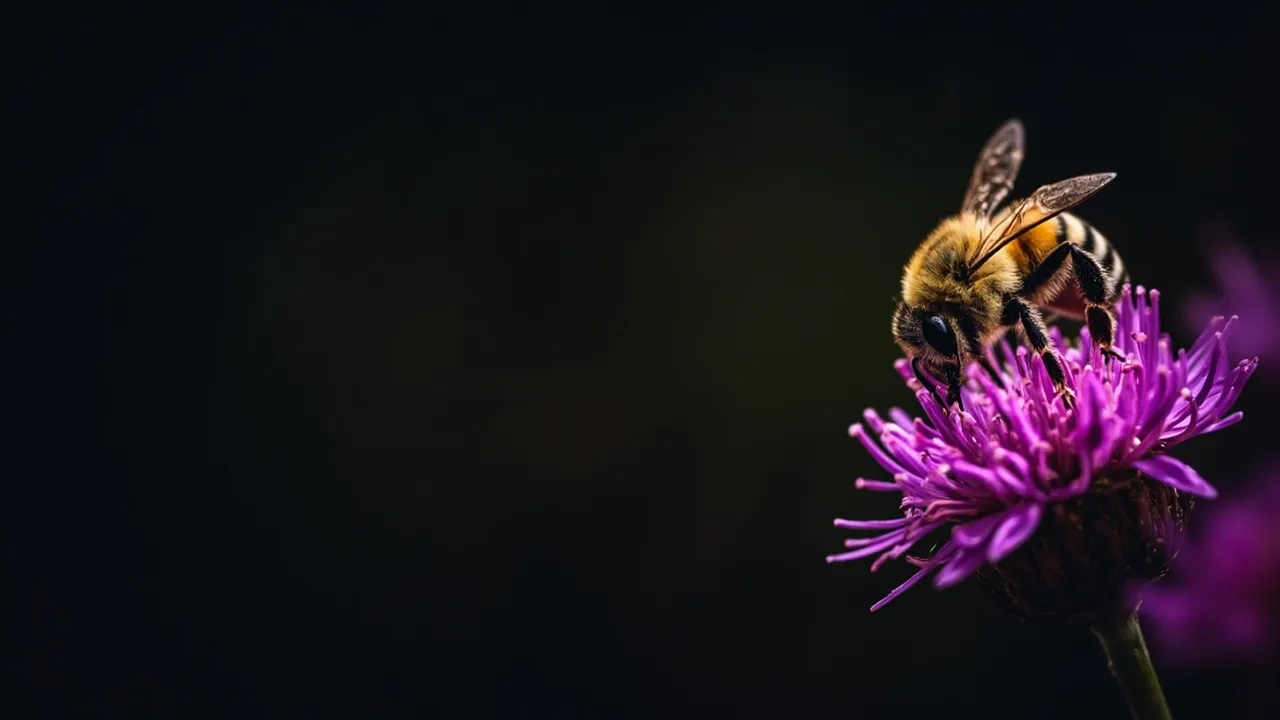
The "Mean Girls" of the Garden
When you picture a sunny afternoon in a garden, you probably imagine a peaceful scene: butterflies fluttering, bumblebees buzzing, and honey bees calmly sipping nectar. It sounds like a Zen garden, right?
Well, hold onto your sun hats, because it turns out the garden is actually a bit more like a crowded food court during lunch rush—and the honey bees are definitely the ones cutting the line and nudging everyone else out of the way!
The Great Pollinator Showdown
Scientists over at Anglia Ruskin University recently spent two years watching how different insects interact around plants like ivy and brambles. They weren't just watching them eat; they were looking for "interactions"—which is a fancy scientific way of saying "who wins the fight for the flower."
The results were pretty eye-opening. It turns out honey bees are incredibly dominant. When honey bees are hanging around in large numbers, the other "locals"—like bumblebees, solitary bees, and hoverflies—start to disappear.
They aren't just losing the race to the flower; they are being actively intimidated. The study found that honey bees frequently use a bit of "gentle" aggression, physically pushing or chasing other insects away to secure their meal.
The Only One Who Fights Back
In this insect version of The Hunger Games, most pollinators just decide it's not worth the drama. If a honey bee shows up, the hoverflies and bumblebees often just fly off to find a quieter spot.
However, there is one rebel in the group: the Ivy Bee. This little guy is a solitary bee that recently moved into the UK, and unlike the others, it actually stands its ground. When a honey bee tries to take its spot, the Ivy Bee is willing to go toe-to-toe, chasing the honey bee away to defend its lunch. Talk about a tiny warrior!
Why This Matters (And Why Climate Change is Making it Worse)
You might be thinking, "Okay, so the honey bees are a bit bossy. Is that really a problem?"
Well, it becomes a big deal when we consider two things: Beekeeping and Climate Change.
- More Bees: Beekeeping has exploded in popularity. There are way more managed honey bee colonies now than there were a decade ago. That means more "bullies" in the ecosystem.
- Heat Waves: As the world gets warmer, flowers get "stressed" and produce less nectar. When food becomes scarce, the competition gets even more intense. Plus, honey bees love the heat and get super active when it's warm, while other pollinators might struggle to keep up.
Don't Stop Keeping Bees!
Before you go out and cancel your subscription to your local apiary, don't worry! The researchers aren't saying we should stop keeping honey bees. Honey bees are amazing and vital for our food systems.
What they are saying is that if we want to protect our wild, native pollinators (the ones that don't have a human to feed them!), we need to understand this competition. By knowing how honey bees dominate, we can better design gardens and habitats that give our wild, solitary bees a fair chance to eat without getting bumped off their favorite flowers.
So, next time you see a honey bee zooming around your garden, give it a little nod of respect—but keep an eye on those tiny Ivy Bees, because they're the real fighters!