
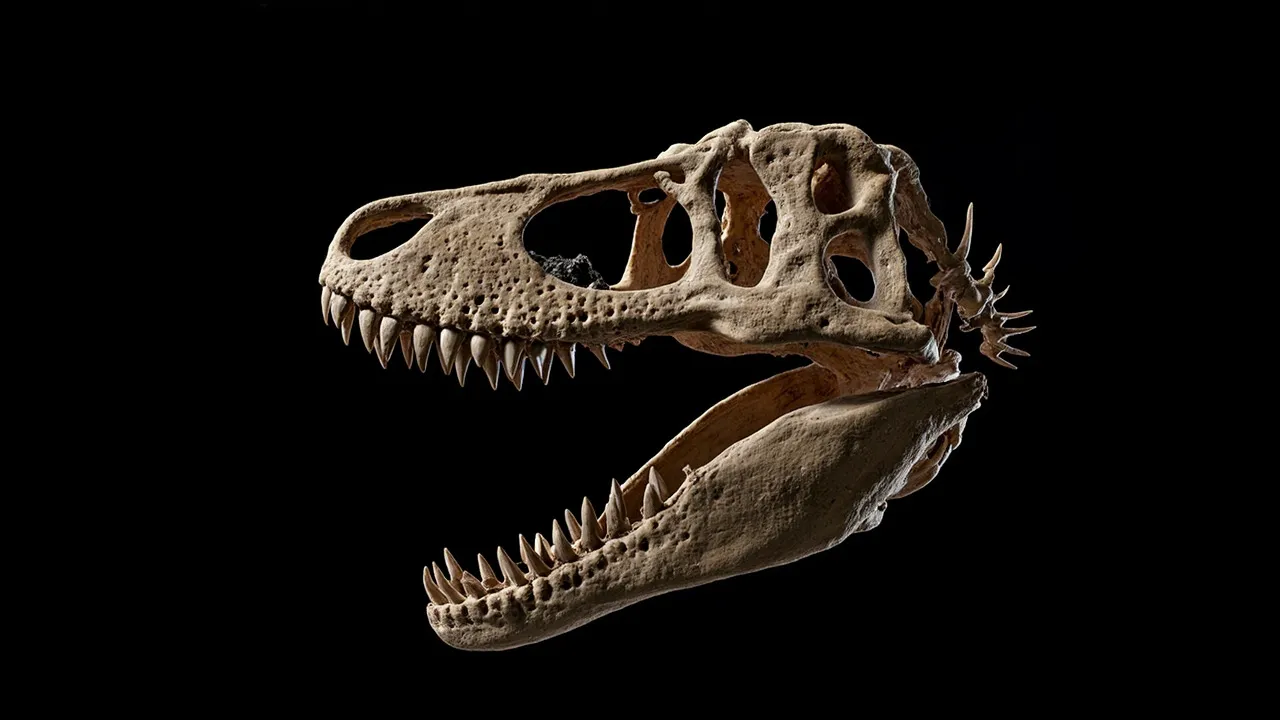
The main blog post Imagine walking through a museum, passing rows of ancient bones and fossils behind glass, when suddenly you spot something that makes you stop dead in your tracks. That's exactly what happened to researchers at Montana State University's Museum of the Rockies when they examined a particular skull in their collection.
The Discovery That Stopped Everyone
In 2005, paleontologists uncovered a nearly complete dinosaur skull in the Hell Creek Formation of eastern Montana. It looked like a typical specimen at first glance — just another piece of prehistory. But then someone took a closer look and noticed something that would change everything: a broken tyrannosaur tooth was still embedded in the animal's face.
Can you imagine that? We're talking about a tooth that was ripped out of a T. rex's jaw and stayed stuck in this dinosaur's skull for 66 million years. That's not just a fossil — that's a frozen moment in time.
Playing Paleontologist Detective
What I love about this discovery is that it's basically a Cretaceous crime scene. And like any good detective story, the researchers had to figure out who did what to whom.
The skull belonged to an Edmontosaurus — a duck-billed herbivore that wandered around what is now Montana during the final days of the dinosaur era. And that tooth? It's a perfect match for Tyrannosaurus rex.
The researchers used CT scans to get a better look at exactly how that tooth got trapped in the skull. And let me tell you, the details are both fascinating and slightly horrifying.
What This Tells Us About T. Rex
Here's the thing that really got me: the tooth is embedded in the nose area of the Edmontosaurus. According to researchers, this positioning suggests the two dinosaurs met face-to-face — literally. That's a pretty intense encounter. Most of the time, when we find evidence of predator-prey interactions, we're looking at bite marks on bones that have already healed or on limbs that were bitten off during feeding. This is different. This captures something much more immediate.
"The amount of force necessary for a tooth to have become broken off in bone also points to the use of deadly force," one researcher noted. "For me, this paints a terrifying picture of the last moments of this Edmontosaurus."
And honestly? I think that's putting it lightly.
The Big Question: Was It Hunting?
Here's where things get interesting. The skull shows no signs of healing around the tooth. That means one of two things: either this Edmontosaurus was already dead when the T. rex bit it, or that bite is what killed it.
If the dinosaur was already deceased, this might just be evidence of scavenging behavior — T. rex eating an already-dead animal. But if the bite happened while the Edmontosaurus was still alive? Then we're looking at a predatory attack, face-to-face, with lethal force.
Either way, this fossil gives us an unprecedented look at how these massive predators interacted with their prey. You know those documentaries where they try to reconstruct dinosaur behavior based on bones and educated guesses? Well, this is about as close to real evidence as it gets.
Why This Matters
Tyrannosaurus rex has captured our imagination for over a century. It's been depicted as a ruthless hunter, a scavenger, and everything in between. Scientists have debated its feeding habits for decades.
Fossils like this one — with that embedded tooth preserved for millions of years — help us piece together the real story. They're not just ancient bones anymore. They're windows into the lives of creatures that walked this Earth long before us.
The next time you visit a natural history museum and see a T. rex skeleton looming over you, take a moment to appreciate just how formidable these animals were. They weren't just big — they were powerful enough to leave marks on other creatures that would last longer than any human civilization.
And somewhere in Montana, there's a museum display that proves it. A skull with a tooth still stuck in its face, quietly telling its 66-million-year-old story to anyone willing to listen.
Source: https://www.sciencedaily.com/releases/2026/07/260713000811.htm