
The Nuclear Waste Problem We've Been Ignoring
Let's be honest – nuclear power has always felt like that friend who's incredibly helpful but comes with serious baggage. On one hand, it's clean, efficient, and could help us ditch fossil fuels for good. On the other hand, there's that tiny issue of radioactive waste that stays dangerous for literally hundreds of thousands of years.
I mean, imagine having to plan storage for something that will outlast human civilization as we know it. That's the kind of problem that keeps nuclear engineers up at night.
Enter the Particle Accelerator Solution
But here's where things get exciting. Scientists at the Thomas Jefferson National Accelerator Facility in Virginia just landed an $8.17 million grant to tackle this exact problem – and their approach is absolutely brilliant.
They're using something called "spallation" (yes, that's a real word, and it sounds as cool as it is). Here's how it works in simple terms:
The Magic of Spallation
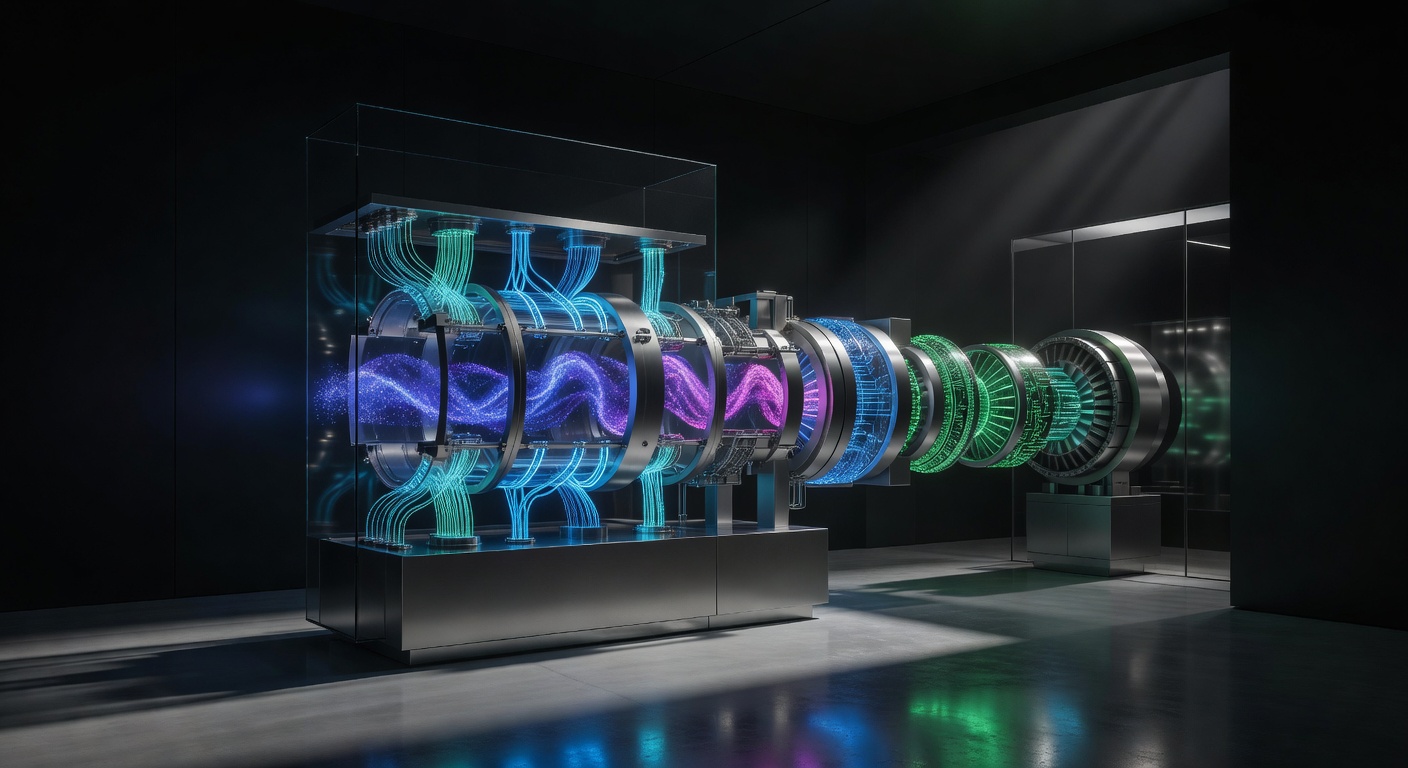
Picture this: You have a superconducting cavity made of niobium (a special metal that can conduct electricity with zero resistance when super-cold). You fire high-energy protons through this cavity at incredible speeds – we're talking millions of volts here.
These supercharged protons then slam into a target material, like liquid mercury. When they hit, neutrons get knocked loose in a process called spallation. These freed neutrons then interact with radioactive waste, essentially transforming dangerous isotopes into much more manageable ones.
The result? Nuclear waste that would normally stay radioactive for 100,000 years gets reduced to just 300 years of storage time. That's a 99.7% reduction in radioactivity!
The Double Win: Less Waste AND More Power
But wait, it gets better. All this nuclear transformation generates massive amounts of heat, which can be converted into electricity. So you're literally turning your biggest problem into a power source. It's like finding out your annoying neighbor can actually help pay your bills.
This is exactly the kind of innovative thinking we need more of. Instead of just trying to bury the problem (literally), these scientists are asking, "How can we make this useful?"
The Technical Challenges Are Real
Now, let's not pretend this is easy. The Jefferson Lab team is working on some seriously complex challenges:
- Temperature management: They're developing tin coatings for their niobium cavities so they don't need to keep everything at near absolute zero (which is expensive as heck)
- Frequency matching: They're building better magnetrons that can sync up with their 805-megahertz particle accelerators
These might sound like minor details, but they're the difference between a cool lab experiment and a technology that can actually scale up to help the world.
Why This Matters More Than Ever
With climate change breathing down our necks, nuclear power is looking more attractive every day. Countries worldwide are dusting off their nuclear programs and building new reactors. But public acceptance has always been hampered by the waste issue.
If technologies like this can solve the waste problem while actually generating additional power, it could be a complete game-changer for clean energy adoption.
The Bigger Picture
What excites me most about this project isn't just the technical achievement – it's the mindset shift. For decades, we've thought of nuclear waste as this permanent burden we have to manage. Now scientists are showing us it might actually be a resource we've been wasting.
This reminds me of how we're starting to think differently about other "waste" streams too – turning CO2 into useful chemicals, converting plastic waste into fuel, using food scraps for energy. Sometimes the best solutions come from completely reframing the problem.
The future of clean energy might just depend on getting really good at turning our biggest problems into our biggest opportunities. And projects like this one in Virginia are showing us exactly how to do it.