
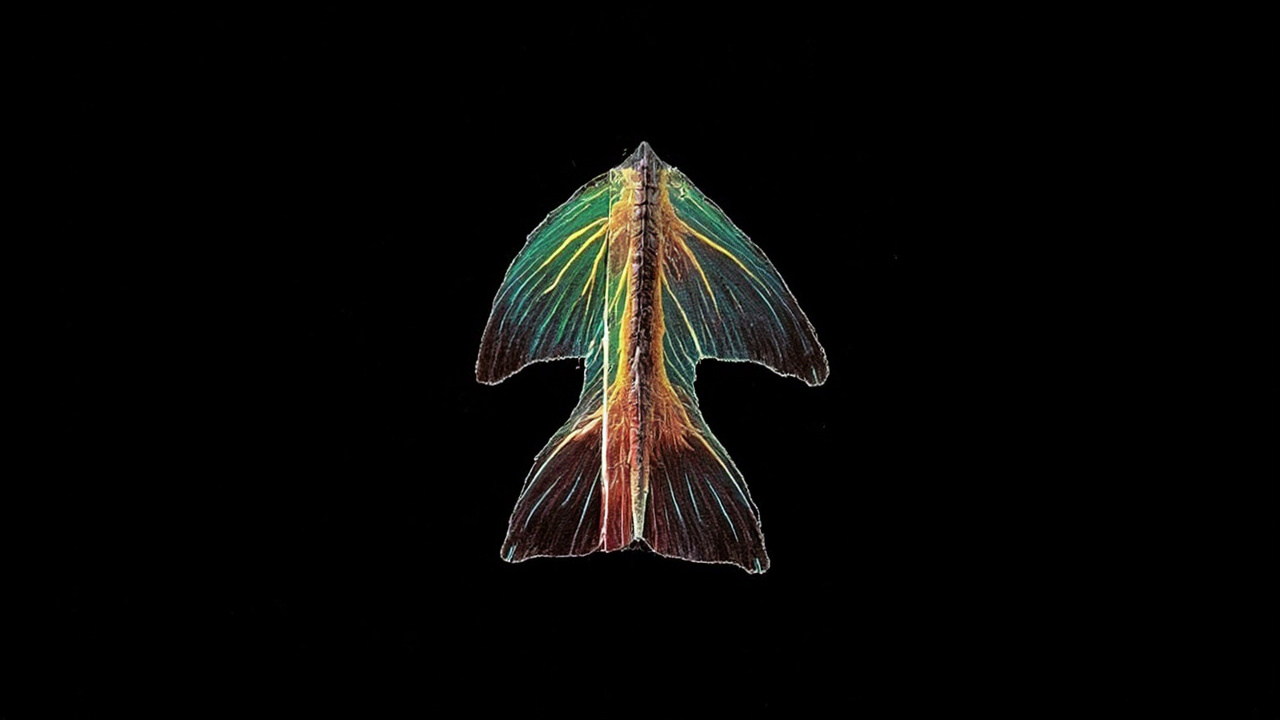
The Fish That Changed Everything
Imagine standing on a beach 380 million years ago. The oceans are absolutely teeming with weird, wonderful creatures—some enormous, some bizarre, many with features that seem designed by someone who really didn't know what they were doing. But somewhere in those ancient waters, hidden among the seaweed and murky depths, swam a fish that would eventually change the entire trajectory of life on Earth.
That fish—or at least one of its close cousins—is the reason you're reading this right now instead of still living in the ocean.
Meet Koharalepis Jarviki: The Fish That Couldn't Quite Decide
Researchers at Flinders University have been studying an incredible fossil called Koharalepis jarviki, a predatory fish about a meter long that lived during something scientists call the "Age of Fishes." The fossil was found in Antarctica's Lashly Mountains (which honestly sounds like a magical place, but I digress).
Here's where it gets cool: this fish belongs to a group that's basically the evolutionary bridge between "Hey, I'm a fish living my best aquatic life" and "Wait, what if I just walked on land instead?" Scientists call these transitional creatures tetrapodomorphs, and they're absolutely crucial to understanding how vertebrates eventually conquered the continents.
The Power of Looking Without Touching
The real breakthrough here isn't just that they found the fossil—it's how they studied it.
Using advanced neutron imaging and synchrotron technology, the research team basically gave this ancient fish skull an MRI without ever cracking it open. Think of it like using X-ray vision, except way more sophisticated. They could see internal structures that have been hidden inside the rock for hundreds of millions of years, without risking any damage to this irreplaceable specimen.
Why does this matter? Well, most fossils only show you the outside shell. Interior details like brain structure? Usually lost to time. But this particular fish preserved its internal skull bones, giving scientists a rare window into what was actually going on inside this creature's head.
A Brain That Was Ready for Change
Here's where the detective work gets really interesting. When the research team examined Koharalepis's brain structure, they found something remarkable: it had features that closely resembled the brains of fish that were actively transitioning toward land-based life.
But that's not all. The fossil revealed some wild adaptations:
- Special openings in the top of its skull that would have allowed it to gulp air from the water's surface (kind of like how modern lungfish do it)
- A light-detecting organ in its brain that helped it understand day and night cycles
- Neurological features that suggest it was preparing—in a biological sense—for a completely different way of life
The researchers think these weren't random mutations. They were functional adaptations. This fish was literally developing the tools it needed to survive in shallow, oxygen-poor waters. And those same features would eventually prove useful for creatures that decided to leave the water entirely.
A Hunter That Broke the Rules
Koharalepis was about a meter long—basically the size of a baseball bat. But here's the twist: it had relatively small eyes. In most aquatic environments, small eyes are a terrible design choice. You need good vision to hunt effectively underwater.
So what did this fish do instead? It compensated by relying heavily on other senses. Lateral line systems (which detect vibrations and movement in water), smell, taste, and possibly electroreception all worked together to help it hunt. This fish was an ambush predator—it would lurk in the murky shallows and strike when prey came close.
This flexibility, this willingness to sense the world in multiple ways, might have also been crucial for surviving the transition to land, where vision became more important but other sensory systems still mattered.
Why This Matters to You
I know what you might be thinking: "Cool story, but why should I care about some ancient fish?"
Because every bone in your body, every part of your anatomy, traces back to creatures like this. The bones in your arms? They're modified versions of fish fins. Your inner ear? Evolved from fish gill structures. Your neck? Fish vertebrae with a major upgrade.
Koharalepis isn't your ancestor—not directly. But it represents a crucial moment in evolutionary history when creatures started experimenting with a completely new way of life. It shows us that the transition from water to land wasn't some miraculous leap. It was gradual, it was incremental, and it involved countless small adaptations that, when stacked together, created something entirely new.
The Power of Modern Science
One more thing I find genuinely thrilling about this research: it only became possible with technology that didn't exist just a few years ago. Neutron imaging and synchrotron scanning have opened up entire new chapters in paleontology. Scientists can now study fossils in ways that were pure science fiction a generation ago.
This particular fossil has been sitting in collections for decades. But only now could researchers truly understand it. Who knows what other ancient specimens are out there, waiting for the next breakthrough technology to reveal their secrets?
The story of how animals first walked on Earth is far from over. We're still finding new pieces of the puzzle, still refining our understanding. And apparently, we're just getting better tools to examine the evidence that's been right in front of us all along.
Pretty wild, right?
Source: https://www.sciencedaily.com/releases/2026/05/260525000459.htm