
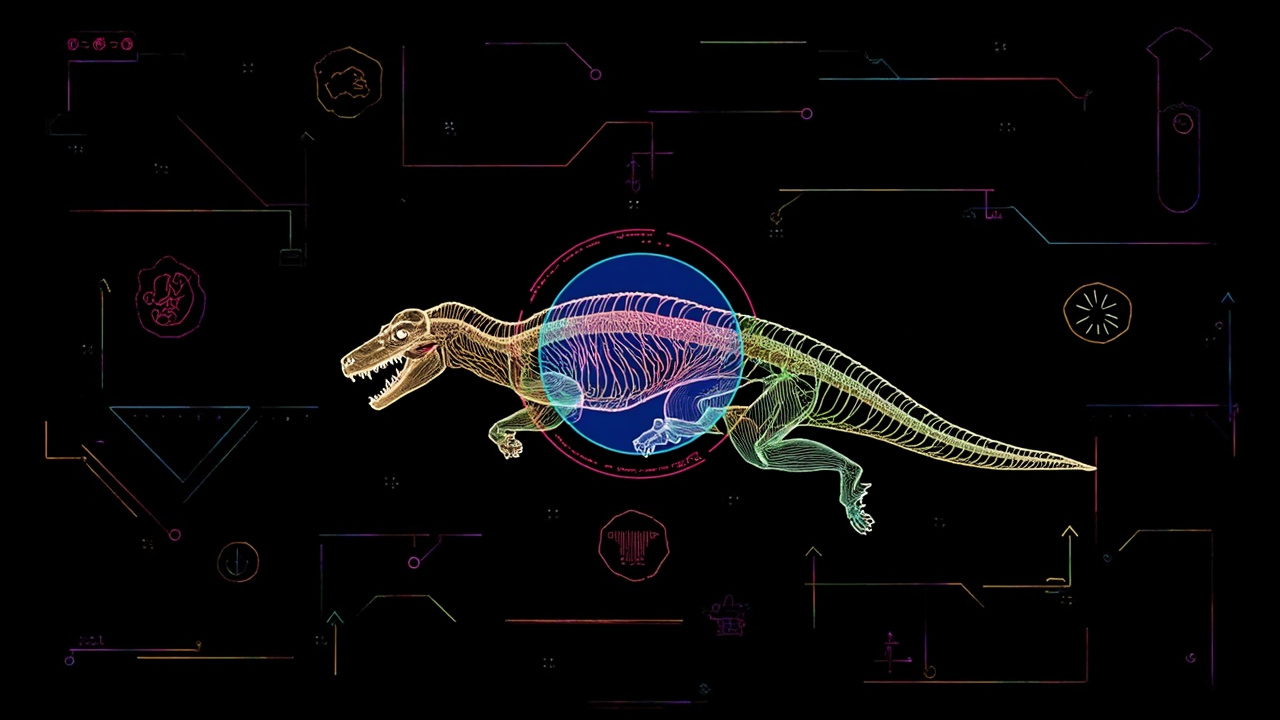
The Most Unexpected Archaeological Discovery Ever
Picture this: It's the 1990s, and a retired chicken farmer in New South Wales decides to spruce up his garden. He sources some rocks from a nearby quarry, stacks them into a nice retaining wall, and calls it a day. Fast forward a few decades, and someone finally takes a closer look at those rocks. Buried in the wall this whole time was an absolute treasure—a nearly complete fossil from 240 million years ago.
If that doesn't sound wild to you, I'm not sure what would. This isn't some artifact that was carefully excavated by a team of paleontologists wearing fancy equipment. It was just... there. In a garden wall. Probably for years while the farmer watered his vegetables and had no idea he was standing next to ancient history.
Meet Arenaerpeton: The Supine Sand Creeper
Scientists have now officially named this creature Arenaerpeton supinatus, which basically means "the creepy thing lying on its back in the sand." (Okay, that's my translation, but it's pretty close to what "supine sand creeper" means!)
Here's where it gets really cool: the fossil is insanely well-preserved. We're not just talking about bones here—researchers can actually see faint outlines of the animal's skin. That's the kind of preservation that makes paleontologists absolutely lose their minds. As Lachlan Hart, the paleontologist who formally identified it, points out, finding complete skeletons with both head and body intact is already rare. But soft tissue preservation? That's lottery-winning levels of rare.
What Was This Thing, Anyway?
Arenaerpeton belonged to a group of extinct amphibians called temnospondyls, which were basically the apex predators of ancient freshwater ecosystems. Imagine a creature that looks vaguely like a modern Chinese giant salamander—same basic head shape, same general vibe—but angrier, heavier, and with some genuinely intimidating teeth. We're talking about actual fangs on the roof of its mouth. This wasn't some gentle bottom-feeder.
The creature lived roughly 240 million years ago in what's now the Sydney Basin, cruising around rivers and streams hunting fish like Cleithrolepis. It was about 1.2 meters (roughly 4 feet) from head to tail, which is actually pretty substantial for creatures of its kind during that era.
Why Size Actually Mattered
One thing scientists found particularly interesting is that Arenaerpeton was noticeably larger than many of its relatives. And here's the hypothesis that gets paleontologists thinking: maybe that size advantage really mattered for survival.
See, temnospondyls managed to stick around Australia for another 120 million years after Arenaerpeton was doing its thing. Some of their descendants actually got bigger than this specimen. Remarkably, they survived through two major mass extinction events. That's an insanely long evolutionary run. The theory is that getting bigger and beefier might have been one of the evolutionary strategies that helped them adapt and endure when smaller creatures couldn't.
Why This Discovery Actually Matters
Dr. Matthew McCurry, a curator at the Australian Museum, called this one of the most important fossil finds in New South Wales in the past 30 years. And honestly? That makes sense. We don't get many windows into what Australia looked like a quarter-billion years ago, especially ones this clear and well-preserved.
This fossil tells us about an ecosystem that existed long before Australia became the island continent we know today. It's a piece of the puzzle that helps us understand how life evolved and adapted through absolutely massive environmental changes.
The Random Nature of Discovery
What I find genuinely delightful about this story is how accidental it was. Some farmer just needed some rocks for a wall project. He had no idea he was literally building with ancient history. His simple act of building a garden feature ended up preserving something that would eventually teach scientists about life from a completely different era.
It's a good reminder that incredible discoveries don't always happen in controlled lab environments or organized expeditions. Sometimes they're just sitting there, waiting for someone to eventually notice what they've got.
Now, if you've got an old retaining wall in your backyard, maybe give those rocks a closer look. You never know what you might find!