
Markdown formatted blog content with headings
Okay, confession time: I've been following hydrogen fuel news for years, and honestly? Most of it left me a little underwhelmed. The promise always felt so big, but the reality kept tripping over itself. Hydrogen might be the universe's most abundant element, but turning it into usable fuel? That's proven to be surprisingly tricky.
But hold on—something just crossed my desk that made me actually sit up and pay attention.
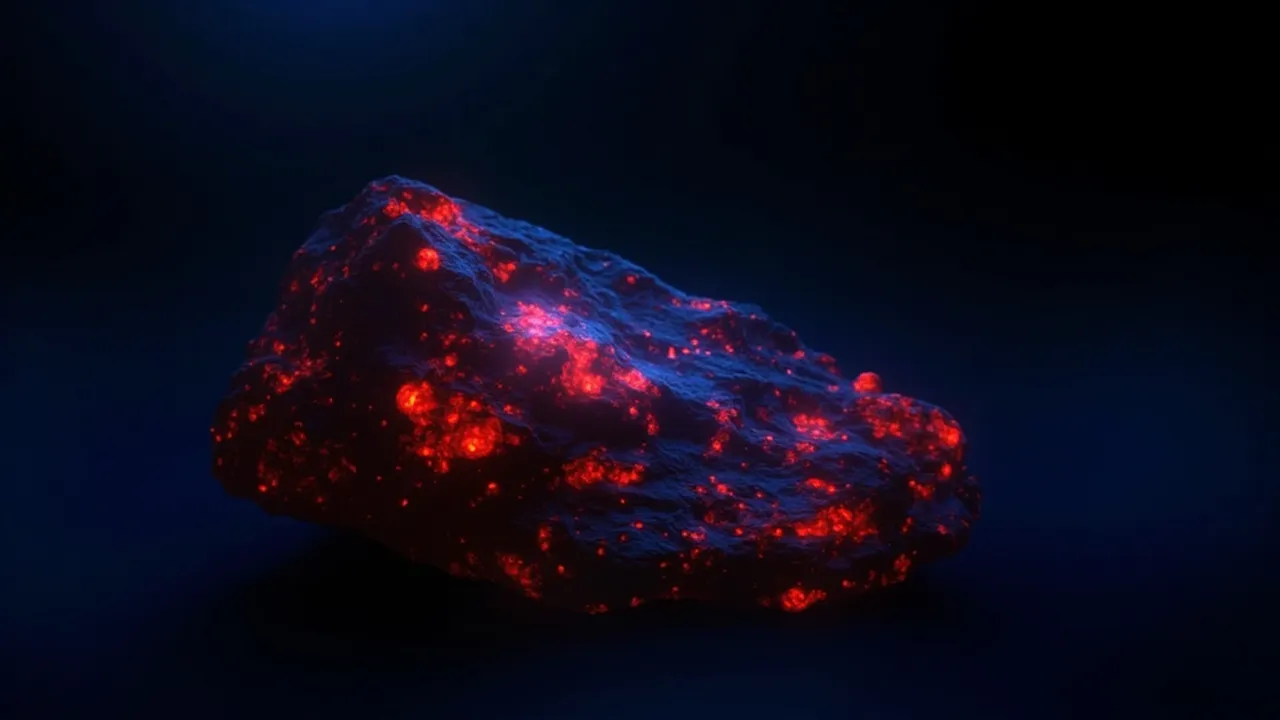
Researchers at Edith Cowan University in Western Australia have been playing around with magnetite, which is basically just fancy iron ore. You know, the black, slightly magnetic stuff you might have encountered in geology class. Well, it turns out this mineral has a secret talent: it can snatch oxygen right out of water molecules, leaving behind good old hydrogen gas.
Now, here's where it gets really interesting. This reaction only happens under serious heat and pressure—the kind you'd find deep underground. But the Pilbara region in Western Australia? It's absolutely stuffed with magnetite. We're talking about some of the world's largest iron ore deposits, just sitting there potentially producing hydrogen all on their own.
The research team didn't just stumble onto this and call it a day. They got clever and recreated these underground conditions in their lab. They grabbed some magnetite, crushed it into powder, exposed it to water at around 200 degrees Celsius, and cranked up the pressure.
The results? The powdered magnetite produced five times more hydrogen than solid chunks of the stuff. Why? Two reasons. First, powder gives you way more surface area for the reaction to happen. Second (and this is the part that really caught my attention), solid slabs of magnetite developed this crusty coating of hematite that basically blocked water from reaching the good stuff underneath. Nature's own defensive layer, if you will.
This matters enormously because it tells us where to look for natural hydrogen reserves. We're not searching blind anymore—we now know porous rocks that allow water to flow through fractures are the sweet spot. Areas that have been deformed or altered over billions of years could be hydrogen-producing machines.
Here's what really got me though. Dr. Alireza Keshavarz, one of the study's senior authors, said something that stuck with me: "Australia could be sitting on a massive, untapped energy reserve—and the potential is enormous. There is enough hydrogen for Australia to benefit for generations, and potentially enough for us to become a major exporter of clean energy to the rest of the world."
That's a pretty bold claim, right? But when you think about it, it makes sense. We've been mining these iron formations for decades without realizing they might be quietly churning out hydrogen beneath our feet.
Let's zoom out for a second, though. This discovery is part of a much bigger picture that's been developing. Earlier this year, the U.S. Geological Survey released the first-ever map of potential geologic hydrogen reserves in America. Scientists found evidence that Canada's ancient bedrock might contain significant hydrogen deposits. We're starting to realize that hydrogen isn't just something we have to manufacture from scratch—it might be hiding underground all over the planet.
This is crucial because here's the thing about hydrogen fuel that's always bugged me: we talk about it like this clean, green miracle solution, but the reality of how we make most of it is... well, not great. Over 95% of hydrogen production today comes from processes powered by coal or natural gas. Yeah, you read that right.
We even color-code hydrogen to reflect this somewhat embarrassing reality. "Gray" hydrogen comes from processes powered by natural gas. "Blue" is the same thing but with carbon capture thrown in. And "green" hydrogen, the stuff we actually want? It's made using renewable energy, and it accounts for less than one percent of global production.
So when I hear about natural processes in the Earth's crust potentially yielding hydrogen without any of that messy fossil fuel dependency, my ears perk up. This isn't about replacing renewables or solar panels or wind farms—those are still essential. But hydrogen has this unique superpower: it can store energy in ways that batteries currently can't match. Need to power a cargo ship crossing an ocean? Battery technology just isn't there yet, but hydrogen could be. Long-haul aviation? Same problem. Industrial processes that need serious heat? Hydrogen's got you covered.
That's why this Australian discovery feels like more than just an interesting footnote in a science journal. It's another piece of the puzzle showing us that the clean energy future we need isn't just about one magic technology—it's about building an interconnected system where solar panels, wind turbines, battery storage, and yes, hydrogen, all work together.
The Australian researchers aren't done, either. They're not packing up and declaring victory. Instead, they're using these findings to guide where to look next, focusing on areas with the right kind of rock formations and permeability. It's methodical, science-backed exploration rather than just crossing fingers and drilling randomly.
Is this the "jackpot" some headlines are claiming? Maybe. Maybe not. But it's definitely another reason to be cautiously optimistic about where clean energy technology is heading. The challenges are real, the timeline is still unclear, and we'll need more breakthroughs before hydrogen becomes a truly mainstream fuel.
But sitting here in 2025, watching these discoveries pile up—geologic hydrogen reserves in America, ancient hydrogen deposits in Canada, and now this magnetite process in Australia—I'm starting to think the universe's most abundant element might finally be within our reach after all.
Now if you'll excuse me, I need to go read more about iron formations. Turns out rocks are more exciting than I gave them credit for.