
The Plot Twist Nobody Saw Coming
Imagine if humans decided at age 30 to just stop using our arms for walking and switched to hopping everywhere on our legs. Sounds ridiculous, right? Well, that's basically what this ancient reptile called Sonselasuchus cedrus apparently decided to do—except it happened over millions of years of evolution.
A team of researchers from the University of Washington just published their findings, and honestly, it's one of those discoveries that makes you realize nature was way weirder back then than we ever gave it credit for.
A Tiny Dinosaur Wannabe from the Triassic
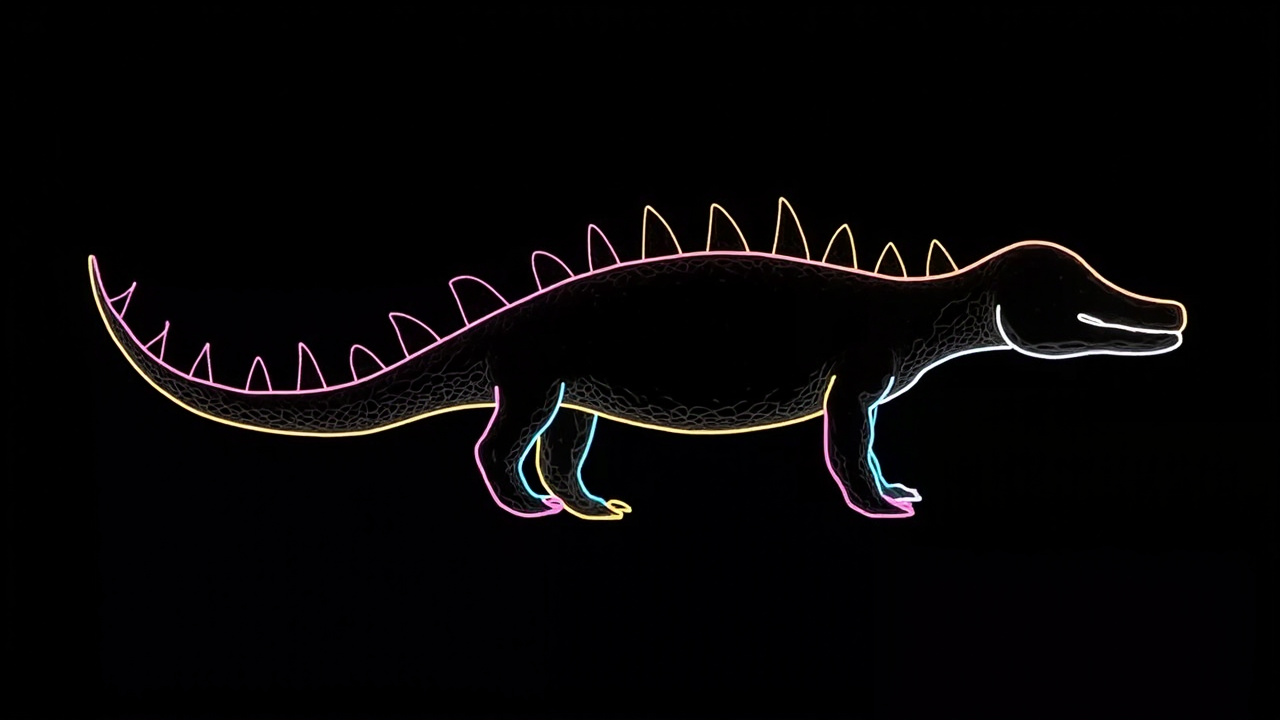
Here's the thing: this creature wasn't actually a dinosaur, even though it looked kind of like one. Sonselasuchus belonged to a group called shuvosaurids, which were distant cousins of crocodiles. But these guys? They evolved to look remarkably similar to ornithomimid dinosaurs—those nimble, two-legged creatures you might picture as the sprinters of the dinosaur world.
The twist is that Sonselasuchus didn't start out that way. Based on bone analysis from hundreds of fossils, scientists figured out that this poodle-sized reptile had a growth strategy that was absolutely bonkers: balanced limb proportions as a juvenile, then its hind legs kept growing longer and more muscular as it matured. Eventually, it was tall enough that bipedal walking (that's two-legged walking, for those keeping score) made more sense.
How They Figured This Out
Lead researcher Elliott Armour Smith, a graduate student, studied the proportions of limb bones from different specimens at various life stages. By comparing these measurements, the team noticed a clear pattern: younger specimens had more balanced front and back legs, while adults showed increasingly oversized hind limbs.
"By analyzing the proportions of the limb skeletons of different animals, they determined its bipedal stance (standing on two feet) may have been the result of a differential growth pattern," explains the research team.
It's like watching someone gradually transition from crawling to walking—except this took thousands of generations to happen.
A Fossil Bonanza in Arizona
The real hero of this story is a dig site in Arizona's Petrified Forest National Park. Back in 2014, Professor Christian Sidor and his team uncovered nearly 1,000 Sonselasuchus fossils in a single layer. Over a decade of careful excavation, that haul has ballooned to more than 3,000 individual bones—making it one of the richest fossil deposits ever found.
This wasn't just luck. All those bones gave researchers an unprecedented window into how these creatures developed over their lifespans. It's the kind of complete fossil record that usually only exists in paleontologists' dreams.
What Did This Creature Actually Look Like?
Sonselasuchus wasn't particularly intimidating. Standing about 25 inches tall (roughly the size of a small dog), it had a toothless beak kind of like a bird, unusually large eye sockets, and surprisingly delicate hollow bones. These features would have made it a nimble, lightweight hunter—perfect for navigating the dense forests of the Late Triassic era.
The species name, cedrus, actually references the cedar trees that dominated those ancient landscapes. Scientists literally named it "The Cedar Crocodile Relative."
The Convergent Evolution Plot Twist
Here's what's really mind-bending: Sonselasuchus and dinosaurs evolved these similar features completely independently. They're not related at all—just two different branches of the reptile family tree that happened to solve the same ecological problem in the same way.
Think of it like this: the croc-line archosaurs (which included Sonselasuchus) and the bird-line archosaurs (which included dinosaurs) were both competing for the same ecological niches in the same forests. So they both evolved to be bipedal, beaked, lightweight creatures. It's called convergent evolution, and it's one of nature's coolest tricks.
The Dig Never Stops
What's really exciting is that the Arizona site still isn't played out. Over 30 University of Washington students and volunteers have worked on the excavation, and Sidor says the fossil bed "doesn't seem to show any signs of petering out." In addition to Sonselasuchus, the site has yielded fish, amphibians, dinosaurs, and other reptiles.
It's the gift that keeps on giving.
Why This Actually Matters
This discovery challenges what we thought we knew about ancient reptile development. We've always assumed that once a species settled into a body plan—four legs or two legs—they stuck with it. But Sonselasuchus shows us that evolution could be way more flexible than we realized.
It's a reminder that paleontology is constantly surprising us. Every time we dig up new fossils, we're essentially rewriting the textbooks. And honestly? That's what makes this field so incredible.