
Okay, folks, I need you to picture something with me.
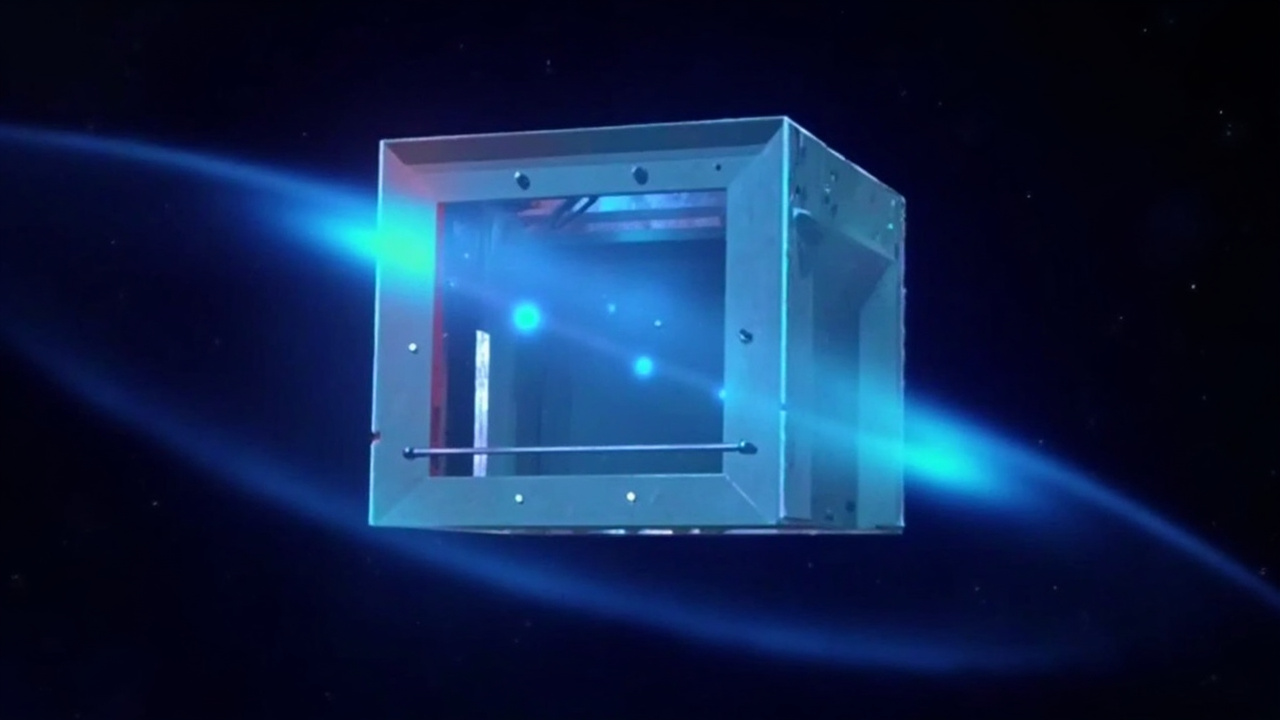
Imagine a box about the size of a dorm-room mini fridge, floating silently around Earth 250 miles up. Inside this unassuming metal container, scientists are cooking up what might be the strangest stuff in the universe. And by "cooking," I mean cooling matter down to temperatures that would make Antarctica feel like a cozy summer day.
The Cold Atom Lab—just got upgraded, and it's kind of a big deal.
So What Exactly Is This Thing Making?
Here's where it gets wild. At temperatures just above absolute zero (that's minus 459 degrees Fahrenheit, or minus 273 Celsius for our metric friends), atoms start doing stuff that would make your high school physics teacher faint.
You probably picture atoms as tiny balls, right? Little spheres bouncing around like microscopic dodgeballs? Yeah, that's what I thought too. But at these extreme temperatures, atoms stop acting like particles and start acting like waves. Waves! They can be in multiple places at once. They can pass right through each other. They start behaving in ways that our everyday intuition just can't handle.
The result is something called a Bose-Einstein condensate, or BEC. Scientists call it the "fifth state of matter" (after solids, liquids, gases, and plasma). But honestly, calling it a "state of matter" feels underselling it—this stuff is more like a quantum playground where the normal rules we've all come to know and love just... stop applying.
Why Does Space Make This Better?
Here's the thing: scientists can create this stuff on Earth. But here's the problem—when you make a BEC on Earth, gravity keeps pulling on it, and you only get to observe it for a few seconds before it falls apart or disperses.
In space? Microgravity is your best friend. Those quantum waves we're trying to study can grow much larger in microgravity, and we can observe them for way longer. It's like the difference between trying to study ocean waves in a tiny bathtub versus actually going to the beach.
As one scientist put it, at these temperatures, "the wavelike nature of matter dominates, and ultracold matter can behave in ways that are not only unexpected, but that also enable extremely precise measurements of time, gravity, and motion."
Let that sink in for a second. We're literally using the coldest stuff in the universe to measure time and gravity more precisely. That's like using the world's most delicate feather to weigh an elephant—it shouldn't work, but somehow it does.
The Tech Behind the Chill
So how do you actually cool stuff down to these insane temperatures? The process is genuinely fascinating.
First, scientists heat up tiny strips of rubidium or potassium metal to about 750 degrees Fahrenheit—super hot, like a pizza oven. This creates a gas inside a vacuum chamber.
Then comes the cool part (pun absolutely intended). They use carefully tuned lasers to basically slam the energy out of the atoms. Think of it like cooling down a hyperactive toddler by making them sit still—not by removing their energy, but by zapping it away with light.
After laser cooling, magnetic fields trap the atoms in place while additional cooling techniques slow them down even more. Eventually, you're left with a cloud of atoms moving so slowly that if they were a car, they'd take a million years to cross a city block.
Why Should You Care?
Now, I know what some of you are thinking: "That's cool and all, but why should I care about some fancy space refrigerator?"
Fair question! Here's why this matters: we're in the early stages of what's being called the "quantum 2.0" revolution. The first quantum revolution gave us lasers, smartphones, and MRI machines—the tech that defines modern life.
The next quantum revolution? That's about directly manipulating large quantum states to create technologies we can barely imagine yet. Better atomic clocks for GPS. Sensors that could detect gravitational waves. Computers that solve problems current computers would take a billion years to crack.
The Cold Atom Lab is essentially proving that we can make quantum technology work reliably in space. It's a testbed for instruments that might one day support everything from Earth science to deep space exploration.
The Latest Upgrade
The recent upgrade that arrived at the ISS in April brought some genuinely exciting improvements. There's a redesigned magnetic trap that can actually change the shape of quantum gas clouds—giving researchers new ways to poke and prod at this bizarre matter. They've also improved the metal atom sources that generate the gas clouds.
One scientist called it "the closest thing we have to controlling the boundary of the quantum world." I don't know about you, but I find that both thrilling and slightly terrifying.
The Bottom Line
Here's what really gets me about this story: we're a species that hasn't even visited Mars yet, but we're up there right now, 250 miles above our planet, playing with matter at temperatures approaching absolute zero. We're manipulating the fundamental building blocks of reality itself, using the microgravity environment to probe questions about the nature of the universe that philosophers have been asking for millennia.
The Cold Atom Lab might not make headlines the way a Mars landing does, but honestly? This is the kind of science that makes my inner nerd do a little happy dance. We're not just exploring space—we're using space to explore the deepest mysteries of matter itself.
And personally, I think that's pretty awesome.