
markdown formatted blog content markdown formatted blog content Okay, I need you to picture this with me.
You're walking through what is now New Mexico about 220 million years ago. The Triassic world looks alien — no flowers, no grass, just strange vegetation and weird reptiles everywhere you look. And then you see something that makes you do a double-take: a two-legged creature with a toothless beak, small arms, and a body type that looks suspiciously like... an ostrich dinosaur.
But here's the twist: it's not a dinosaur at all.
A Crocodile in Disguise
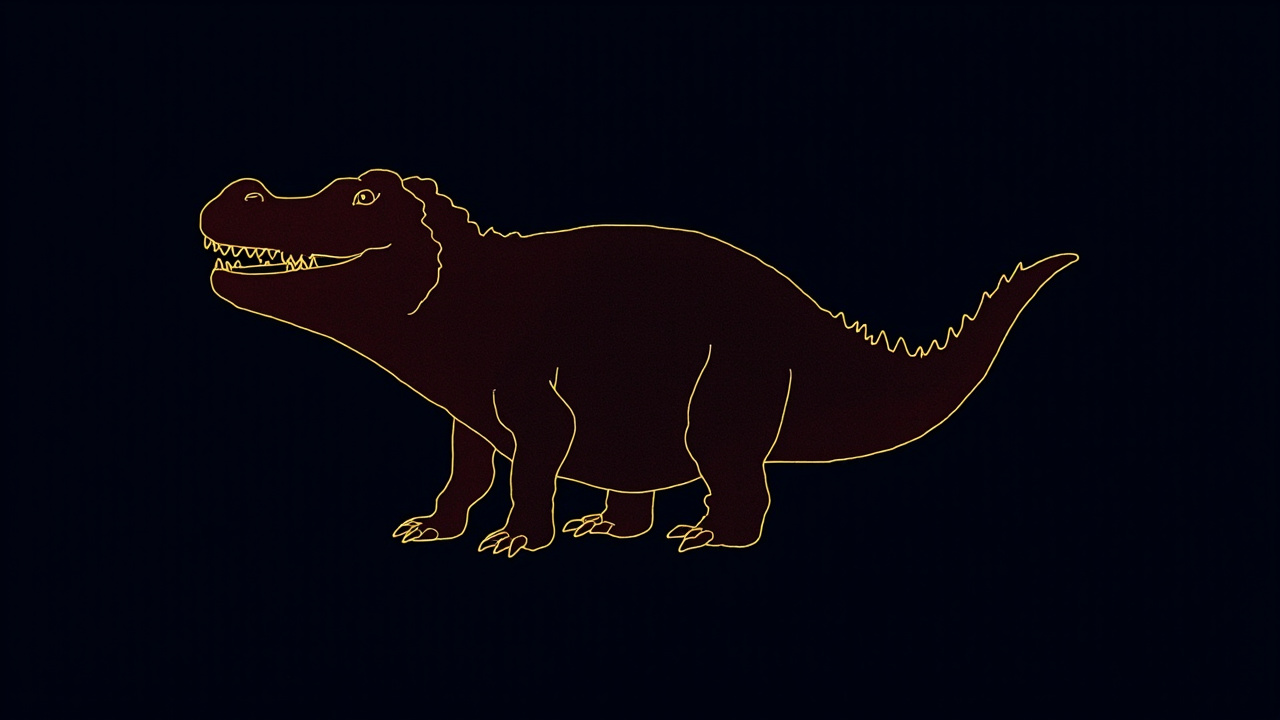
Meet Labrujasuchus expectatus — a newly described species that belongs to a group called Shuvosauridae, which were ancient relatives of modern crocodiles. This is absolutely wild when you think about it, because everything we associate with crocodiles — the four-legged sprawling bodies, the heavy tails, the toothy grins — this thing completely threw out the playbook.
It walked on two legs. It had tiny little arms. It had a beak.
Sound familiar? It should. This body plan would later dominate the dinosaur world, showing up in everything from small theropods to giant sauropods. But Labrujasuchus got there first, and from the completely wrong branch of the evolutionary tree. This is what's called convergent evolution — when completely unrelated creatures stumble onto the same winning formula independently.
"We've see a lot of the successful strategies for modern animals and non-avian dinosaurs first arise in the Triassic, and shuvosaurs are a great example of that convergent evolution," said Dr. Alan Turner, lead author of the study. "Bipedalism is certainly a unique path for crocodile relatives to take, but it's a path well-trod by dinosaurs and later birds. It obviously worked for these animals."
The Missing Puzzle Piece
Here's what makes this discovery even cooler. Paleontologists had actually predicted that an intermediate shuvosaur species like Labrujasuchus would exist. They'd found older shuvosaurs in some rock layers and younger ones in others, leaving a gap that screamed "there's something missing here."
And then they found this little guy — and the name tells you everything. "Expectatus" means expected in Latin. Scientists literally anticipated this discovery for years.
The genus name is a nod to Ghost Ranch in New Mexico, one of the most incredible fossil sites on the planet. "Ranchos de los Brujos" translates to "Ranch of the Witches" — an old name for the area that's about as fitting as you can get for a place that keeps yielding bizarre creatures from deep time.
A World Full of Evolutionary Experiments
The Triassic was basically nature's laboratory, throwing everything at the wall to see what stuck.
You had lagerpetids — small, bipedal relatives of dinosaurs that would eventually evolve into pterosaurs. You had Drepanosaurus, a tree-dwelling reptile with a sloth-like claw and a prehensile tail. You had Vancleavea, an armored aquatic creature that looked like a miniature swimming tank. And now you have Labrujasuchus, the shuvosaur that decided bipedalism and beaks were the way to go.
What I find absolutely fascinating is that many of the features we associate with later animals — birds, dinosaurs, mammals — first showed up in these early Triassic experiments. It's like nature was brainstorming, testing out different body plans and lifestyles before committing to the ones that would eventually dominate the Jurassic and Cretaceous.
Why This Matters
Here's the thing about paleontology that I think people don't always appreciate: it's not just about finding cool monsters (though yes, that's definitely part of it). It's about understanding how life works — how it adapts, how different lineages can arrive at similar solutions through completely different routes, and how the world we live in today was shaped by millions of years of this kind of evolutionary trial and error.
Labrujasuchus isn't just a quirky fossil that'll make you say "whoa, that's weird." It's evidence that the path from ancient reptiles to modern animals was far more tangled and surprising than we previously understood. It shows that bipedalism wasn't a dinosaur innovation — it was an idea that occurred to multiple groups independently, because sometimes the best solution to "how do I move around efficiently" is "just stand up and walk on two feet."
Twenty years of excavations at Ghost Ranch have already revealed an incredible cast of Triassic characters. But clearly, the site still has plenty of secrets to share — and this toothless, two-legged crocodile cousin is just the latest reminder that nature has always been far more creative than we give it credit for.
Source: https://www.sciencedaily.com/releases/2026/05/260529043641.htm