
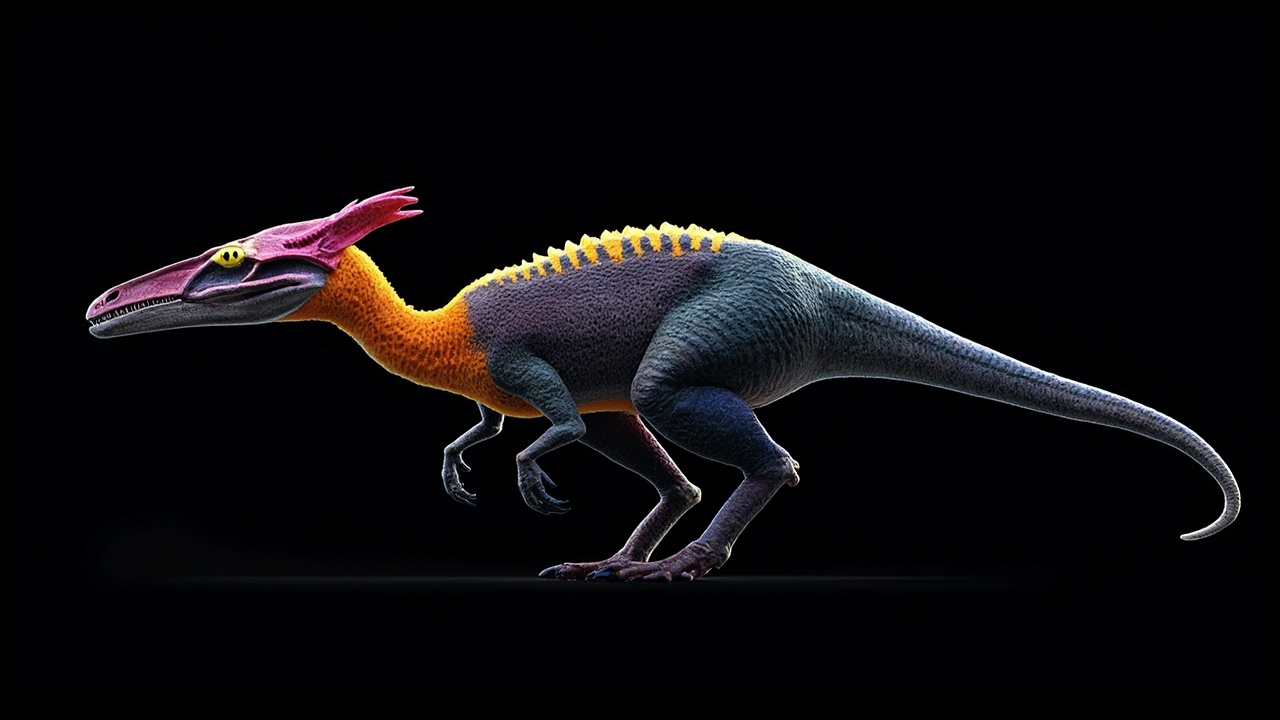
Okay, I've got to be honest with you — when I first heard about this discovery, I had to read the headline twice. A raptor that hunted like a heron? That sounds like something out of a paleontologist's fever dream, but here we are. Scientists have officially described a new dinosaur species called Kank australis, and it might just be the coolest thing to come out of Patagonia in a while.
So, What Exactly Is Kank?
Let's start with the basics. Kank australis was a theropod dinosaur — you know, the two-legged, mostly meat-eating kind — that wandered through southern Patagonia about 70 million years ago during the Late Cretaceous period. It belonged to a family called unenlagiids, which were basically the weird cousins of the famous raptors like Velociraptor you've seen in every dinosaur movie.
But here's where things get interesting. While Velociraptor and its cousins were out there chasing down small mammals on land, Kank appears to have been doing something completely different. Based on its anatomy, researchers think this dino was a dedicated fish hunter — and not in a "oh, it might have eaten fish occasionally" kind of way, but more like "this thing was basically a dinosaurian heron."
The Heron Connection
Now, I know what you're thinking. How do scientists even figure this out from a bunch of old bones? Fair question, and here's where it gets really fascinating.
The research team, led by Dr. Matís Motta from the Bernardino Rivadavia Natural Sciences Museum in Buenos Aires, looked closely at Kank's neck vertebrae. And they found something remarkable: special adaptations for muscle attachment and blood vessel protection — features that are almost identical to what we see in modern herons.
Think about it. Herons have incredibly precise, flexible neck movements. They stand motionless in shallow water, then strike with lightning speed when a fish swims by. That kind of hunting requires serious neck control, and apparently, Kank had the hardware for it.
"The cervical vertebrae of Kank show special structures for muscle attachment and the protection of neck blood vessels, features particularly important in modern birds with complex neck movements, such as herons," Dr. Motta explained.
This is the kind of connection that makes paleontology so exciting. We're talking about animals separated by 70 million years, but their bodies found similar solutions to similar problems. That's evolution doing its thing, folks.
A Different Kind of Predator
What really gets me about this discovery is how it challenges our image of raptors. We've been conditioned by movies and documentaries to think of these animals as sleek, land-based hunters — pack predators going after dinosaurs their own size. And yeah, some of them definitely were.
But Kank suggests a much more diverse picture. Its skull and teeth were apparently well-suited for snatching slippery fish from the water. The environment where it lived — reconstructed from ancient soils and plant fossils — was a network of rivers, streams, and seasonal ponds, complete with water lilies and plenty of aquatic life. Sounds like the perfect spot for a dinosaurian fishing trip, honestly.
And this wasn't just any fishing spot. Dr. Motta describes the landscape as having a temperate, humid climate with seasonal rainfall — very different from the cold, dry conditions we see in Patagonia today. 70 million years ago, this place would have looked like something out of a completely different world.
More Than Just a Curiosity
Beyond the cool factor, Kank actually helps scientists fill in some important gaps. Seven unenlagiid species had been identified from northern Patagonia, but southern regions had only produced scattered, fragmentary fossils. Kank bridges that distributional gap, showing that these dinosaurs were more widespread across South America than we realized.
The timing of the discovery is also worth noting. The first Kank remains were found back in 2018, but they were too incomplete to identify as a new species. It took until 2024 — when researchers found a particularly important neck vertebra — to finally piece together what they had. This is a good reminder that paleontology moves slowly, and sometimes the crucial evidence comes from a single bone.
What This Tells Us
Here's the thing I keep coming back to: we're still discovering how varied dinosaur life truly was. Kank wasn't just another predatory dinosaur — it represented an entirely different lifestyle, one that adapted to exploit aquatic resources in ways we hadn't fully appreciated before.
The unenlagiids keep getting more interesting the more we learn about them. They weren't just "southern hemisphere raptors." They were a diverse group experimenting with different ecological niches, and Kank shows us just how specialized some of them became.
And honestly? I love that we're finding dinosaurs that don't fit neatly into the categories we've built for them. It reminds me that nature is always more creative than we expect.
So next time you see a heron standing perfectly still at the edge of a pond, waiting for the perfect moment to strike — just take a moment to appreciate that some version of that scene played out in ancient Patagonia, with a small, feathered predator doing the exact same thing.