
The Discovery That Started With a Hobby
Imagine going out for a casual weekend with your metal detector and coming home with a piece of ancient history. That's exactly what happened to one lucky detectorist in southeastern Poland. While scanning the soil near the town of Zamość, their metal detector pinged—and what they pulled out would eventually end up in a museum and have archaeologists debating for years to come.
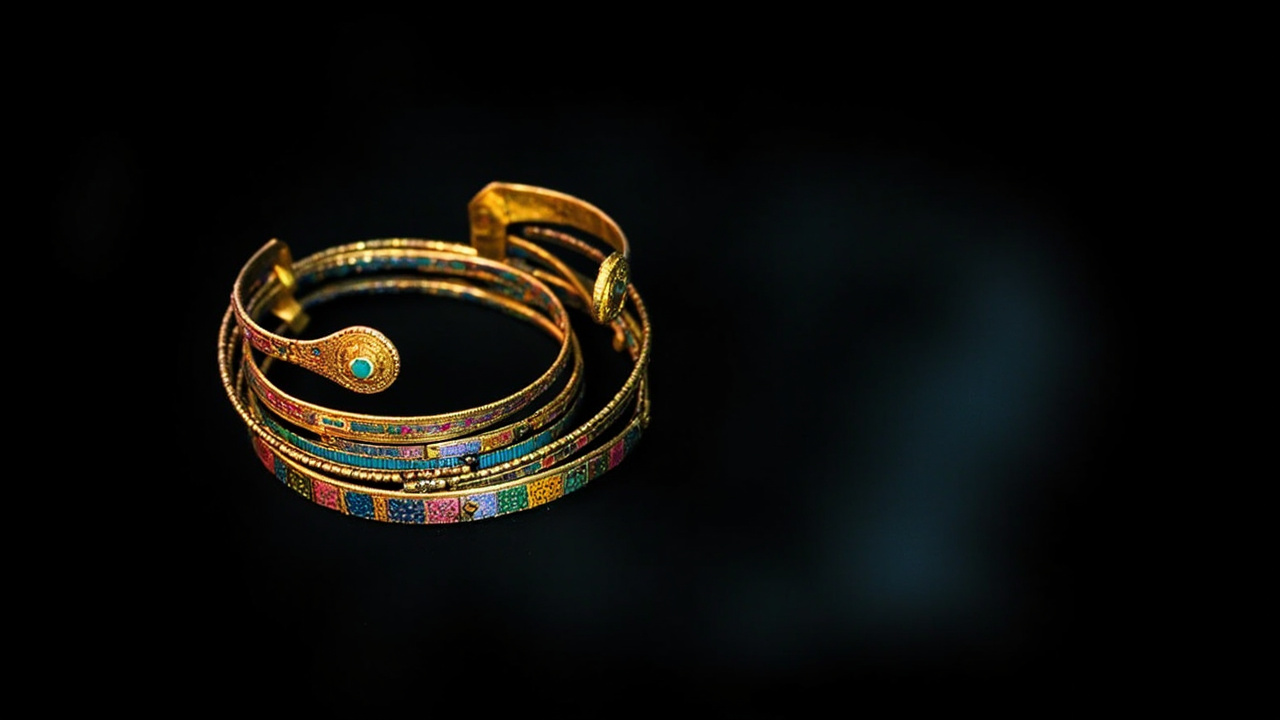
One foot below the surface lay 18 bronze bracelets and anklets, all neatly grouped together like someone had carefully arranged them for safekeeping. But here's the kicker: whoever buried them 2,500 years ago apparently never returned to claim their prize.
A Collection That's Pretty Seriously Fancy
These weren't just any old bronze accessories. We're talking about pieces so well-made and ornate that they could only have belonged to someone important—probably nobility or someone with serious wealth and status in their community.
The entire hoard weighed nearly eight pounds, and what's really cool is that many of the pieces came as matching pairs. Think of it like designer jewelry sets—a bracelet for one wrist matched with an identical one for the other, plus coordinating ankle bracelets. The craftsmanship is where things get really impressive. Each piece was made from twisted bronze rods that were then carved and engraved with meticulous detail.
The Artistry Is Actually Mind-Blowing
When I say "engraved," I don't mean a simple line here and there. These ancient craftspeople were covering the bracelets with geometric patterns—chevrons, grooves, intricate lines—sometimes so completely that you'd think they were using modern tools. One piece even features little bumps on the outside created by pushing the bronze through from the inside, kind of like ancient 3D printing.
The inside of most pieces stayed smooth and comfortable to wear, while the outside became a canvas for these stunning designs. A professor from Krakow who examined them called the work "highly skilled craftsmanship," and honestly, seeing photos of these pieces, you can't help but agree.
The Mystery Everyone Wants Solved
Here's where it gets interesting. These bracelets and anklets came from the Lusatian culture, a Bronze Age civilization that thrived across what's now Poland, Czech Republic, Slovakia, Germany, and Ukraine from around 1300 to 500 B.C.E. They were known as farmers and herders, but they were also serious artisans who had a major advantage: they lived along important trade routes.
Finding Lusatian bronze work in this region? That's actually pretty rare. And finding such a large, pristine collection all in one place? That's basically hitting the archaeological jackpot.
So... Why Leave It Behind?
The big question nobody can quite answer is: what happened? Why would someone bury such valuable items and never come back?
One theory is that it was a personal treasure—someone's prized collection that they buried to hide it or protect it from danger. Maybe they planned to retrieve it later but never could. Another possibility, and this is where things get a bit mysterious, is that it was intentionally buried as part of a ritual. Some ancient cultures practiced ritual burials of valuable objects for religious or ceremonial reasons.
What archaeologists do know is that whoever owned this hoard had serious wealth and status. You don't casually collect and beautifully craft nearly eight pounds of bronze jewelry unless you're someone important.
What Happens Now?
The collection is now sitting safely in the Zamość Museum, where conservators are doing the kind of detailed analysis that makes archaeology exciting. They're examining the bronze composition, studying the techniques used, and trying to figure out exactly where these pieces came from and who might have worn them.
Every artifact tells a story if you look closely enough. And this one's a real page-turner.
The fact that we're still discovering treasures like this from 2,500 years ago just shows how much of human history is literally buried beneath our feet. Sometimes all you need is the right person with the right equipment—and maybe a little bit of luck—to uncover something that changes what we know about ancient civilizations.
Makes you wonder what else is down there, doesn't it?