
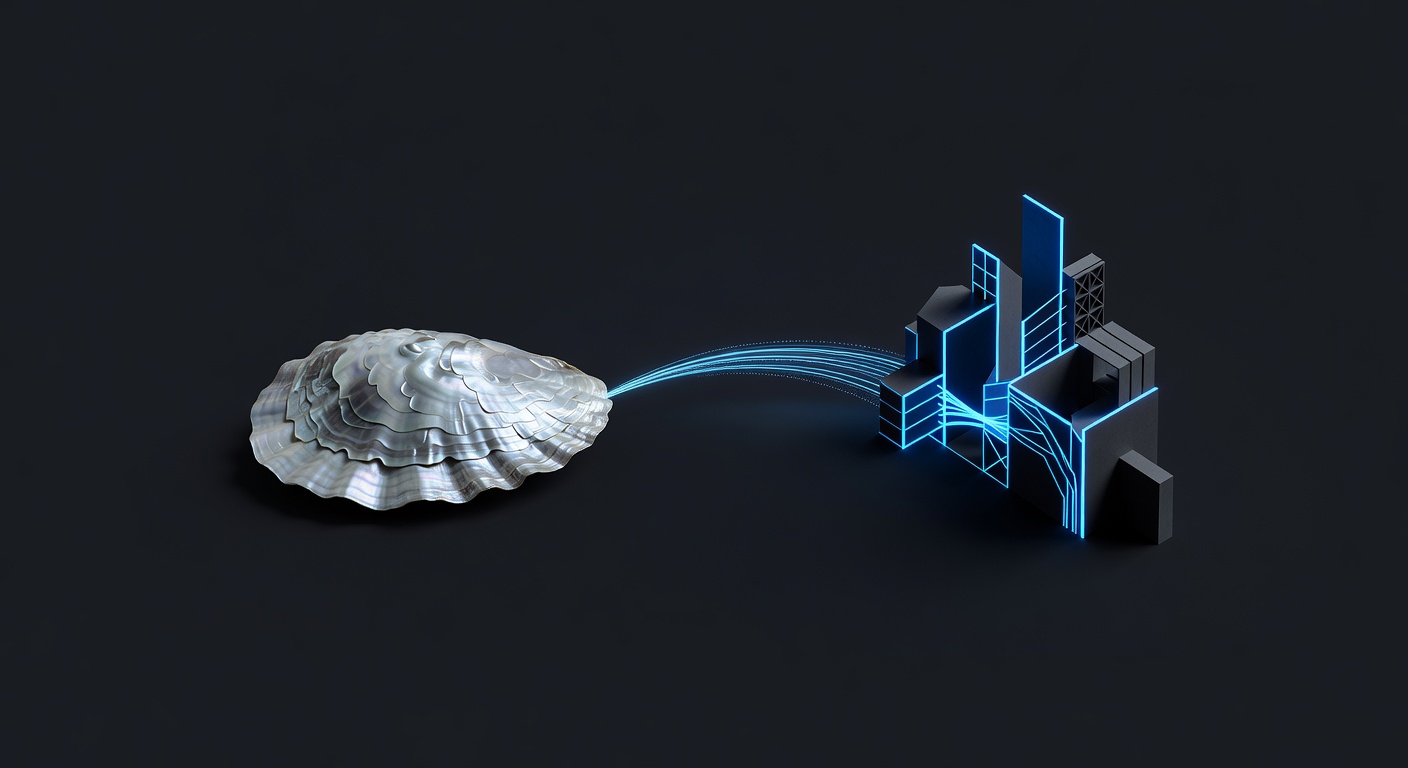
When Mother Nature Schools Human Engineers
You know what I love about science? Sometimes the most brilliant breakthroughs come from the most unexpected places. Case in point: Princeton University researchers just figured out how to make cement 17 times stronger by studying... oyster shells. Yes, really.
As someone who's spent years writing about materials science, this story absolutely fascinates me. We humans are pretty clever, but we've got nothing on billions of years of evolution when it comes to engineering solutions.
The Problem We Desperately Need to Solve
Here's the thing about cement that most people don't realize: it's an environmental nightmare. Cement production accounts for roughly 8% of global greenhouse gas emissions. That's huge! Every time we pour concrete for a building, bridge, or sidewalk, we're basically cooking limestone at insanely high temperatures and pumping CO2 into the atmosphere.
So when engineers can make cement last 17 times longer, that's not just impressive — it's potentially world-changing. Less replacement means less production, which means fewer emissions.
Nature's 500-Million-Year Research Project
The Princeton team looked at nacre — that beautiful, iridescent "mother of pearl" lining inside oyster shells. I've always admired nacre in jewelry, but I had no idea it was such an engineering marvel.
Here's what makes nacre so special: it's built like microscopic LEGO blocks. Tiny hexagonal plates made of aragonite (basically calcium carbonate) are held together by flexible organic "glue." The hard plates provide strength while the soft polymer layers provide flexibility. It's like having the best of both worlds.
The Brilliant Biomimicry Breakthrough
The researchers didn't just copy nacre — they understood its principles and applied them to cement. They created layered beams alternating between cement sheets and thin polymer layers, with some featuring those crucial hexagonal patterns.
What I find most interesting is their approach. As co-author Reza Moini explained, they're "intentionally engineering defects in brittle materials as a way to make them stronger by design." That's counterintuitive but brilliant — sometimes imperfection makes things perfect.
The Results Are Mind-Blowing
The nacre-inspired cement achieved:
- 17x greater toughness
- 19x more flexibility
- Same strength as regular cement
Think about what this means for construction. Buildings that can better withstand earthquakes. Infrastructure that lasts decades longer. Fewer catastrophic failures that put people at risk.
Why This Matters (Beyond Just Cool Science)
As much as I geek out over the technical details, the real excitement here is the potential impact. If we can make concrete structures last significantly longer, we're talking about:
- Massive reductions in greenhouse gas emissions
- Safer buildings and infrastructure
- Huge cost savings over time
- Less frequent construction disruption in our cities
The Reality Check
Before you start imagining oyster-inspired skyscrapers, the researchers admit this technique needs more refinement before construction companies can use it. But that's totally normal in materials science — breakthrough discoveries often take years to reach commercial applications.
What matters is that we now have a proven concept. Nature has been perfecting these designs for 500 million years, and we're finally smart enough to pay attention.
The Bigger Picture
This research represents something I find deeply hopeful about human ingenuity. Instead of just trying to brute-force our way to better materials, we're learning to observe, understand, and respectfully adapt nature's time-tested solutions.
The oyster didn't evolve its incredible shell to help us build better cities, but here we are, benefiting from its evolutionary wisdom. There's something beautifully poetic about that.
Who knows what other natural solutions are waiting for us to notice them? Maybe the next breakthrough in sustainable technology is sitting in your backyard, just waiting for the right curious engineer to come along.
Source: https://www.popularmechanics.com/science/animals/a70463889/engineers-find-durable-cement-secret-stronger