
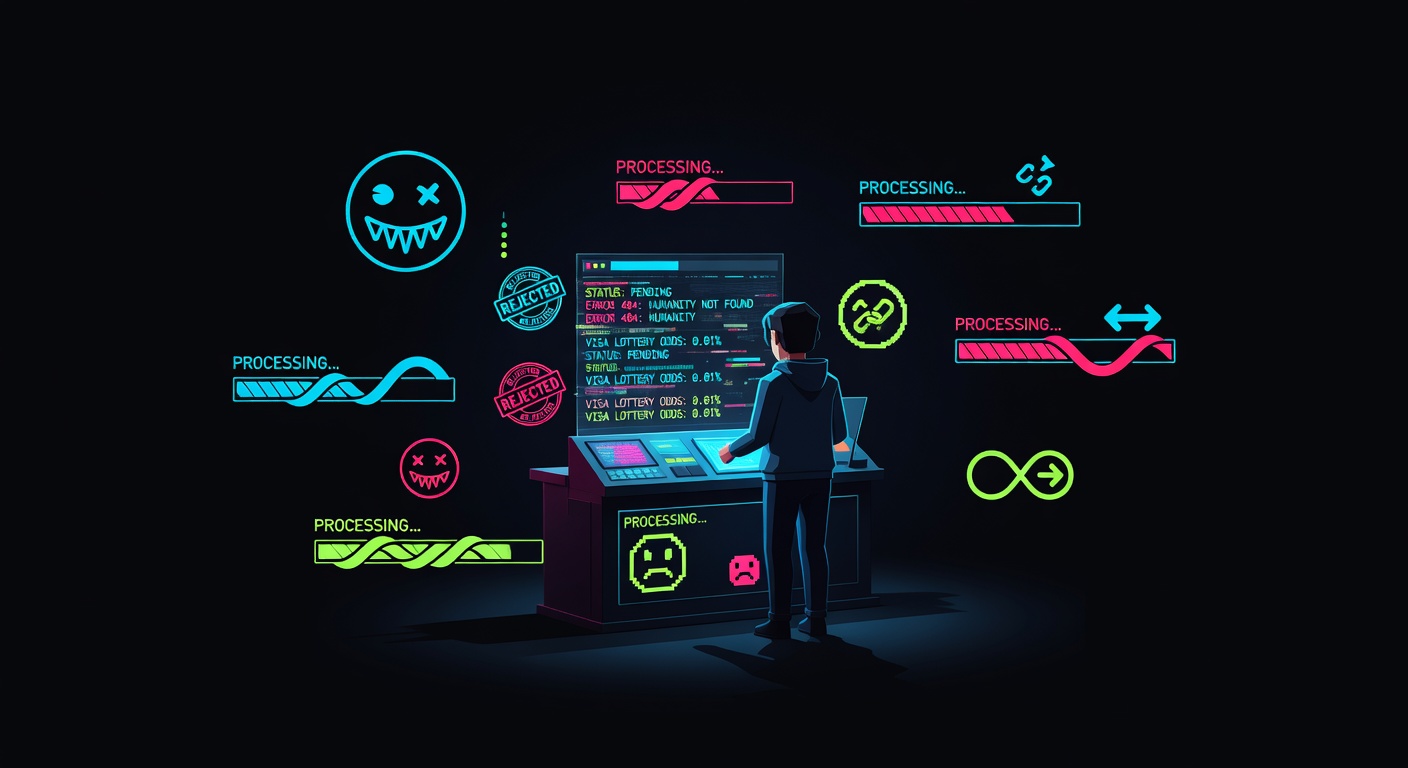
When Reality Gets So Absurd, It Becomes a Game
You know something's seriously broken when someone can turn it into a video game and it feels completely natural. That's exactly what's happening with a new indie game that transforms the H-1B visa system into an interactive simulation – and honestly, I'm not sure whether to laugh or cry.
For those who haven't been through this particular bureaucratic maze, the H-1B visa is supposed to help skilled foreign workers contribute to the American economy. In practice? It's more like playing the lottery while navigating a haunted house designed by someone who really, really doesn't want you to succeed.
The Game That Mirrors Madness
What fascinates me about this concept is how perfectly suited the immigration system is for gamification. Think about it – you've got:
- Random chance mechanics (the literal lottery system)
- Resource management (legal fees, time, sanity)
- Multiple failure states with devastating consequences
- NPCs (government officials) who seem programmed to say "no"
- Side quests that lead nowhere
It's almost like the system was designed by game developers who forgot they were working on real life, not entertainment.
Why This Matters More Than You Think
Games have this incredible power to build empathy by putting you in someone else's shoes. When you're clicking through endless forms, watching your savings drain away on legal fees, and feeling that gut-punch rejection after months of waiting – suddenly you understand what millions of people actually go through.
I've watched brilliant engineers, doctors, and researchers get caught in this system's web. People who could be curing diseases or building the next breakthrough technology instead spend years in limbo, wondering if they'll get to stay in the country they're trying to serve.
The Beautiful Irony
Here's what really gets me: some of the most innovative games, apps, and tech solutions we use every day were probably created by people navigating this exact system. The visa process is supposed to attract the "best and brightest," but then it treats them like they're asking for charity rather than offering their talents.
It's like inviting someone to dinner and then making them solve a Rubik's cube while blindfolded just to get through your front door.
What Games Can Teach Us
This simulation approach isn't just clever – it's necessary. Sometimes the only way to highlight absurdity is to embrace it fully. By turning immigration into gameplay, the developers are doing something politicians and policy wonks have failed to do: making the human cost visible and relatable.
When you watch your virtual character's dreams get crushed by a random number generator, you're experiencing a scaled-down version of very real trauma. That's powerful stuff.
The Bigger Picture
What I love about indie game developers is their willingness to tackle subjects that big studios won't touch. They're not worried about offending anyone or dealing with complex political messaging – they just see a broken system and think, "How can we make people understand this?"
This game joins a growing movement of "serious games" that use interactive media to explore real-world issues. And frankly, we need more of this. If traditional media can't make people care about immigration reform, maybe putting them in the driver's seat will.
The fact that we've reached a point where our bureaucratic systems are surreal enough to become entertainment says everything about where we are as a society. But hey, at least someone's finding a way to turn that frustration into art.