
Wait, a Gecko With Cancer Could Help Humans?
Okay, I know what you're thinking. A cute little gecko that gets cancer sounds more like a sad story than a scientific breakthrough. But stick with me here, because this is genuinely one of the coolest things I've read this week.
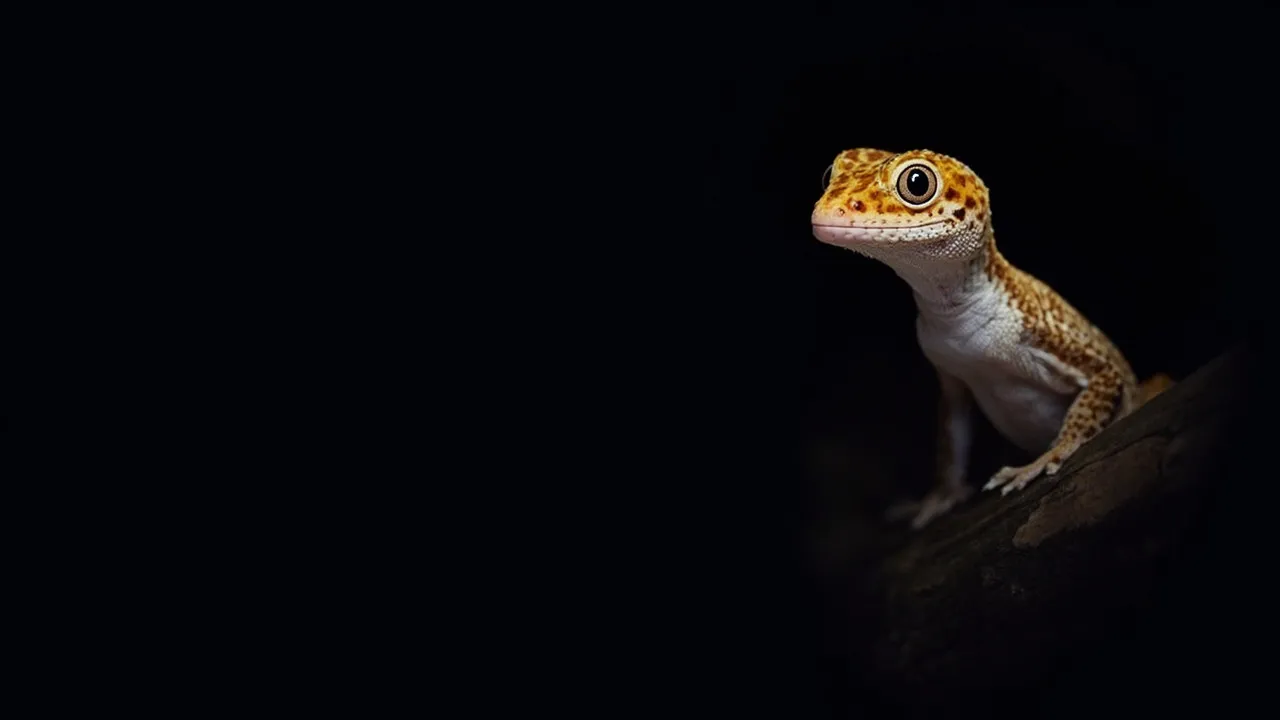
Researchers from the University of Nottingham have been studying a specific type of leopard gecko called the "lemon frost" morph — you know, those gorgeous white and yellow ones you might have seen in pet stores. These little guys are absolutely stunning. But here's the thing: about 80% of them will develop aggressive cancer during their lifetime.
Eighty percent. That's a crazy high number.
The Problem With Modern Cancer Research
Now, here's why this matters so much. Most cancer research happens with lab mice, which is great, but there's a catch. Scientists usually have to give those mice cancer by manipulating their genes or exposing them to chemicals. The tumors don't occur naturally.
But lemon frost geckos? They develop cancer all on their own. No lab tricks required. They get tumors, those tumors spread to other parts of their bodies (something called metastasis), and they do it at a relatively young age.
This gives researchers something incredibly valuable: a natural model for watching cancer develop from start to finish, just like it would in a human patient.
What Did They Find?
The team — led by Dr. Ylenia Chiari — sequenced the DNA from tumor tissue and compared it to healthy tissue from the same geckos. And here's where it gets really interesting.
Many of the genetic changes they discovered in these gecko tumors are the exact same genes that go haywire in human cancers. The same biological pathways. The same mechanisms.
This suggests that by studying these little reptiles, we might learn things that directly apply to human medicine. How cool is that?
Dr. Chiari put it this way: by understanding why some animals are so susceptible to cancer while others barely ever get it, we can learn about the different ways species have evolved to deal with this disease.
Nature's Extreme Survivors
Speaking of which — get this. While lemon frost geckos are dropping like flies from cancer, turtles and tortoises almost never get it. Talk about opposite ends of the spectrum!
This is exactly why biodiversity matters so much. Every species on this planet has evolved its own unique strategies for dealing with diseases. By studying the vulnerable ones AND the resistant ones, scientists have way more power to understand what's actually happening.
Dr. Scott Glaberman from the University of Birmingham said something that really stuck with me: "We often look inward to solve human problems, but every species has something to teach us."
What Makes This Study So Special
Here's another reason I love this research: it shows that the tools developed for studying human cancers can actually be adapted for all sorts of other animals. The researchers used genomic software originally designed for human medicine to analyze gecko tumors — and it worked beautifully.
Brandon Hastings, one of the study authors, pointed out that this kind of work shows how important it is to "look across the tree of life" when searching for answers to human diseases.
Why Should You Care?
Honestly? This gives me hope. Cancer research often feels slow and frustrating, with tiny incremental advances. But stories like this remind me that nature has been running its own experiments for millions of years. Different species have developed different defenses, different vulnerabilities, and different ways of dealing with cellular chaos.
The lemon frost gecko might seem like an unlikely hero. But sometimes the most unexpected sources end up teaching us the most important lessons.
And isn't it kind of beautiful that the answer to a devastating human disease might be hiding in the genes of a little colorful gecko that millions of people keep as pets?
I'll never look at these little creatures the same way again.
Source: ScienceDaily