
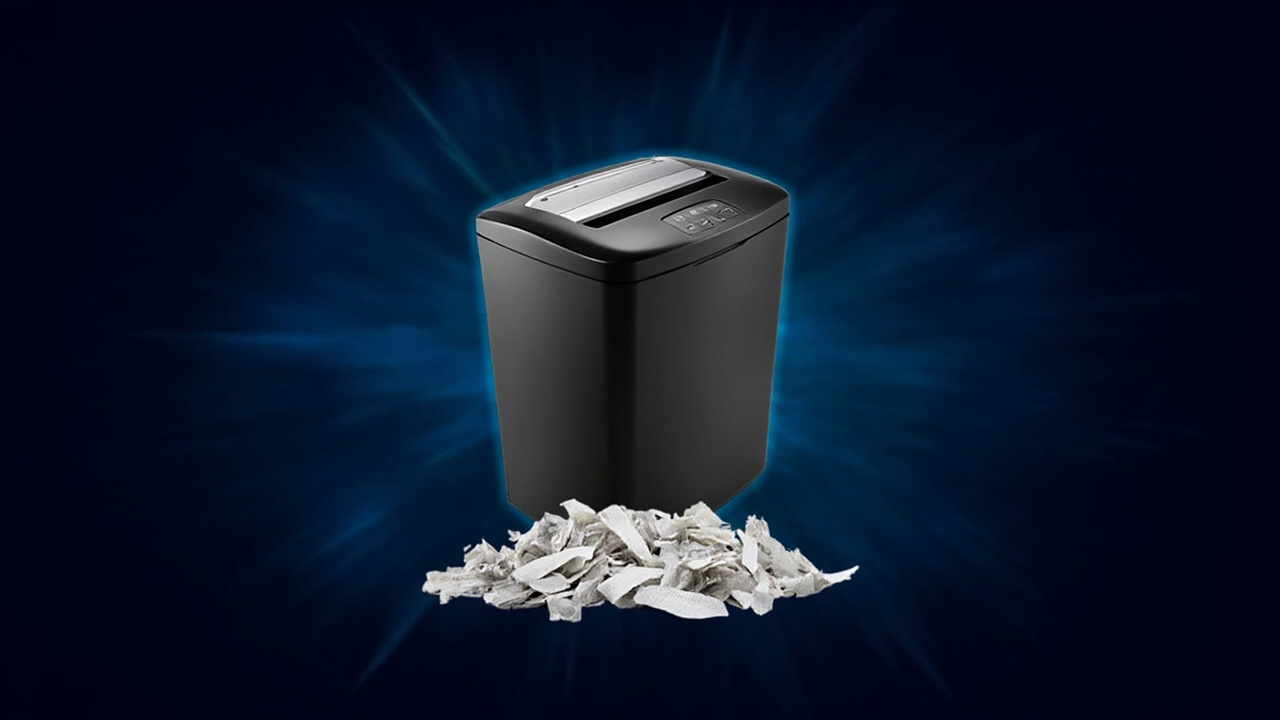
Let's be honest — when's the last time you thought about shredding?
I mean really thought about it. Not just tossing bank statements in the recycling bin (please don't do that) or stuffing old credit card offers into a drawer where they'll fossilize alongside the takeout menus from 2019.
For most of us, the whole "identity theft" thing feels like a digital problem. We obsess over strong passwords, two-factor authentication, and not clicking suspicious links. But here's the uncomfortable truth nobody talks about enough: your paper trail is still very, very real.
The Junk Drawer Problem (It's Worse Than You Think)
Financial statements. Insurance documents. Shipping labels with your address plastered all over them. Tax forms. Receipts from every online order you've ever placed.
This stuff piles up, doesn't it? And most of us either:
- Throw it away (risky)
- Recycle it (also risky, honestly)
- Shove it in a drawer and pretend it doesn't exist (not a solution)
The problem is that identity thieves aren't just lurking in dark corners of the internet. Some of them are dumpster divers. Literal, physical humans who dig through your trash looking for enough information to wreak havoc on your finances.
So yeah. You probably need a shredder. And after spending way too much time researching the Fellowes Powershred LX220, I think I found one that won't make you want to hurl it out a window.
But Why a "Good" Shredder?
You might be thinking: "Can't I just grab the cheapest option at the big box store?"
You could. But you'd probably regret it about three uses in.
See, cheap shredders have a few charming quirks:
- They jam constantly (looking at you, that one that came free with a business supply order)
- They overheat after like 10 sheets
- They turn one piece of paper into long strips that could theoretically be reassembled
- They sound like a dying garbage disposal
The LX220 is different. And I don't say that lightly.
The Hero Features
Here's what makes this little machine worth your attention:
First, the jam-prevention. This thing genuinely works. During testing, reviewers fed it everything but the kitchen sink — mixed stacks of junk mail, stapled documents, those annoying credit card offers with fake cards glued to them, glossy catalogs, the works. Most shredders would choke on that variety within minutes.
The LX220 just... kept going. No jams. No stuck paper. No angry profanity muttered while trying to unjam the roller with a credit card (we've all been there).
Second, the capacity. Fellowes advertises 20 sheets, but realistic testing shows it's closer to 16-18. Here's the thing though — that's still a ton of sheets at once. You can burn through a ream of paper without the tedious one-sheet-at-a-time rhythm that makes most shredding sessions feel like medieval torture.
Third, the runtime. This is where things get wild. The LX220 can shred continuously for nearly 45 minutes before needing a cooldown. The brand estimates 30 minutes, but independent testing pushed it to almost 40. That's marathon territory for a shredder.
And when it does overheat? Fifteen minutes later, it's back at full strength. That's roughly the same time it takes to empty the bin and clean up the inevitable paper confetti explosion.
But What About Security?
If you're shredding sensitive documents, you want that paper gone. Not just cut into long strips that some patient criminal could tape back together.
The LX220 uses cross-cut shredding that turns a standard sheet of paper into roughly 1,200 tiny pieces — think the size of little pasta bits. It's security level P-4, which is one step below what the government uses for top-secret stuff. For your average identity thief with a garbage bag and too much time? That's overkill. In the best way.
The Not-So-Great Parts
Look, nothing's perfect. A few things to know:
- Those tiny pieces? They scatter. If you push the machine too hard with thick stacks, you'll find confetti in places confetti has no business being. The fix? Line your bin with a simple plastic bag. Problem solved.
- The bin drawer needs to click shut properly. If it doesn't, those particles will escape into the machine instead of staying where they belong.
- Narrow or oddly shaped scraps sometimes need a gentle引导 (that's "nudge" for those of you who don't speak shredder) to get the rollers started.
These are minor inconveniences, not dealbreakers. Honestly, I'd deal with a little paper mess for a shredder that actually works.
Is It Worth It?
Here's my take: if you work from home and have any documents with personal information passing through your space, this is a worthwhile investment. The LX220 isn't cheap, but it's built by Fellowes — a company that's been making shredders forever and actually stands behind their products.
Think about it this way: how much time and money would you spend dealing with identity theft? A good night's sleep knowing your sensitive info is properly destroyed? Priceless, probably.
The LX220 won't make shredding exciting. But it will make it painless. And in a world where we're all trying to simplify our lives and protect what matters, that's actually something worth celebrating.
Go destroy some paper. You (and your future self) will feel better about it.