
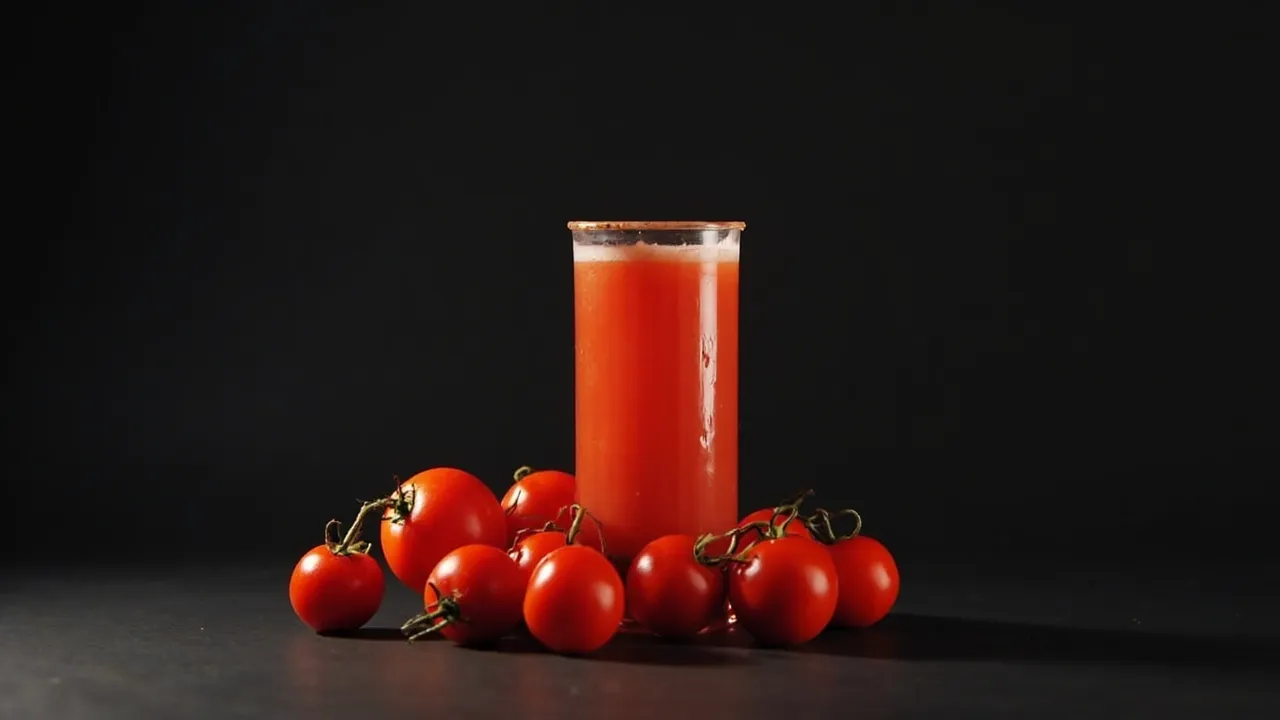
Okay, I have to share something that genuinely excited me this week. Scientists have found that drinking a specially formulated tomato-soy juice for just four weeks can significantly reduce inflammation in the body. And not in some complicated way — we're talking about a simple beverage here. This isn't about popping pills or drastic dietary overhauls. It's about a juice.
The study, published in Molecular Nutrition & Food Research, involved adults with obesity who drank two cans of this tomato-soy juice every day for four weeks. The results? Significant drops in three key inflammatory markers in their blood. Three. That's a big deal when you're talking about measurable biological changes from something as accessible as food.
What's Actually in This Juice?
Let me break down what makes this drink special. The researchers at Ohio State University developed a tomato juice that's been bred to have particularly high levels of lycopene — that's the carotenoid that gives tomatoes their gorgeous red color. They then fortified it with soy isoflavones, which are plant compounds found in soybeans.
Here's the interesting part: the team didn't compare the tomato-soy juice to nothing. They compared it to a regular tomato juice that was much lower in those key compounds. So it wasn't just "juice versus no juice" — it was specifically about whether these high amounts of lycopene and isoflavones were making the difference. And the data suggests they are.
Why Inflammation Matters So Much
Now, you might be wondering why we should care so much about inflammation. Here's the thing: chronic inflammation isn't just about swelling when you twist your ankle. We're talking about a slow-burning, systemic level of inflammation that contributes to all sorts of serious health conditions — heart disease, diabetes, certain cancers, and more.
The lead researcher, Jessica Cooperstone, put it perfectly: "Can we use food-based interventions to modulate inflammation? And can we test this in a rigorous way?" That's exactly what they did.
How the Study Worked
Twelve adults with obesity participated in the trial. Everyone drank the tomato-soy juice for four weeks, then took a break, and then drank the control tomato juice (the low-carotenoid version) for another four weeks. This cross-over design is actually pretty clever — it means each person served as their own comparison, which makes the results more reliable.
The results showed meaningful reductions in three cytokines: IL-5, IL-12p70, and GM-CSF. These are inflammatory proteins that, when elevated long-term, can contribute to all kinds of health problems. There was also a decrease in TNF-a, which didn't quite reach statistical significance but is worth noting.
But here's what really caught my attention: the researchers also examined participants' urine samples. They found changes in metabolites — the molecules produced when your body processes nutrients — that indicated the juice was actually influencing biology in measurable ways. Particularly with the soy isoflavones, the evidence was clear that something real was happening.
The Bigger Picture
This study is actually part of a larger research program. Based on these findings and supporting evidence, Cooperstone's team has received funding from the National Institute of Diabetes and Digestive and Kidney Diseases for a pilot clinical trial. Their next target? People with pancreatitis, a condition involving severe inflammation of the pancreas.
The fact that they're now testing this approach specifically for pancreatitis patients tells me the researchers have real confidence in what they've discovered. They're not just stopping at publishing interesting results — they're pushing forward toward practical medical applications.
What Does This Mean for You?
Here's my take: this doesn't mean you should go out and buy the first tomato-soy juice you see at the store. This was a specially formulated beverage with specific, elevated levels of these compounds. Regular tomato juice won't have the same impact.
But what this research does suggest is incredibly important for the future of nutrition science: we can use foods not just for nutrition, but as functional interventions for health conditions. We're not talking about magic bullets or cure-alls, but about using what we eat strategically to support our bodies.
The researchers themselves acknowledge that there's more going on than just lycopene and isoflavones — there's complexity in whole foods that we probably don't fully understand yet. And that's part of what makes nutrition science so fascinating.
I'm genuinely hopeful about where this research is heading. If a simple juice can move the needle on inflammation in just four weeks, imagine what else might be possible when we really understand how food components interact with our biology.
Keep an eye on this space — I think we're just getting started.
Source: https://www.sciencedaily.com/releases/2026/05/260529043644.htm