
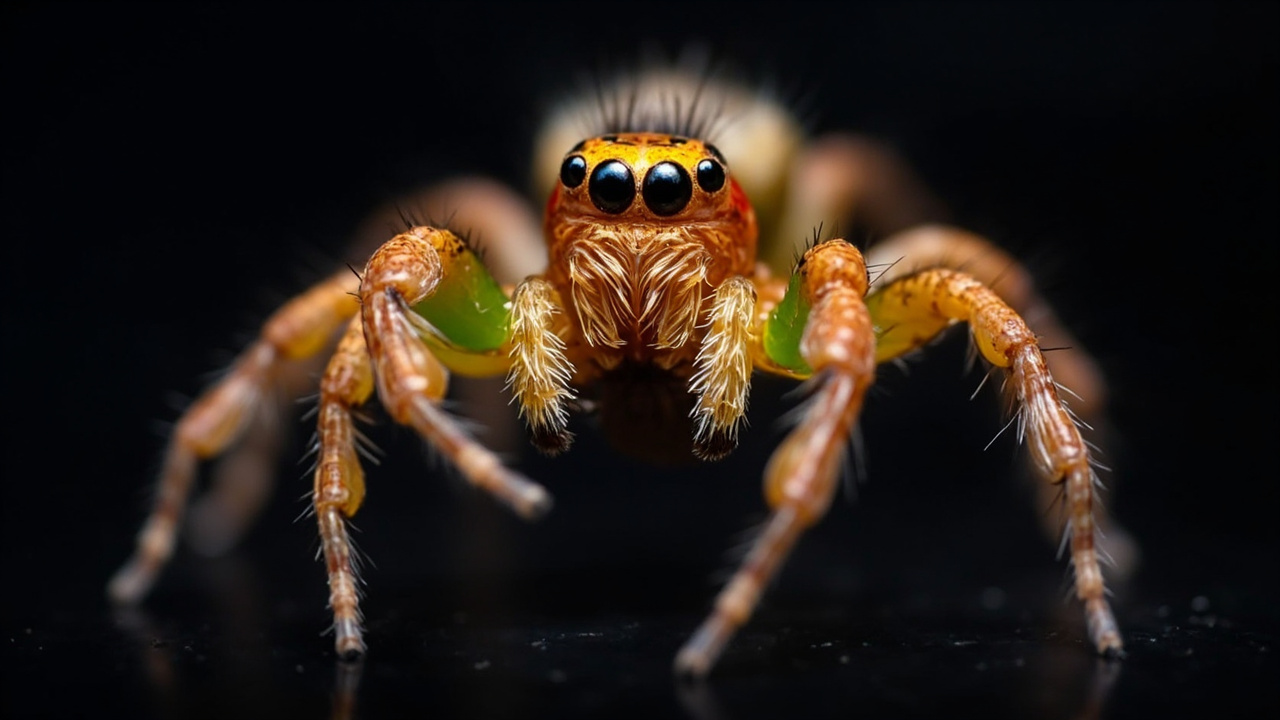
Okay, I need you to sit down for this one.
There's a spider in the Ecuadorian Amazon that has figured out how to disguise itself as a fungus. Not just any fungus, mind you — but a parasitic fungus that specifically infects and kills spiders. So basically, this little guy is walking around dressed up as its own doom. Nature, you absolute wild card.
Researchers recently identified this remarkable creature and named it Taczanowskia waska. The discovery happened during a nighttime field survey in Ecuador's Llanganates-Sangay Corridor, which is basically nature's version of a treasure chest for biodiversity. When scientists first spotted this spider, they genuinely thought it was a mushroom. I don't know about you, but I find it both hilarious and slightly terrifying that a spider can fool trained researchers with its disguise.
So what's the deal with this disguise? Well, the spider has these creepy elongated structures extending from its abdomen, plus a pale, ghostly coloration that makes it look exactly like the fruiting body of fungi in the Gibellula genus. And here's where it gets really messed up: Gibellula fungi are parasites that specifically infect spiders. They're basically spider assassins in fungal form.
But wait — it gets better. The spider doesn't just look like the fungus. It also acts the part. The spider stays completely motionless on the undersides of leaves, which just so happens to be the exact spot where these parasitic fungi are typically found. So predators looking for a tasty spider might pass right by what they think is a perfectly dead, fungus-covered leaf. Meanwhile, the spider is just sitting there, waiting for its moment to strike at unsuspecting prey.
Talk about a double win!
What's fascinating is that this appears to be the very first documented case of a spider mimicking a fungus that targets its own kind. Scientists are calling it a "highly specialized adaptation," which is scientist-speak for "this thing figured out evolution's sneakiest cheat code."
Now, here's what really gets me about this story: the discovery almost didn't happen. It started with regular folks posting observations on the citizen science platform iNaturalist. Someone spotted what they thought was a mushroom growing on a leaf, but other users looked closer and realized — nope, that's definitely a spider. That observation sparked the scientific investigation that led to this incredible discovery.
Doesn't that just make you feel all warm and fuzzy about people getting involved in science? The researchers themselves said it best: these kinds of finds show how valuable scientific collections are, and how combining them with international collaboration and citizen science opens up amazing new possibilities for understanding biodiversity.
The researchers also point out that this discovery highlights how much we still don't know about tropical ecosystems. We could spend our entire lives studying the Amazon rainforest and still only scratch the surface of what's really out there. Every now and then, a spider dressed up as a zombie fungus reminds us that nature has been brainstorming far longer than we have — and its ideas are way weirder than anything we could dream up.
So the next time you think you know what's lurking in the undergrowth, remember: there's probably something weirder waiting that we haven't discovered yet. And honestly? I'm both terrified and thrilled to learn what it is.
Source: ScienceDaily