
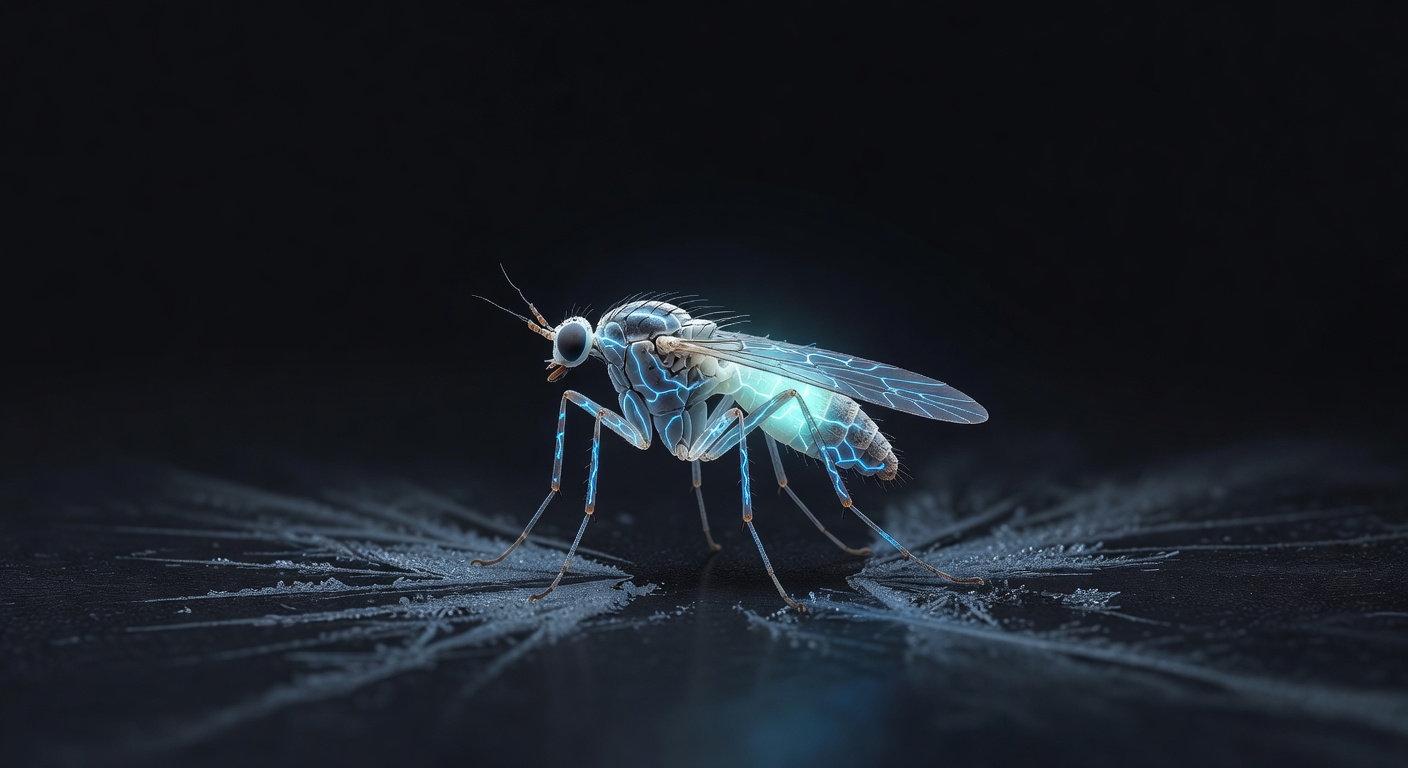
When Evolution Gets Weird (In the Best Way)
Have you ever wondered how anything survives on snow? I mean, I complain when it's below 50°F and I have to wear a jacket. But some insects? They're literally thriving when it's 21 degrees Fahrenheit. That's not just survival—that's a flex.
Northwestern University researchers recently published a study that honestly blew my mind. They found that snow flies—these tiny, wingless insects that live on snowy surfaces—have basically evolved into biological superheroes. Not the cape-wearing kind, but the kind that would make any climate scientist jealous.
The Genetic Plot Twist
Here's where it gets really interesting. When the researchers sequenced the snow fly's genome and compared it to related insects, they found something bizarre: genes that didn't match anything in existing databases. The lead researcher, Marco Gallio, literally thought they'd sequenced an alien species. (His words, not mine!)
But those weird genes? They're genius. They produce antifreeze proteins.
Yes, you read that correctly. These bugs are literally walking around with built-in antifreeze, like they're tiny biological cars prepped for winter. The proteins work by latching onto ice crystals and preventing them from growing large enough to shred the insect's cells. It's the same trick that Arctic fish use, which is kind of wild when you think about it—evolution came up with the same solution on completely different animals.
The Heat Generator Nobody Expected
But wait, there's more. The researchers also discovered that snow flies generate their own body heat. Not through shivering like bees or moths do—they actually produce heat at the cellular level, similar to how mammals (like bears) or even some plants generate warmth.
When scientists tested this by measuring the insects' internal temperature while dropping the surrounding air temperature, the snow flies consistently stayed a couple of degrees warmer than expected. For a tiny insect, that small temperature bump is literally the difference between living and dying.
Think about that for a second: this bug is running a personal heater while simultaneously keeping ice from forming inside its own cells. It's doing two completely different survival strategies at once.
Why This Actually Matters Beyond Coolness Factor
Okay, so snow flies are objectively awesome. But is this just trivia for nature nerds? Actually, no.
Understanding how these insects survive extreme cold could help scientists develop better ways to protect human cells and tissues from cold damage. There are medical applications here—think organ transplants, cryo-preservation, that kind of thing. If we could borrow nature's solutions, we might be able to save more lives and preserve biological materials better.
The Bottom Line
What I love about discoveries like this is that they remind us how adaptable life really is. Snow flies aren't just tolerating freezing temperatures—they're actively preferring them. When it warms up and the snow melts, they hide away. They've essentially inverted what most insects do.
It's a great reminder that evolution doesn't just solve problems one way. Sometimes life finds multiple solutions, stacks them on top of each other, and creates something truly remarkable. And sometimes that remarkable thing is a bug you've never heard of that's basically a walking physics experiment.
Pretty cool, right?
Source: https://www.sciencedaily.com/releases/2026/03/260326011455.htm