
Meet the Little Guy Who Got Forgotten
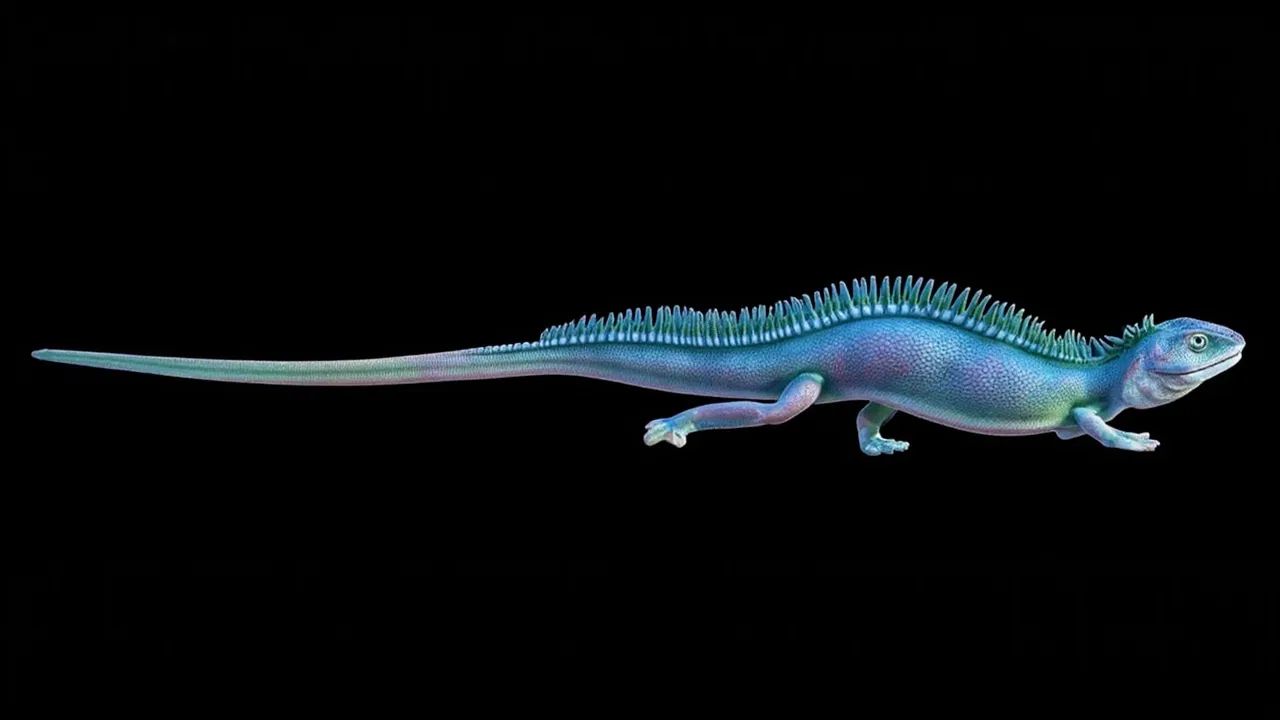
Okay, I've got to tell you about this fossil. It's got everything: ancient mysteries, a lost-and-found story, and a creature that basically lived next door to the ancestors of dinosaurs and crocodiles. Meet Silescelida acristata — a name that means "silent leg without a crest." And honestly, the name is perfect.
Picture this. It's about 240 million years ago. The worst mass extinction in Earth's history just wrapped up — you know, the one that wiped out about 96% of marine life and 70% of land vertebrates? Yeah, that one. The planet was still picking itself up, recovering from the absolute catastrophe.
And in what is now southern Brazil, a small, slender creature was going about its business. Not a dinosaur. Not a crocodile. Something close to both, but not quite either. Just a little four-legged predator, maybe the size of a small alligator, doing its thing in the Triassic forests.
Why This Discovery Actually Matters
Now, you might be thinking: "So what? It's another fossil. Big deal."
But here's the thing — this is a big deal. And it's all about what scientists call archosauriformes. Fancy word, right? Let me break it down.
Archosauriformes are the evolutionary group that eventually gave rise to archosaurs. And archosaurs? That's the lineage that includes everything from T. rex to the crocs lounging by the water today — plus birds, who are technically living dinosaurs.
So when Silescelida was alive, the ancestors of some of the most famous animals ever were still figuring out who they were. This little reptile gives us a window into that experimental phase — when nature was basically saying, "Okay, let's see what works."
The Leg Bone Connection
Here's where it gets really interesting for the science nerds (like me).
The fossil preserves parts of the limbs — especially the femur, which is the thigh bone. And that femur tells us something pretty cool. Silescelida had legs in a more semi-erect position — think not quite underneath the body like a horse, but not sprawled out to the sides like a lizard either.
This posture was more efficient. Less drag. Better movement. In evolutionary terms, this was one of the changes that would eventually help archosaurs become the dominant land animals on Earth.
So basically, this little guy was part of an evolutionary "testing phase" for body plans that would later prove wildly successful. Pretty profound for something the size of a small alligator, right?
A Global Family Tree Gets Bigger
Here's another reason to get excited. Silescelida appears to be related to the Euparkeriidae — a group of archosauriforms that scientists have mostly found in Africa, Asia, and Europe. Until now.
Finding a euparkeriid relative in South America? That's a huge deal. It means these reptiles were way more widespread during the Triassic than anyone realized. The fossil record just got a lot more interesting.
This discovery also highlights something I love about paleontology: South America keeps showing up as a critical piece of the puzzle for understanding vertebrate evolution. From the Triassic to the age of dinosaurs, this continent has been hiding some of the most important clues in the story of life.
The "Lost" Fossil That Came Back
Oh, and did I mention this fossil was lost for over 20 years?
Part of the specimen — the bit that recorded where it was found — went missing sometime after its initial discovery. It wasn't until 2022 that researchers at the Pontifical Catholic University of Rio Grande do Sul found the missing piece hiding in the collection.
Twenty years of being forgotten, just sitting there in a museum. That's why the name "Silescelida" combines "silence" with "leg" — a tribute to the long quiet period when the fossil was essentially invisible to science.
It makes you wonder what other treasures might be hiding in plain sight, right?
Why This Story Stays With Me
I love this discovery because it's a reminder that the history of life isn't just about the famous giants. Sometimes the most important chapters come from small, unassuming creatures — the ones quietly experimenting with new body plans while the world was still healing.
Silescelida acristata wasn't a T. rex. It wasn't a fearsome crocodile ancestor. It was a small predator in a recovering world, trying out features that would one day help its distant cousins take over the planet.
And for 20 years, it was waiting in a drawer for someone to realize what it was.
I think there's something beautiful about that. The fossils of the world are patient. They sit quietly until we're ready to listen.
Maybe that's the real lesson here.
Source: ScienceDaily