
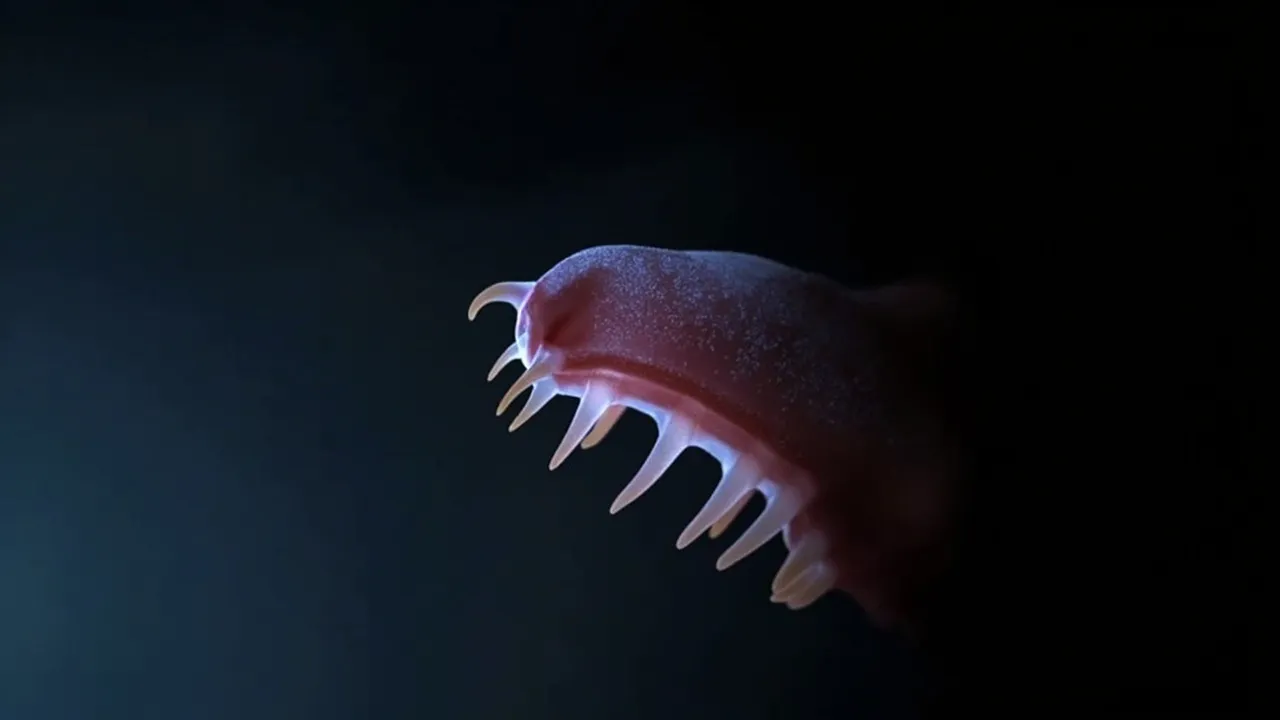
Nature's Original Metalworkers
Okay, I need to tell you about something that just blew my mind, and I promise it's cooler than it sounds (because I almost fell off my chair when I first read about it).
There's this sea worm called Perinereis cultrifera. It sounds like something from a fantasy novel, right? But here's the wild part — this little guy has been crawling around Earth's oceans for millions of years, and it's still going strong today. Not only that, but it's got some serious hardware.
We're talking jaws made of what scientists are now calling bio-metals.
Wait, Metal Jaws?
I know what you're thinking. Metal jaws? On a worm? That sounds like something out of a sci-fi movie. But hear me out.
Researchers from TU Wien and the University of Vienna decided to take a super close look at these worm jaws, and what they found was genuinely fascinating. These aren't just hard little mouthparts — they behave in ways that are strikingly similar to actual metals.
Now, I'm not talking about the worm literally growing titanium or steel. What makes these jaws special is how they're structured and how they behave under pressure. The researchers found that metal ions are packed more densely at the very tips of the jaws, which makes perfect sense when you think about it. The tips do all the heavy lifting — the biting, the crushing, the general terrorizing of smaller creatures. Nature's not wasting resources on the parts that just sit there looking structural.
The Nix-GAO Effect (Yes, There's a Cool Name)
Here's where things get really interesting.
The scientists used a technique called nanoindentation to test how hard these jaws really are. Basically, they pressed really, really tiny needles into the material and measured what happened. And they discovered something unexpected: the smaller the area they tested, the harder it was to dent.
This is called the Nix-GAO nanoindentation size effect, and it's something we see in actual metals like copper and silver. The idea is that when you get down to tiny scales, the atomic structure behaves differently — defects in the material interlock more intensely, making it naturally harder to deform.
So in a sense, these worm jaws are doing something that took humans centuries of metallurgy to understand.
But Here's the Twist
Here's what really got the research team excited, though. These bio-metal jaws aren't exactly like regular metals.
According to researcher Christian Hellmich, bristle worm jaws also showed size-dependent elasticity. This means they bounce back and flex differently depending on the scale. Regular metals? Not so much. This unique property is what helps distinguish bio-metals from your standard crystalline metals.
The team is still figuring out exactly how this works at the atomic level, but they're piecing together the puzzle using mathematical models.
What Does This Mean for Us?
Honestly? This could be a big deal.
The researchers are planning to study more species and refine their understanding of these materials. But here's where it gets really exciting: they're looking into the link between genetic interventions and material design.
Think about that for a second. If we can understand how these worms build their metal-like jaws from proteins and ions, we might be able to inspire entirely new materials. Imagine materials that are self-healing, lightweight, and incredibly strong — all inspired by something nature's been perfecting for millions of years.
The Bigger Picture
What I love most about this research is what Hellmich said about it: there's "true excitement about the beauty, elegance, and refinement found in and produced by nature."
And honestly? That's the vibe I get from this whole discovery. We've spent centuries figuring out how to forge and alloy metals, and the whole time, a humble sea worm has been quietly doing something arguably more impressive — building functional metal-like structures out of biological materials in the cold depths of the ocean.
It makes you wonder what other hidden superpowers are out there, just waiting in a tide pool or a muddy seabed somewhere.
Sometimes the most amazing engineering isn't in a laboratory — it's been here all along, if we just know how to look.
Nature, you're showing off again.