
Have you ever wondered how your body knows when to do what? I mean, think about it. You're growing from a single cell right now, and somehow your body coordinates billions of divisions, creates specific cell types in specific places, and does it all in the right order. There's no instruction manual sitting in your nucleus saying "okay, now grow fingers." Or is there?
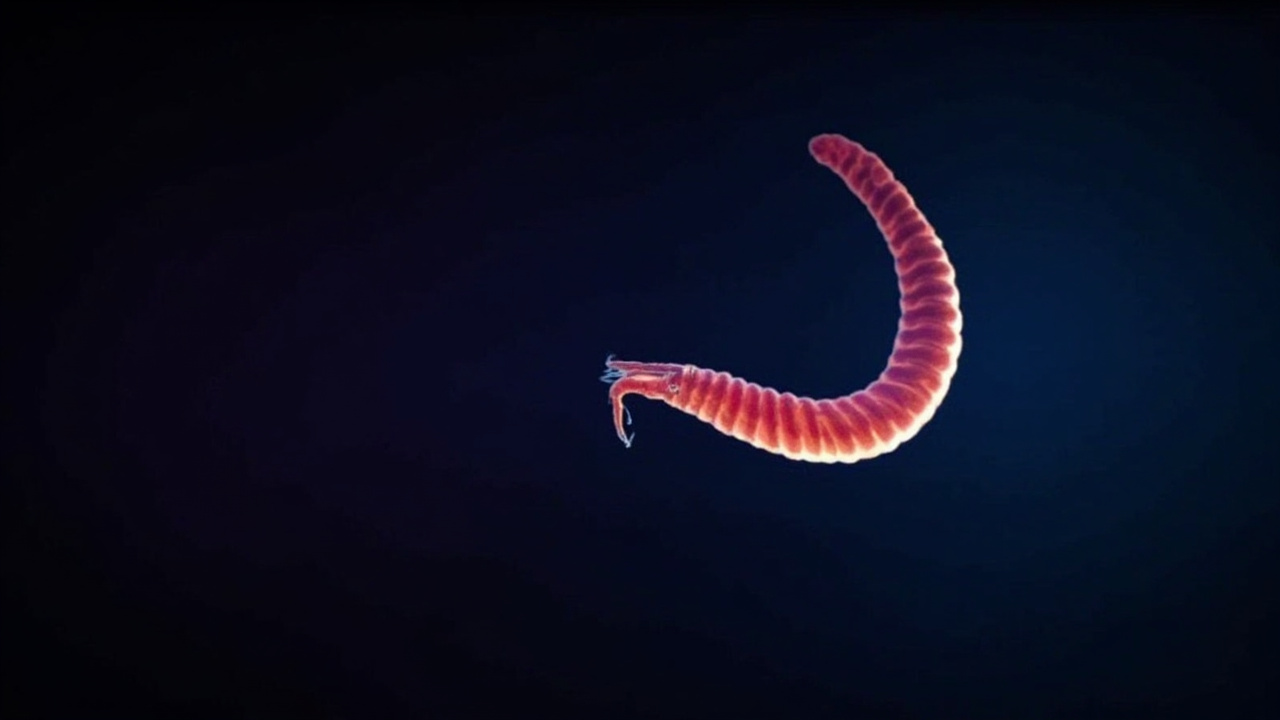
That's what makes this new discovery so exciting to me. Researchers at Cold Spring Harbor Laboratory have found what appears to be a master developmental clock inside C. elegans — a tiny worm that's become something of a celebrity in biology labs because it's transparent and researchers can watch development happen in real-time.
The clock? Two proteins called MYRF-1 and LIN-42 that work together like a lock and key system. But here's the wild part — they're not just keeping time. They're actually orchestrating the entire developmental program.
Here's how it works. Development isn't continuous like a movie playing straight through. Instead, it happens in pulses. Think of it like a series of green lights at an intersection, but each green light only appears after you've successfully passed the previous one. Each pulse of gene activity represents a developmental stage, and the MYRF-1/LIN-42 team makes sure each pulse happens at exactly the right moment and lasts exactly as long as it should.
What really got me excited about this research is the "one direction" aspect. Professor Christopher Hammell describes it like a ratchet — something that can only move forward, never back. This makes sense because, well, you're not going to developmentally revert to being a single cell, right? But understanding exactly how that one-way street works is genuinely new territory.
Here's where things get spooky. The team found that MYRF-1 does something I've never seen before in biology. It's not just part of the clock mechanism — it's also the actual trigger for each developmental stage AND the checkpoint that says "okay, this stage is done, move on." It's like having the same person who's both your alarm clock and the person who checks your homework before you leave for school.
When they blocked MYRF-1 in experiments, development hit an absolute wall. Everything stopped. No warning lights, no error messages — just complete developmental arrest. The cells were stuck, waiting for instructions that never came.
Now, here's where my brain starts spinning. Every cell in the worm has this clock running. And when you watch normal development, all these independent clocks stay perfectly synchronized. But here's the question the researchers are now asking: are these clocks actually talking to each other?
I find this absolutely fascinating because it opens up a whole new way of thinking about development. We're not just talking about one clock running the show from a central location. We're potentially talking about a network of clocks that somehow stay coordinated. That's the kind of discovery that makes you realize how much we still don't understand about the simplest things life does.
The implications for human health might take years to fully explore, but they're pretty clear. Developmental disorders, certain genetic conditions — many of these might involve our own versions of clocks that have gone off track. If MYRF-1 and LIN-42 have cousins in human cells (which seems likely given how fundamental these mechanisms tend to be), understanding their worm counterparts could eventually help us understand what goes wrong in conditions where normal development is disrupted.
It's one of those discoveries that makes you look at a tiny, almost boring-looking worm and think "you're carrying secrets about life itself in there, aren't you?"
I genuinely can't wait to see where this research goes next.
Source: https://www.sciencedaily.com/releases/2026/06/260604044236.htm