
The Insect That Reinvents Itself
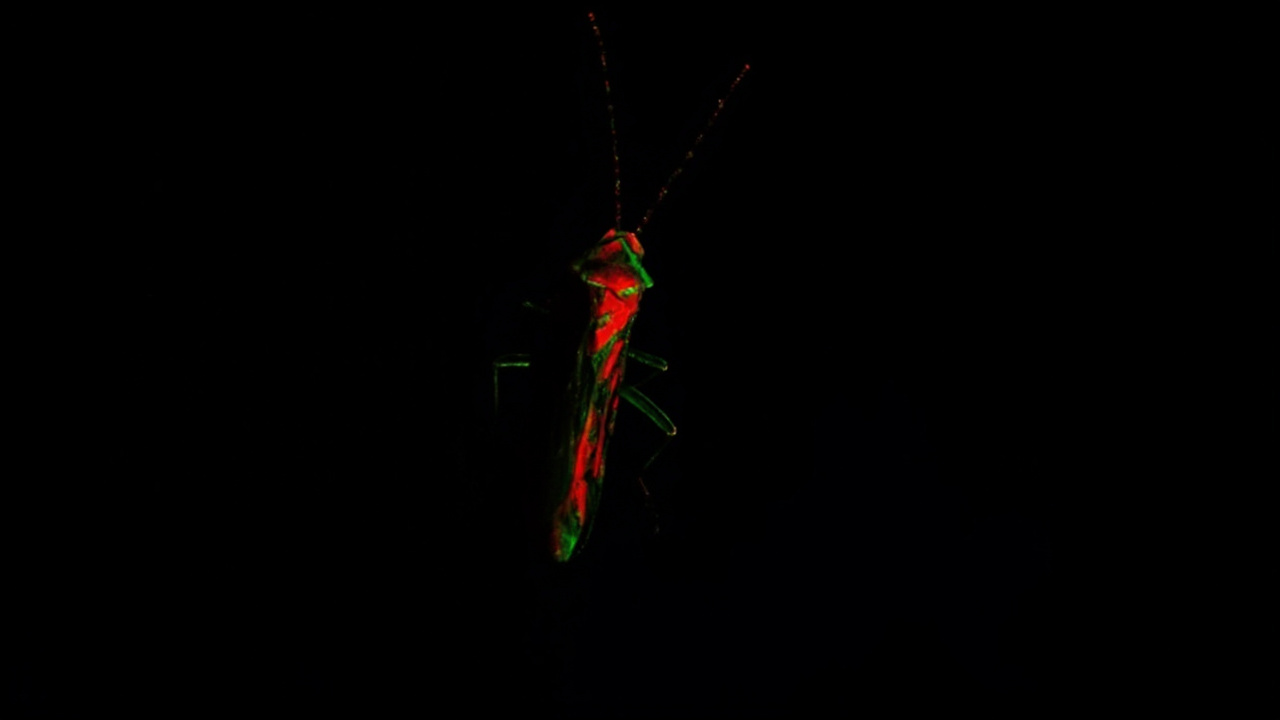
Picture this: you're a researcher in the Panamanian rainforest, and you spot an absolutely stunning hot pink insect hanging out under a light. It's gorgeous, almost impossibly vibrant. You document it, marvel at its beauty, and move on with your work. Then, just eleven days later, you check on it again and... it's completely green. What just happened?
That's exactly the head-scratching moment scientists at the Smithsonian Tropical Research Institute experienced recently. And it turns out, this isn't a glitch in nature—it's actually one of the most clever survival strategies we've ever seen.
Not a Genetic Whoopsie—A Calculated Move
Here's what makes this discovery so mind-blowing: for over a century, scientists assumed pink katydids (also called bush crickets) were just rare genetic mutations—nature's oopsies. These insects, found in Central and South America, occasionally showed up in bright pink, and people basically shrugged and assumed something had gone wrong during development.
But a team of researchers from universities in Scotland, the UK, Switzerland, and the Netherlands decided to actually watch one of these pink katydids day by day. They kept detailed photographs over thirty days, and the transformation was undeniable. The vivid hot pink faded into pastel tones around day four, and by day eleven, the insect looked identical to the typical green katydids everyone was familiar with.
The lightbulb moment? This isn't a defect. It's a feature.
Following the Rainforest's Fashion Cycle
Here's where it gets really clever. In tropical rainforests, about one-third of all plant species go through something called "delayed greening." Picture a brand new leaf unfurling on a tree—it doesn't come out green right away. Instead, it's bright pink or red, full of pigments that protect it from the sun's harsh rays while it's still delicate and vulnerable.
Then, as that leaf matures over a couple of weeks, it gradually transforms to green as it develops its full capacity to photosynthesize.
The katydid seems to have basically said, "You know what? If the leaves I'm trying to hide on do that, maybe I should too." So it times its own color change to match. When it first emerges or transforms, it dresses in hot pink to blend in with the fresh, young foliage. Then, as those leaves turn green, so does the katydid.
It's like the insect has its own seasonal wardrobe calendar built into its biology.
Predator-Proof Fashion
Dr. Matt Greenwell from the University of Reading puts it perfectly: imagine a bright pink insect in a mostly green forest. Normally, that would be absolutely terrible camouflage—like wearing a neon safety vest to hide in the woods. You'd stand out like crazy and get eaten immediately.
But here's the genius part: if roughly a third of the plants around you are putting on pink leaves, suddenly you're not so obvious anymore. You're just another piece of foliage in the landscape.
The katydid essentially cracked the code of its environment. It learned to sync up with the rhythm of the forest itself, making a synchronized color change that keeps it perfectly hidden whether it's born into a time of pink leaves or green ones.
A Discovery That Changes Everything
What's particularly wild is that this is the first time scientists have documented a single katydid completing this entire color transition within one life stage. We've known pink katydids existed since way back in 1878, but we basically wrote them off as unfortunate genetic accidents.
Now we know better. And it makes you wonder: how many other "weird mutations" in nature are actually brilliant survival strategies we just haven't been patient enough to observe yet?
The researchers even watched this particular katydid mate before it naturally died the following month, proving that this color-shifting ability doesn't harm its ability to reproduce. If anything, it probably improved its chances of surviving long enough to pass on its genes.
What This Really Tells Us
This discovery is a beautiful reminder that tropical rainforests are almost incomprehensibly complex ecosystems. We're still figuring out how animals have adapted to these environments, and sometimes the answer is stranger and more elegant than anything we could have predicted.
An insect that gradually changes color to match the plants around it isn't just smart evolutionary engineering—it's proof that nature's solutions are often far more nuanced than we give them credit for. The rainforest isn't just a collection of plants and animals coexisting. It's a synchronized dance where participants have learned to move in rhythm with each other.
And frankly? That's pretty incredible.