
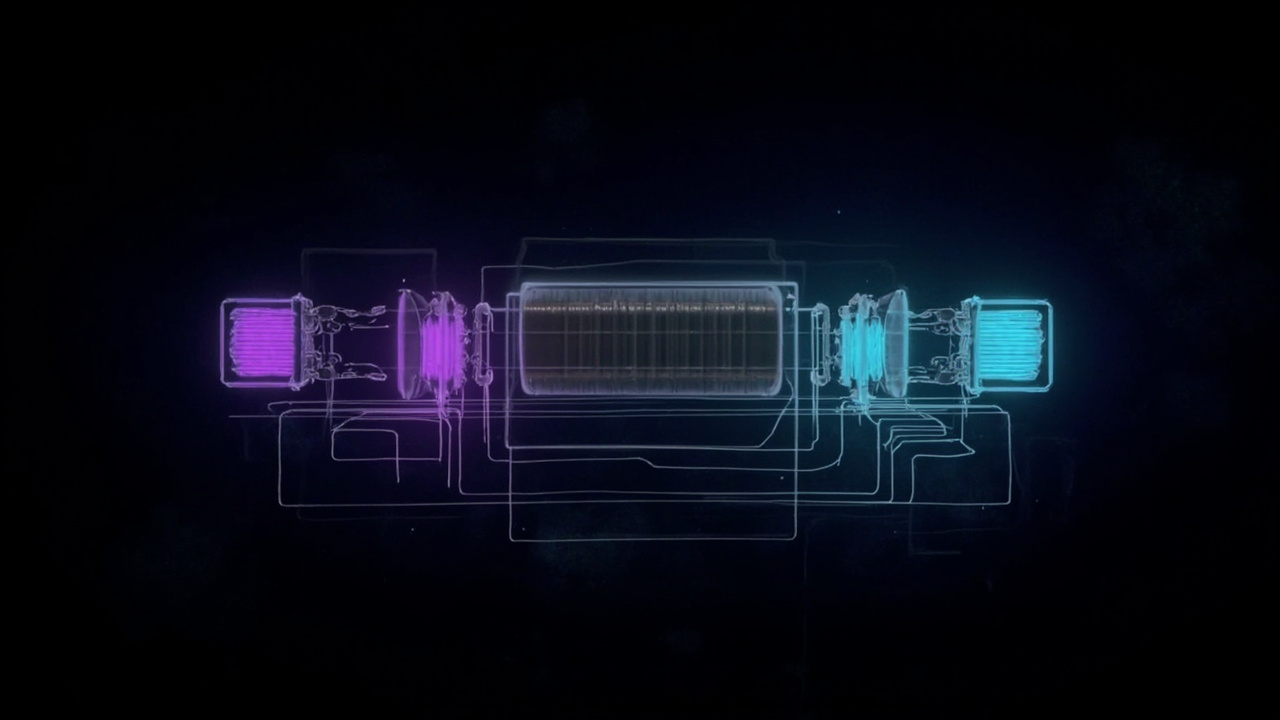
A Nuclear Reactor Without the Nuclear Part?
Okay, I need you to picture this with me. You're looking at a machine that looks, acts, and quacks like a nuclear reactor. It has the same thermal physics. The same plumbing. Roughly the same size. There's even a turbine that generates electricity. But here's the plot twist—it doesn't use any fuel.
I know what you're thinking. "That's not a reactor, that's a space heater with ambition." And honestly? You might not be entirely wrong. But stick with me, because what Newcleo has built might just be the future of nuclear energy.
What's So Great About Lead?
The reactor, called PRECURSOR, uses lead as its coolant instead of the traditional water you'd find in most nuclear plants. And before you ask—yes, that's the same metal in your pencil (well, graphite, but work with me here).
Here's why lead is kind of a genius choice. Water boils at just 212°F, which seems perfectly reasonable until you realize that nuclear reactions create temperatures way higher than that. When water evaporates, it can leave parts of the reactor exposed and vulnerable. That's basically how you get a meltdown.
Lead, on the other hand, needs to reach a scorching 3,170°F before it even thinks about boiling. In normal reactor conditions, that's basically impossible. So the chances of it suddenly evaporating and leaving your reactor high and dry? Essentially zero.
But there's more! Lead is so dense that it can circulate on its own without needing pumps. No pumps means fewer things that can break. Fewer things that can break means fewer potential disasters. And if there's ever a leak? The lead just solidifies. It basically self-heals.
So... How Does It Make Energy Without Fuel?
Great question! While traditional reactors use nuclear fission—the process of splitting atoms to release energy—PRECURSOR uses electrical heaters to do the same job.
Inside the reactor, where fuel would normally sit, there are just heaters. They warm up the molten lead, which then transfers that heat to a steam generator. That steam powers a turbine, and voila! Electricity.
The beauty of this setup is that it mimics everything about a real nuclear reactor without any of the scary nuclear stuff. Scientists can test how the system behaves, how heat moves through it, and how everything responds under pressure—all without risking a runaway chain reaction.
Why "Critical Mass" Matters (And Why PRECURSOR Can't Go Critical)
Here's a quick science lesson that'll make you sound smart at parties: "critical mass" is the minimum amount of nuclear fuel needed to keep a chain reaction going. Each fission releases neutrons that trigger more fission in nearby atoms, kind of like an extremely energetic game of dominoes.
"Supercritical" means there's more fuel than needed, so the reactions accelerate out of control. Left unchecked, this is how you get explosions and meltdowns.
But PRECURSOR has no fuel. The space where fuel would normally go is just... empty. So there's literally no way for it to go critical. It's physically impossible. The scientists can push it, prod it, and stress-test it to their hearts' content, and the worst thing that happens is some melted lead gets a little warmer.
Where Does Newcleo Go From Here?
PRECURSOR is still under construction and expected to be completed by the end of 2026. But it's really just the first step. Newcleo's actual commercial reactor, called the LFR-AS-30, is a 30-megawatt design that will actually run on nuclear fuel.
Here's where things get really interesting: Newcleo is partnering with Oklo (one of only two companies chosen by the U.S. Department of Energy for its plutonium program) to use Cold War surplus plutonium as fuel. We're talking about 44,000 pounds of weapons-grade plutonium that the government just has lying around.
Rather than burying this stuff in a waste facility in New Mexico, they want to repurpose it as clean energy. As Josh Jarrel from the DOE put it, "Surplus plutonium was once viewed solely as a nuclear liability... but it doesn't have to remain one. We are redirecting this Cold War legacy to serve as a vital energy asset."
How cool is that? Turning the remnants of nuclear weapons into the foundation for clean, safe power.
The Bottom Line
I'm genuinely excited about this, and I think you should be too. Nuclear energy gets a bad rap because of disasters like Chernobyl and Fukushima, but those accidents happened with old technology using water cooling systems that have fundamental vulnerabilities.
Newcleo's approach—with lead cooling, fuel-free testing, and plans to use recycled plutonium—feels like nuclear energy finally growing up. It's learning from its mistakes. It's being more careful. And honestly, given the climate challenges we face, we need every clean energy option on the table.
PRECURSOR won't be finished until 2026, and the commercial reactors won't come online until around 2031. That's a long wait. But sometimes the most important innovations are the ones that take their time to get right.
The future of energy might not need fuel to be revolutionary. Sometimes, the smartest thing you can do is leave the dangerous stuff out entirely.