
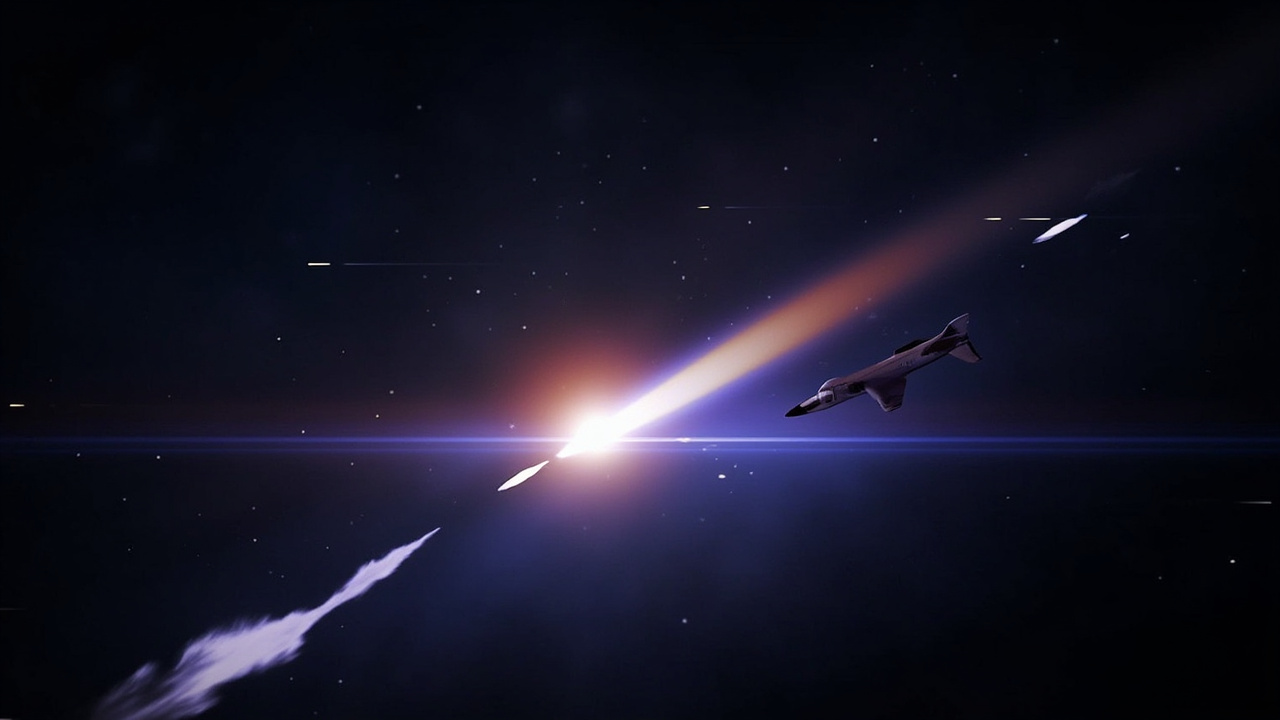
The Night Sky Wasn't Empty
Here's something that'll make you think twice the next time you look up at a clear night sky: in the middle of the biggest conflict in human history, pilots on both sides of World War II were seeing things they couldn't explain. We're not talking about enemy aircraft or trick of the light explanations—these were glowing orbs that seemed to have a mind of their own.
I first came across this story and honestly couldn't believe it wasn't more widely known. Picture yourself in the cockpit of a fighter plane, tens of thousands of feet above war-torn Europe, navigating through darkness. Then you spot them—strange lights floating alongside your aircraft. They change colors. They follow you. They vanish without a trace.
That's exactly what was happening to real people during the war.
A Name Born From a Cartoon
Here's where it gets even more interesting. The term "foo fighter" didn't come from some serious military briefing or scientific journal. It came from a comic strip. Seriously.
Pilots were swapping stories about these mysterious lights, and someone thought of Bill Holman's comic character Smokey Stover, who would call himself a "foo fighter" instead of a firefighter. It was playful, almost a joke—but the phenomenon behind the name was anything but funny.
These weren't just fleeting glimpses either. Multiple crew members from the same squadrons were reporting identical experiences. They weren't seeing things because they were tired or scared—these were trained observers who knew the difference between atmospheric phenomena and actual objects.
So What Were They?
This is the million-dollar question, and honestly? Nobody has a satisfying answer.
The military tried to explain them away. Flares? Flares can't turn or dive. Exhaust flames? They wouldn't be visible. Weather balloons? Those only drift upward. Ball lightning? That doesn't change direction and follow aircraft. St. Elmo's fire? That only forms around physical objects, not floating freely.
None of the conventional explanations fit. And here's what really gets me: these things were potentially dangerous. Not because they attacked anyone—they never did—but because pilots found them impossibly distracting. Imagine trying to focus on a dogfight while mysterious lights are floating around your cockpit.
Some people jumped straight to extraterrestrial explanations, and honestly, I can see why. The behavior of these objects—following planes, making acrobatic turns, appearing and disappearing at will—doesn't match anything known to science at the time.
The Legacy
What I find fascinating is how this story connects to the wider UFO phenomenon. When Kenneth Arnold spotted mysterious objects near Mount Rainier in 1947, the media latched onto his description of them moving like "a saucer skipped across water." Suddenly we had "flying saucers" and then, that same summer, the infamous Roswell incident.
But the foo fighters came first. They were happening while bombs were still dropping, while thousands of soldiers were still fighting and dying. These weren't hoaxes or mass hysteria—they were real encounters by credible witnesses.
And we still don't know what they were.
Maybe that's what makes this story so compelling. In an era when we like to think we have explanations for everything, here's a genuine mystery from less than a century ago. Something was out there in the skies over Europe and Japan, following aircraft, watching, and then vanishing.
I don't know about you, but I find that both creepy and oddly comforting. The world's a strange place, and sometimes the most amazing stories are the ones we're still trying to figure out.