
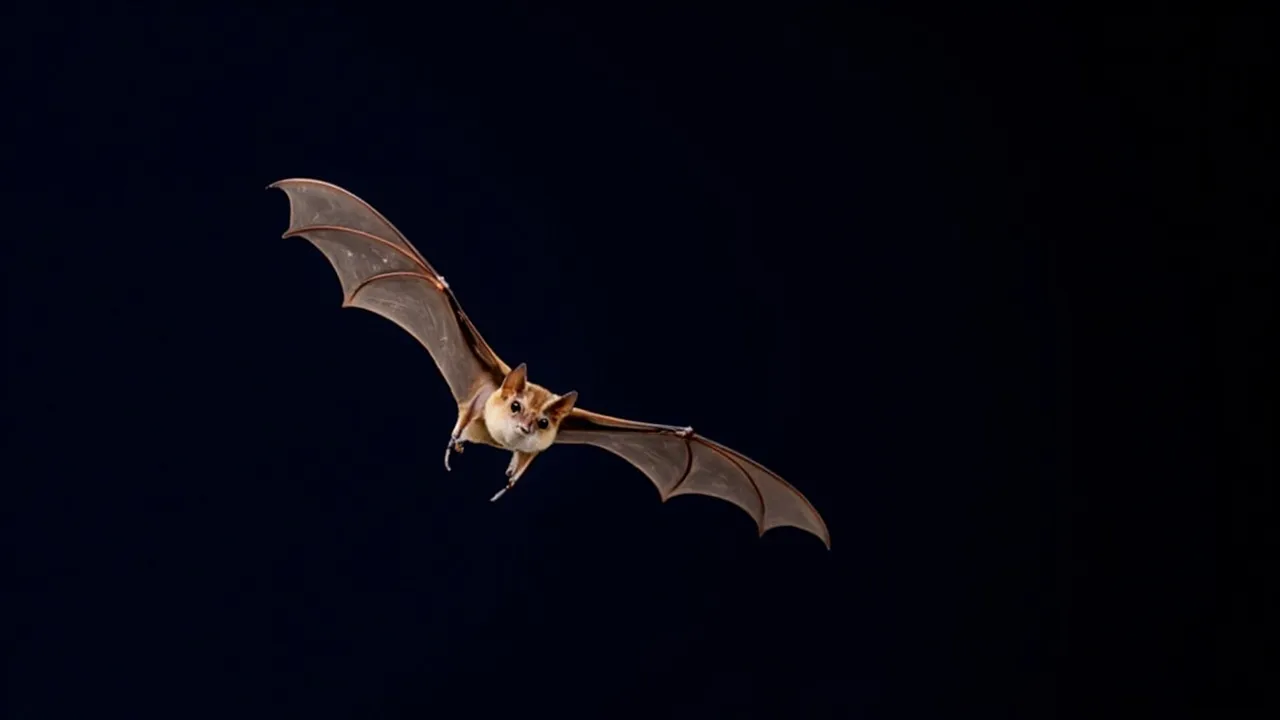
Okay, I have to admit—I never thought I'd be writing a blog post that makes me excited about bat evolution, but here we are. And honestly? You should be excited too, because this new research is genuinely mind-blowing.
The Plot Twist Nobody Expected
For decades, scientists have been arguing about where bats first appeared. Some thought Africa. Others pointed to Asia or North America. Everyone had their favorite theory, complete with supporting evidence and passionate arguments.
But here's the thing: a massive international team of 137 researchers from 64 countries just published a study in Nature that suggests all those debates might be over. According to their research, bats most likely originated in Europe during the late Paleocene—roughly 65 to 60 million years ago.
Europe! Of all places!
I don't know about you, but I find this completely delightful. When I think of bats, I picture tropical caves or moonlit summers in the American South. Europe doesn't exactly scream "bat paradise." But apparently, our little winged friends might have started their incredible evolutionary journey there, long before humans even existed.
How Did They Figure This Out?
The researchers did something pretty extraordinary. They combined genomic data from every single living bat family with evidence from ancient fossils. Specifically, they examined 103 bat genomes—including 42 brand new chromosome-level assemblies—covering all 21 recognized bat families. They also incorporated 44 fossil bats into their analysis.
That's a LOT of data.
The team used computational methods to essentially reconstruct the evolutionary family tree of bats, tracing their origins all the way back to that European ancestor. Then they tracked how bats spread across the planet: from Europe, their descendants moved into Africa, then separately into the Americas, Asia, and Australia. Over millions of years, these migrations produced the amazing diversity of bat species we see around the world today.
Why Should We Care?
Here's where things get really interesting. Bats are, without exaggeration, some of the most unusual animals on Earth.
First, they're the only mammals capable of true powered flight. That's huge! We're talking about an entire class of animals (mammals), and bats are the only ones who figured out how to really fly. Not glide like flying squirrels or colugos—but actually fly, with flapping wings and everything.
Second, most bat species can navigate and hunt in complete darkness using echolocation. They emit sounds and listen to the echoes to build a mental map of their surroundings. It's like biological sonar, and it's incredibly sophisticated.
Third, bats represent about one-fifth of all living mammal species. Think about that for a second. One out of every five mammals on Earth is a bat. That's extraordinary diversity.
And here's something that blows my mind: many bat species are unusually resistant to disease and can live far longer than other mammals of similar size. A mouse of similar weight might live 2-3 years. Some bats can live over 30 years! Scientists have been trying to understand why, and this new research might finally give us some answers.
Flight and Echolocation: The Big Questions
One of the most exciting findings relates to how bats developed their signature abilities. The research suggests that powered flight and echolocation both emerged very early in bat evolution—close to the beginning, actually.
"The approach we used to model the evolution of fossil and living species together can do what other methods cannot," said Professor Liliana M. Dávalos from Stony Brook University. "It identifies the oldest group of fossil bats while taking the genomic data into account, and uncovers when and where bats originated."
By analyzing a fossil bat called Vielasia (which sits on the oldest branch of the bat family tree), researchers concluded that echolocation had already appeared very early in bat history. Both flight and echolocation evolved before modern bat groups started diversifying—and these abilities might be the secret to their remarkable evolutionary success.
The Ancient Bat Genome
Here's something that feels almost like science fiction: the researchers computationally reconstructed the genome of the ancient ancestor shared by all living bats.
Think about that. They took genetic information from living species, combined it with fossil evidence, and worked backwards to recreate what the DNA of a bat that lived 60+ million years ago probably looked like.
This reconstruction offers an incredible glimpse into the genetic makeup of one of the earliest flying mammals. Scientists can now use this data to investigate the genetic changes associated with flight, echolocation, longevity, and disease resistance.
What This Means for Humans
I know what you're thinking: "That's cool for scientists, but what does it mean for me?"
Well, actually, quite a lot potentially. The genomic resource created by this research could eventually contribute to human research involving aging, immunity, and disease resistance. Bats carry viruses that would kill other animals (including us), yet they seem almost unaffected. Understanding why might help us develop better treatments for diseases that currently have no cure.
"Bats constantly surprise us," said Professor Sonja Vernes from the University of St Andrews. "They are one of evolution's greatest experiments."
And honestly? I couldn't agree more. These creatures are evolutionary marvels. They turned out the lights on needing perfect vision and developed their own biological sonar instead. They figured out flight when all their mammalian relatives were stuck on the ground. They developed resistance to diseases that would decimate other species.
The Takeaway
The next time you see a bat silhouette flitting across the evening sky, take a moment to appreciate just how incredible these creatures are. They've been around for at least 60 million years, and they've evolved some of the most sophisticated adaptations in the animal kingdom.
And now we know they got their start in Europe—which honestly makes them a bit more relatable. Bats went from European origins to conquering nearly every continent on Earth, filling ecological niches from rainforests to deserts, and becoming one of the most successful groups of mammals ever to exist.
Not bad for a bunch of flying rodents, right?