
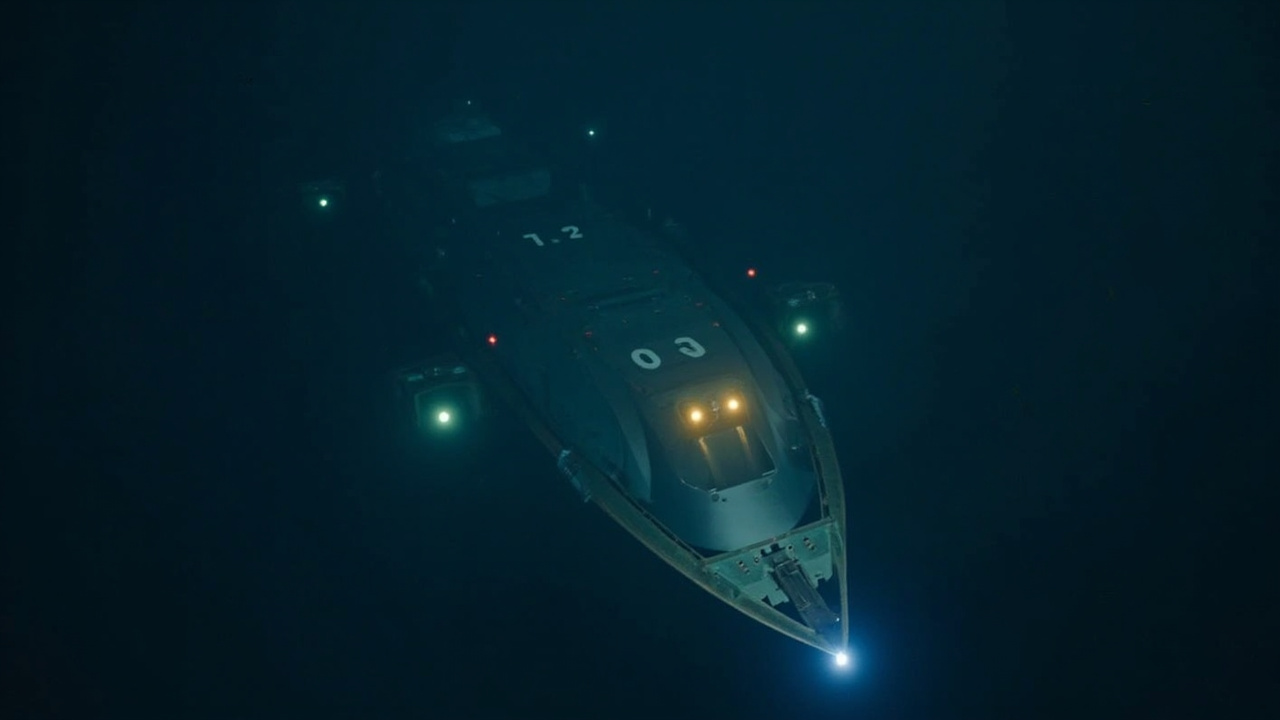
Two Shipwrecks. Two Different Stories. One Forgotten Battle.
When you think about World War II, you probably picture Europe—D-Day, the German blitz, the fall of Berlin. But here's something that might surprise you: one of the war's most intense and brutal battles happened in Alaska, of all places. And it was so isolated, so cold, and so far removed from the public eye that even today, most people have never heard of it.
That battle—the three-week siege of Attu Island in 1943—left behind more than just soldiers' graves and wartime memories. It left behind ghosts in the depths.
The Deep Blue Discovery
A team of researchers recently decided to explore the underwater wreckage near Attu, and what they found is honestly kind of remarkable. Using sonar technology, underwater drones, and historical records, they located and documented two shipwrecks that had been lost to history. The findings were so significant that they published their research in a journal called Heritage.
Here's what makes this cool: they didn't just spot some rusty metal on the ocean floor. They actually recovered detailed images and information about two vessels—one Japanese, one American—that each tell a completely different story about the war.
The Japanese Supply Ship: A Direct Hit
Let me tell you about the Kotohira Maru first. This was a Japanese transport vessel, built way back in 1918. It was a coal-powered cargo ship, the kind that hauled supplies and equipment wherever the military needed it. In late 1942, the Japanese military loaded it up with lumber, fuel, provisions, and supplies destined for their troops on Attu.
On the morning of January 5, 1943, the Kotohira Maru was approaching Attu from the west, looking for Holtz Bay—which was Japan's main stronghold on the island. But here's where things took a terrible turn: an American pilot spotted the ship. Within hours, B-24 Liberator bombers attacked.
A single 500-pound bomb was all it took. It struck the ship's bow directly, and the Kotohira Maru went down into nearly 300 feet of water. The crew—between 30 and 50 sailors—all perished in the attack.
When researchers found the wreck recently, it was still mostly intact, sitting upright on the ocean floor. They could see the damaged bow, the cargo hatches, even the steam engine. It's like a time capsule of a single moment—the moment everything changed for those sailors.
The American Cable Ship: A Different Disaster
The SS Dellwood has an entirely different story. This ship was originally built in 1919 as a cable-layer—basically a floating factory designed to lay underwater cables and establish communication networks. The U.S. Navy commandeered it about a week after Pearl Harbor, and for the next few years, it made regular runs between Seattle and military outposts scattered across Alaska.
The Dellwood arrived at Attu in July 1943—after the Americans had won the battle—with an important mission: establish a cable connection between the island's military command headquarters and a new airfield on a neighboring island. Sounds straightforward, right?
Except nobody had told the crew about an uncharted, submerged rock pinnacle lurking near Alexai Point.
The ship hit it. The damage was catastrophic. Other vessels tried to help, but the situation was hopeless. Salvage teams stripped the valuable equipment from the wreck, and then the Dellwood went down about 115 feet below the surface.
When researchers found it recently, they discovered something surprising: the postwar effort to clear the harbor for navigation had actually demolished the wreck intentionally. The ship is now completely flattened across the seabed, barely recognizable. The only clue to what it once was? The distinctive cable-laying machinery still visible in the debris field.
Why These Wrecks Matter (Even if Most People Don't Know About Them)
Here's the thing that really got me thinking about this discovery: neither of these ships was directly involved in combat during the Battle of Attu itself. But they're both deeply symbolic of something much bigger.
Japan had captured Attu and another nearby island called Kiska in June 1942. That capture had displaced the indigenous Unangan people who had lived there for thousands of years. The Kotohira Maru represents the Japanese military buildup and the removal of native inhabitants. The SS Dellwood, on the other hand, symbolizes the American military presence that eventually prevented those displaced people from returning to their home.
These aren't just old shipwrecks. They're physical evidence of a war that happened on American soil—well, American territory, at least—and displaced an entire indigenous population. And most Americans have absolutely no idea any of this happened.
The Bigger Picture
What I find fascinating about this research is that it's part of a larger effort to document and preserve Alaska's underwater World War II heritage. The researchers are basically creating a historical record of these underwater cultural sites, so future generations—and historians—can understand what happened in one of the war's most remote and brutal theaters.
The Aleutian Islands campaign was intense. Thousands of soldiers fought in freezing conditions on desolate islands in the middle of the Bering Sea. American troops suffered extreme cold, isolation, and some of the harshest conditions any American soldiers faced during the entire war. And yet, it gets almost no attention in our collective memory of World War II.
These two shipwrecks are like bookends on that forgotten story—the supplies trying to reach the troops, and the infrastructure trying to support them after victory. They're reminders that history isn't always written in the places we expect to find it. Sometimes you have to dive 300 feet into the Bering Sea to understand it.
Pretty cool stuff, if you ask me.