
Okay, I need to tell you about something that just blew my mind, and I've been writing about space and science for years.
So picture this: It's October 2026, and Hurricane Simon—a Category 4 beast with winds whipping around at 155 miles per hour—is churning dangerously close to Mexico's Pacific coast. Satellite images show the hurricane's eye sitting just 30 miles offshore, basically breathing down the neck of coastal cities like Manzanillo and Puerto Vallarta.
But here's where it gets wild. While all this chaos is happening at ground level (and by ground level, I mean ocean level), NASA satellites captured something incredible happening way, way up above the storm. We're talking high up in Earth's atmosphere—past the weather we live in, past the stratosphere, all the way into the mesosphere. Scientists spotted enormous ripples, like waves spreading outward from the hurricane, except these waves weren't in water. They were rippling through the air itself.
These are called atmospheric gravity waves, and honestly, the name is a bit of a misnomer. They're not actually gravitational waves (sorry, Einstein fans—no black hole mergers here). Instead, think of them as disturbances traveling through the atmosphere, with gravity acting like the弹簧 that pushes things back into place.
Here's the simplified version of how they form: inside a massive hurricane, you've got incredible energy being released. Warm, moist air shoots upward from the ocean surface, building towering thunderclouds in the eyewall—the most intense part of the storm. These powerful updrafts punch into the atmosphere above, creating ripples that travel upward and outward, sometimes reaching hundreds of kilometers into the sky.
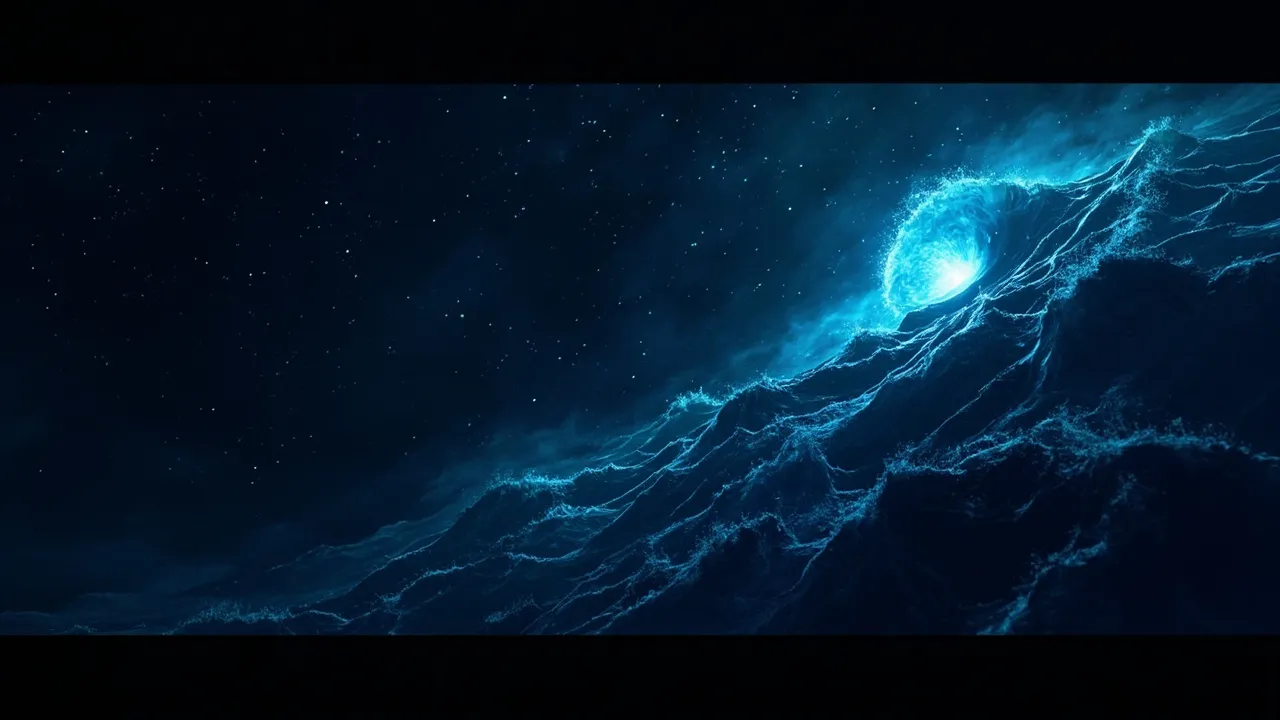
Now, here's the really cool part. These waves can get so high that they pass through a region called the mesosphere, where they can create something called airglow. This is a faint, natural light produced by chemical reactions happening in our atmosphere—kinda like how neon signs glow, but way more subtle. When the gravity waves pass through this glowing layer, they create beautiful ripple patterns that can sometimes be seen from space.
The satellite that caught this was NASA's Suomi NPP satellite, using an instrument called VIIRS. It has a special "day-night band" that can detect this faint airglow. But normally, moonlight reflecting off Earth's surface drowns out these delicate patterns. Lucky for scientists (and us), the Moon was barely visible when the satellite passed over Simon, so those atmospheric ripples stood out crystal clear.
Imagine that—there's a hurricane making waves in the ocean, and simultaneously sending ripples through the sky so high they reach into the realm where airglow happens. It's like the storm is having an echo all the way up in space.
The scientists tracking Simon admitted they had "very low confidence" in predicting where it would go next. These things are notoriously unpredictable, and honestly, I'm just grateful we're getting better at watching them from above. The more we understand about how hurricanes interact with our entire atmosphere—not just the lower layers we experience directly—the better we can prepare for these monsters.
So next time you see a hurricane heading toward land, remember: the chaos isn't just happening where you can see it. Those storms are reaching up and touching the very edge of space itself.