
Have you ever tried navigating without your phone and immediately felt lost? Yeah, me too. But here's something that'll make you feel even worse: a creature that lived 97 million years ago apparently had a built-in compass that puts our smartphone navigation to shame.
Researchers from the University of Cambridge and Helmholtz Zentburg Berlin recently made a wild discovery. They found microscopic magnetic fossils—preserved in ancient seafloor sediments—that appear to be the earliest known evidence of an animal's internal "GPS system." And honestly, it's blowing my mind.
So What Exactly Are These Things?
The fossils are called magnetofossils, and they're incredibly tiny—each no bigger than a bacterial cell. But don't let the size fool you. These little structures come in various shapes: spearheads, spindles, bullets, needles. Think of them as nature's magnetic building blocks.
For a long time, scientists weren't sure what made them or why they existed. Some suggested they might be protective spines. Others hypothesized they could be related to navigation. Well, turns out that second group might have been onto something.
The 3D Images That Changed Everything
Here's where it gets really cool. The research team used a fancy new imaging technique to create the first-ever 3D pictures of the magnetic structure inside these fossils. (This was no small feat—they had to use specialized equipment at the Diamond X-ray facility in Oxford.)
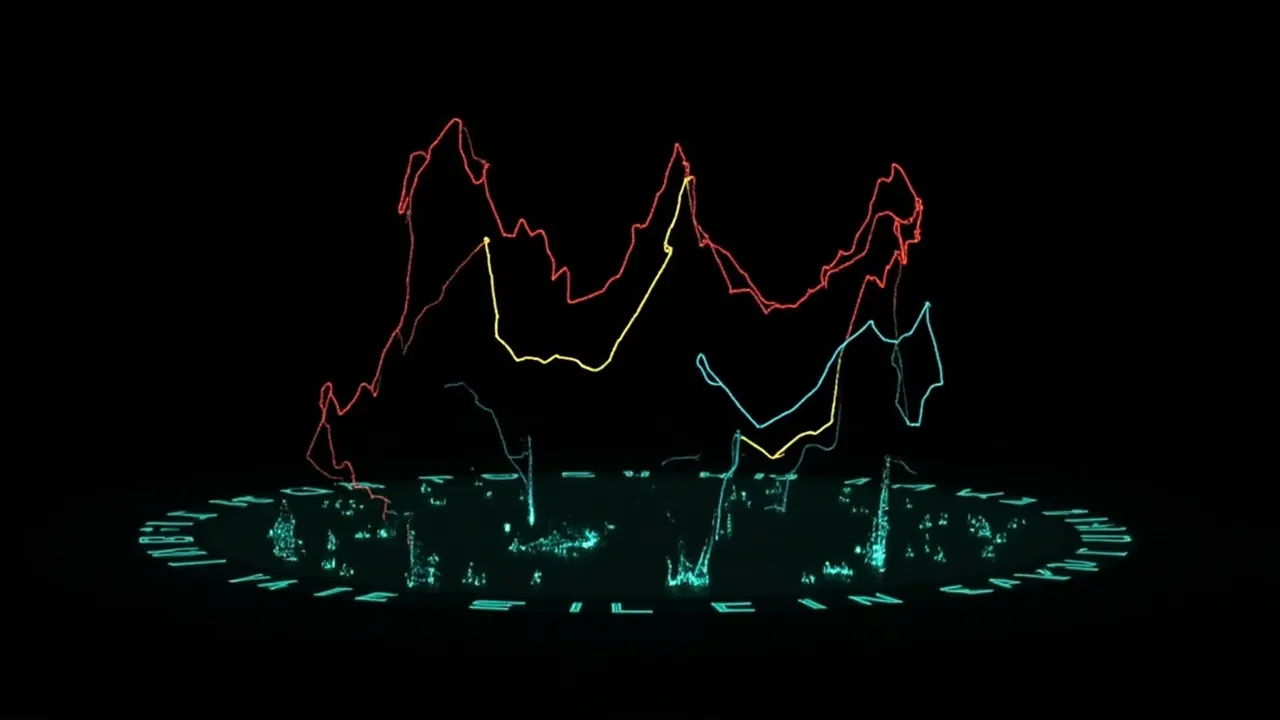
What they found was genuinely surprising. The magnetic moments inside these fossils spiral around a central line, creating a structure that looks a bit like a tornado or vortex. Professor Rich Harrison, who co-led the research, put it this way: "Whatever creature made these magnetofossils, we now know it was most likely capable of accurate navigation."
This vortex structure has special properties that make it perfect for navigation. When the Earth's magnetic field changes—even slightly—the structure "wobbles" in response. This means the creature could potentially detect not just which direction it's facing (like a basic compass) but also where it is on the planet—essentially reading both direction and intensity to build a mental map.
Wait, Bacteria Had This First?
Now here's something interesting: some modern bacteria already use a simpler version of magnetic navigation. They have tiny chains of magnetic particles that help them orient toward their preferred water depth. These particles are tiny—about 50 to 100 nanometers wide.
But these ancient magnetofossils? They're 10 to 20 times bigger than those bacterial versions. That's a significant jump in complexity. It's like going from a basic calculator to a smartphone.
"What this tells us is that whatever creature made these was carefully controlling the shape and structure of these fossils," Harrison explained. "We wanted to know why."
And the answer seems to be: because bigger meant better. A larger magnetic structure could do more than just point north—it could help the creature figure out its location on Earth.
What Does This Mean For Us?
Here's where my inner science geek gets really excited. Magnetoreception—the ability to sense Earth's magnetic field—is still one of the least understood senses in the animal kingdom. We know birds, fish, and insects use it to migrate across enormous distances. But exactly how their bodies do this? Scientists have been scratching their heads over it.
This discovery pushes back the evidence for magnetic navigation by a LOT. We're talking about 97 million years ago—way before modern birds and many fish even existed. This suggests magnetoreception might have evolved much earlier than we thought, or perhaps appeared independently in different creatures over time.
It's also just... incredibly humbling, right? While I'm over here needing voice navigation to find the grocery store, some Cretaceous-era creature was out there using an internal magnetic map to navigate across oceans. Nature is wild.
The Mystery Continues
Here's the thing that still bugs me (in a good way): we don't know what animal made these fossils. The organism's identity remains a complete mystery. Whatever it was, it left behind these incredible magnetic structures as its calling card—a biological GPS system that worked 97 million years before GPS satellites ever existed.
I don't know about you, but I'm rooting for whatever mysterious Cretaceous creature this was. It clearly had its life together way more than I do.
Source: ScienceDaily — 97-million-year-old fossils reveal the earliest known animal "GPS"