
Okay, I have to admit — when I first read about this study, I genuinely had to sit with it for a moment.
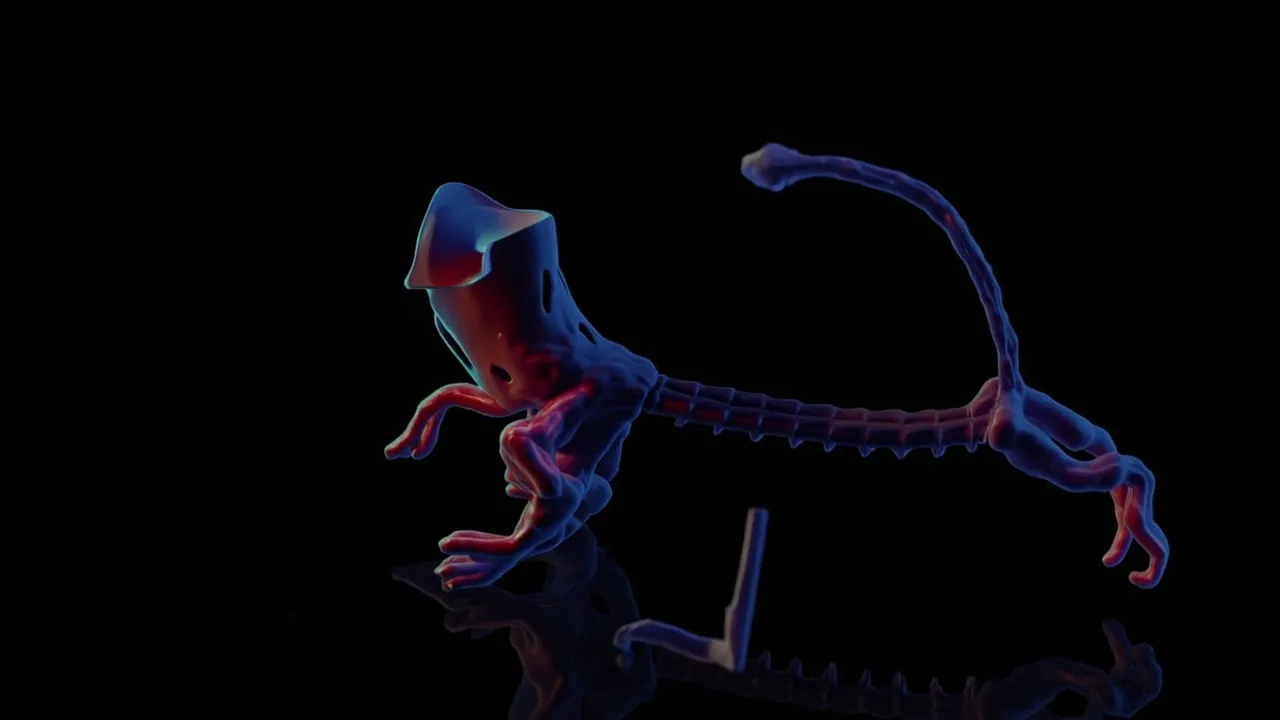
Researchers found what appears to be a neonatal line — essentially a growth ring in bone that forms right after birth — in a 236-million-year-old fossil of Chiniquodon theotonicus. This little guy was discovered in Argentina, and based on the evidence, it was a newborn when it died. But here's where things get wild: the scientists calculated that this newborn weighed about 1.7 kilograms at birth, which was roughly 14% of its adult body weight.
Let that sink in for a second.
If you're anything like me, you're probably thinking "so what?" Well, friend, this is a big deal. You see, reptiles and birds of similar sizes produce babies that are basically tiny compared to their adults — we're talking 0.1% to 4.5% of adult body mass. But mammals? We churn out relatively chonky babies. That 14% ratio? It puts C. theotonicus squarely in the same category as modern placental mammals.
The team that discovered this — led by Dr. Leandro Gaetano and his colleagues in Argentina — essentially found themselves staring at what looks like the earliest evidence of live birth (viviparity, if you want to get fancy) in our family tree. Previously, scientists thought live birth showed up maybe 150 million years ago or so. This new evidence pushes that back by nearly 100 million years.
Now, I know what you might be wondering: why would giving birth to live babies instead of laying eggs be such an advantage in the first place? Great question! The researchers point out that the Triassic period — when these critters lived — was basically the wild west. The world was recovering from a massive extinction event, so competition for resources was fierce and predators were everywhere. Carrying developing embryos inside your body rather than leaving them vulnerable in eggs? That's a pretty solid survival strategy.
Of course, science being science, there's still a lot we don't know. The researchers themselves acknowledge that this might not be the whole story. Maybe C. theotonicus was a unique case. Maybe other cynodonts were still laying eggs while some species went the live-birth route. The fossil record is notoriously patchy, and finding evidence of embryonic development in ancient bones is incredibly rare.
But that's what makes this stuff so exciting, right? Every now and then, a tiny line in a fossilized bone gives us a completely new perspective on the story of life on Earth. And the story of how we went from egg-laying reptiles to live-birthing mammals just got a lot more interesting.
Personally, I love that this discovery came from what started as a postgraduate course — basically some curious students noticing something unusual in a bone. Sometimes the biggest revelations come from people who haven't yet learned what's "supposed" to be impossible.
Makes you wonder what other secrets are hiding in museum drawers, doesn't it?
Source: ScienceDaily