
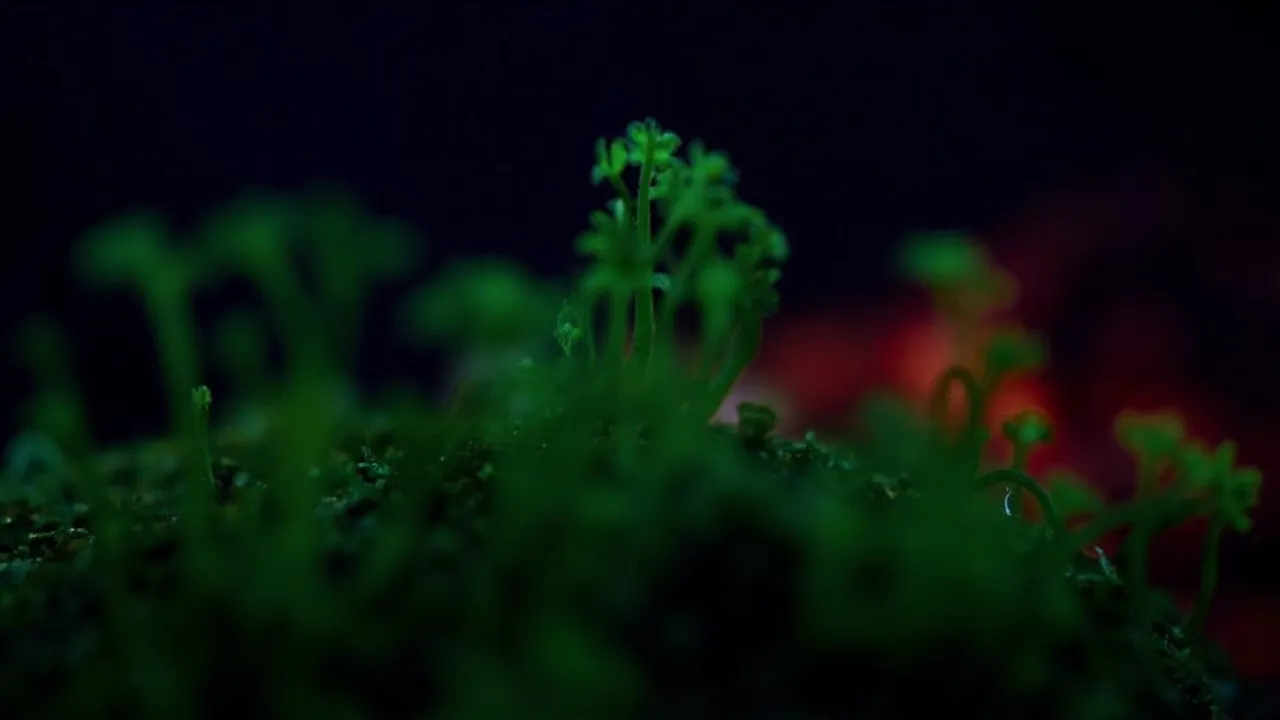
Who Knew Moss Was This Interesting?
Okay, I have to be honest with you. Before writing this post, I would've told you that moss is that green stuff that grows on rocks and looks nice in gardens. Not exactly the most thrilling organism on Earth, right?
Well, buckle up, because scientists just found something in moss that made me completely rethink this humble little plant.
A computer scientist named Andrew Adamatzky decided to stick electrodes into some moss and see what happened. And boy, did he find something unexpected.
The World's Most Underappreciated Pioneer
Moss isn't just background decoration. This tiny plant has been hanging around on land for about 470 million years—long before dinosaurs, long before flowers, long before anything green that most of us would recognize today.
It's basically the original colonizer. When there's bare rock with nothing growing on it, moss shows up, breaks it down, and creates soil so fancier plants can eventually move in. Pretty humble job for such an ancient organism.
But here's the thing—scientists never really thought moss was doing anything interesting. It's not like it's got eyes or a nervous system. It's just... there. Growing slowly. Looking green.
Or so we thought.
What Happens When You Wire Up a Moss Bed?
Adamatzky, who works at the University of the West of England, Bristol, wanted to see if moss was hiding some electrical secrets. So he did what any curious scientist would do: he grabbed some common British moss (specifically Brachythecium rutabulum—a fancy name for regular old rough-stalked feather moss), stuck eight pairs of electrodes about a centimeter or two apart into a clump of it, dimmed the lights, kept things humid, and then watched.
For a week straight.
That's roughly five million electrical observations.
Can you imagine being that patient? I can barely wait for my coffee to brew.
So What Did He Find?
Here's where it gets really interesting. The moss wasn't just sitting there being a plant. It was firing off electrical signals. Not random noise, but structured signals with distinct patterns—fast spikes, medium spikes, slow spikes, all propagating through the moss like some kind of botanical conversation.
Think about that for a second. Electrical signals. Moving through a clump of moss. With timing patterns that suggest they're actually meaning something.
This isn't like your brain firing neurons—those are much faster. But it's not nothing, either. The signals moved along the electrodes, suggesting they were traveling through the moss itself, not just being random interference.
This Is Part of a Bigger Pattern
Here's what's wild: Adamatzky has done similar work with fungi. And fungi? They basically have their own electrical language. Scientists have detected what looks like word-like patterns in fungal electrical activity.
Does this mean fungi are having conversations? Maybe not in the way we think about talking. But there's definitely something happening that we don't fully understand yet.
And now moss is joining that club.
The scientist himself noted that "fungi can sense everything humans sense and much more" and suggested there might be "a somewhat universal grammar underpinning communication in all living substrates."
Universal grammar of life? That's the kind of phrase that makes my brain do somersaults.
What Does This Actually Mean?
Let's not get carried away. Moss isn't going to start solving crossword puzzles or writing poetry. These electrical signals aren't exactly thoughts in the way we experience them.
But here's what this does suggest: the line between "simple" life and "complex" life might be blurrier than we ever imagined. We used to think you needed a brain, or at least a nervous system, to have any kind of sophisticated information processing. Plants like moss are making us reconsider that assumption.
The study also suggests some pretty practical applications. Imagine buildings covered in living moss that could sense their environment—like a natural biohybrid sensor. How cool would that be?
The Bigger Picture
I don't know about you, but I find this stuff genuinely humbling. We've spent centuries assuming that intelligence and sophisticated behavior require big brains and complex nervous systems. And maybe—in some ways—that's true.
But nature keeps proving that the most unexpected organisms can be doing incredibly complex things right under our noses. Or rather, under our feet.
Moss has been quietly building soil, creating habitats, and apparently having little electrical conversations for hundreds of millions of years. And we're only just now figuring out how to listen.
Maybe the lesson here is that we shouldn't be so quick to dismiss the "simple" organisms of this world. They might just be hiding layers of complexity that take us centuries to unravel.
In the meantime, I'm going to look at that moss on my patio wall a little differently. You never know what conversations are happening in there.