
Saturn's Getting a New Toy, and We Almost Missed It
Okay, space fans, gather 'round. I need to tell you about something happening on Saturn right now that's honestly kind of blowing my mind.
Picture this: You're looking at Saturn through a telescope. You see those gorgeous rings, of course, but your eyes are drawn to the planet itself—that smooth, golden ball rolling through space. Now imagine zooming in and discovering that the atmosphere has spontaneously decided to arrange itself into a perfect 10-sided polygon. Just... appeared. Like Saturn woke up one day and said, "You know what? I want a new shape."
That's essentially what NASA just announced, and I can't stop thinking about it.
Say Hello to the Decagon
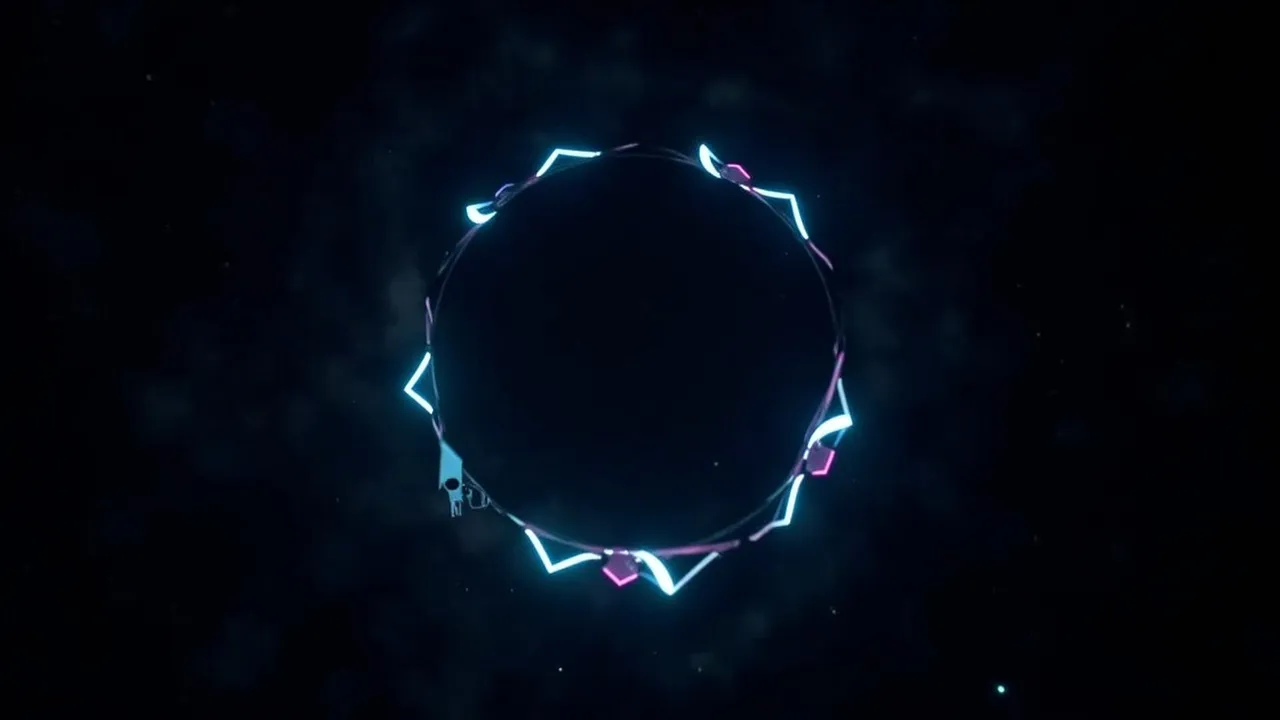
Using the trusty Hubble Space Telescope, scientists spotted a giant wavy pattern circling Saturn's south pole. They've named it a "decagon" because, well, it has 10 sides. (The cool kids at NASA really said "why have 6 when you can have 10?")
But here's what makes this really special: this isn't some ancient feature that's been sitting around for eons. Based on Hubble observations going back to 2023, researchers can see the structure getting clearer and stronger over time. It's not just there—it's growing.
"We haven't seen anything like this in Saturn's southern hemisphere," said Amy Simon, one of the researchers on the study. "The northern hexagon has been there every time we've looked for more than 40 years. This feature is different—it appears to be strengthening, giving us the rare opportunity to watch a giant atmospheric pattern develop."
A growing shape. On a planet. That's wild.
The OG Hexagon vs. The New Kid
Now, if you're a space nerd (and let's be honest, if you're reading this, you probably are), you already know about Saturn's famous hexagon at the north pole. It's been churning away for at least four decades, a perfect six-sided jet stream that's become one of the most recognizable features in our solar system.
So what makes this decagon different? A few things:
It's new. Like, actually new. The hexagon was already there when Voyager flew by in the early 1980s. This decagon? It seems to have formed sometime recently.
It's evolving. Rather than being stable, the decagon appears to be still developing. Scientists are watching it change in real-time, which is basically like being handed a time-lapse of planetary weather in action.
It might disappear. Nobody knows if this decagon will stick around or if it's a temporary feature. Saturn might be experimenting with new patterns, and this one might not make the cut.
How Did We Miss This?
Here's a fun detail: amateur astronomers were actually the first to spot the faint wavy structure in 2024. Trevor Barry and Jean-Paul Oger noticed something unusual in ground-based images, which prompted researchers to dig deeper. Then Hubble confirmed what they suspected and traced it back to 2023.
This is one of those stories that reminds me how cool citizen science can be. Professional telescopes have limited time, but there are amateur observers all over the world with their eyes on the sky. Together, we make a pretty impressive network.
The research team specifically used Hubble's Outer Planet Atmospheres Legacy (OPAL) program, which has been taking annual snapshots of the outer planets for over a decade. Without that consistent monitoring, this gradual development might have slipped past us entirely.
What's Actually Going On Down There?
So what is this thing? Based on Hubble's observations, the decagon sits within one of Saturn's powerful jet streams. But here's the interesting part—it's not just sitting at the cloud tops. The structure appears to extend through multiple layers of the atmosphere, meaning it's a genuinely deep feature, not just a surface pattern.
Scientists noticed something else neat: depending on what wavelength Hubble used to observe, the decagon's apparent position shifted slightly. That's because different wavelengths let astronomers peer to different depths in Saturn's atmosphere. The fact that the shape is visible across multiple layers suggests it's a fundamental part of how the atmosphere is circulating, not just a weird surface quirk.
The Big Questions
Honestly, the most exciting thing about this discovery might be that it raises more questions than answers:
Why now? Saturn goes through seasons, just like Earth. The south pole has been gradually coming into view as the planet orbits the Sun. Coincidence? Maybe. But why would a new pattern form exactly when we started looking more carefully?
What triggered it? Nobody knows. Was it the changing sunlight? A shift in the jet stream? Some internal atmospheric dynamics we don't fully understand? The honest answer is: we're still figuring that out.
Will it stick around? The northern hexagon has been stable for 40+ years. Will this decagon become a permanent fixture, or will it fade away? Only time will tell.
Could other planets do this? If Saturn can spontaneously grow new geometric weather patterns, what about Jupiter? Neptune? Is this unique to Saturn, or are we just now developed enough to catch it happening?
These are the questions that keep planetary scientists up at night, and honestly, I love them for it.
Why This Matters
I know what you're thinking: "Cool, a wavy thing on a distant planet. Why should I care?"
Fair question. Here's my answer:
First, this is a reminder that planets are alive—in their own way. They're not just static rocks floating in space. Their atmospheres churn, shift, and apparently occasionally decide to form geometric patterns that shouldn't even be possible.
Second, it shows how powerful long-term observation can be. This discovery didn't happen because someone built a fancy new telescope. It happened because Hubble kept looking, year after year, building a dataset that let scientists see gradual changes. The OPAL program specifically exists to create these kind of long-term baselines. Without that patience, we'd have missed Saturn's newest feature entirely.
And third? Come on. Saturn just grew a 10-sided shape. A 10-sided shape. On a planet. If that's not going to make you look up at the night sky and wonder what else might be happening out there, I don't know what will.
What's Next?
Scientists plan to keep watching. Hubble will continue monitoring Saturn, and the James Webb Space Telescope will join the investigation too. Computer models will try to simulate how such a pattern could form and what might determine its stability.
We'll probably know more in the coming years. For now, though, I think there's something beautiful about not knowing. Saturn is out there, doing its thing, and apparently it's still full of surprises—even for the folks who've been studying it for decades.
One thing's for sure: I'm going to be keeping a closer eye on Saturn now. Maybe I'll spot something next time. (Okay, probably not, but a girl can dream.)
Source: ScienceDaily - NASA scientists discover a giant 10-sided pattern on Saturn