
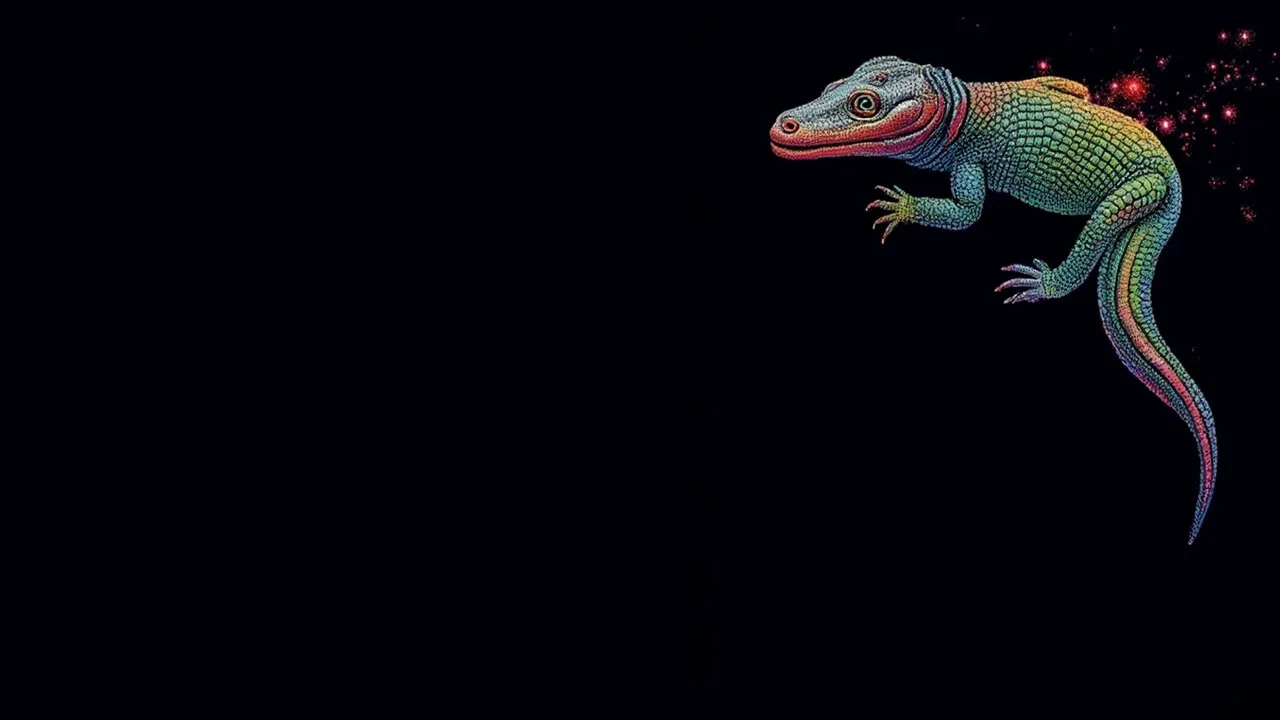
Meet Your Great-Great-Great... Great-Great-Grandcousin
Okay, I need to tell you about this incredible discovery that literally made me gasp out loud when I read about it.
Picture this: You're wandering through the Ajimu area of Oita prefecture in Japan, but it's not the Japan you know. The year is approximately 3.5 million years ago. Instead of the crisp mountain rivers where today's giant salamanders live, you're looking at vast freshwater lakes and marshlands stretching across what is now the island of Kyushu.
And here's the kicker: elephants and crocodiles are wandering around nearby.
Elephants. In Japan. Wild.
I know, I know—try to process that for a second.
So What Exactly Did Scientists Find?
Back in the late 1990s, researchers uncovered three little fossilized vertebrae from what turned out to be a giant salamander. These weren't just any bones—they were from the Cryptobranchidae family, the group that contains the absoluteUNIT giants of the amphibian world.
For over 20 years, these fossils sat around (well, carefully preserved in museum collections) while scientists didn't have quite enough comparative material to figure out what exactly they'd found. But recently, a team from Kyoto University decided to take another look with fresh eyes and better reference materials.
What they discovered? The mid-trunk vertebra had anatomical features that simply don't exist in any other known giant salamander species.
Not a new species. Not just a new species—a completely new genus.
They named it Limnospondylus ajimuensis. The name comes from Greek words for "lake vertebra," plus a reference to the Ajimu area where it was found.
A salamander the size of a seventh-grader
Based on the fossils, researchers estimate this ancient giant reached about 1.1 meters in length as an adult. That's roughly the height of a tall 12-year-old human—or about as long as a baseball bat. Not bad for an amphibian!
Why This Matters (A Lot)
Here's something wild: previously, scientists had only described five genera in the entire giant salamander family. Finding a sixth is a big deal for understanding how these magnificent creatures evolved and spread across the Northern Hemisphere.
The research team points out something fascinating: Ajimu is literally the only place on Earth where fossils from the giant salamander family and living genera have both been found. That's like finding a missing puzzle piece that connects the ancient world to the modern one, right there in one small region of Japan.
This discovery also raises a big question: with limited anatomical knowledge in the past, many Cryptobranchidae fossils have been casually assigned to the living genus Andrias. But what if some of those "Andrias" fossils are actually hiding multiple unrecognized species and genera? The ancient salamander family might be way more diverse than we ever imagined.
The Connection to Today's Salamanders
Limnospondylus ajimuensis eventually disappeared, likely due to cooling temperatures and major changes in habitat as the Pliocene gave way to the Pleistocene. But its relative, the Japanese giant salamander (Andrias japonicus), is still out there in the rivers of Japan.
These modern giants can grow up to 1.5 meters long and are seriously impressive creatures. But they're facing serious threats now: hybridization with foreign species and habitat destruction are putting pressure on wild populations.
Researcher Masahiro Noda put it beautifully when he said this work has given him "a renewed appreciation for the importance of preserving extant species for the future."
My Take
I love stories like this because they remind us that Earth's story is still being written. We're constantly discovering that the past was stranger, more diverse, and more connected to our present than we ever imagined.
The fact that Japan's ancient lakes once hosted a completely different cast of characters—elephants, crocodiles, and now a brand-new genus of giant salamander—makes you wonder what other secrets are hiding in those fossil beds.
And the conservation angle hits hard, too. We've got living relatives of these ancient giants swimming in Japanese rivers right now. They're survivors of millions of years of change. Let's not be the generation that lets that connection break.
Sometimes the past and present aren't that far apart at all.
Source: ScienceDaily - https://www.sciencedaily.com/releases/2026/07/260722032119.htm