
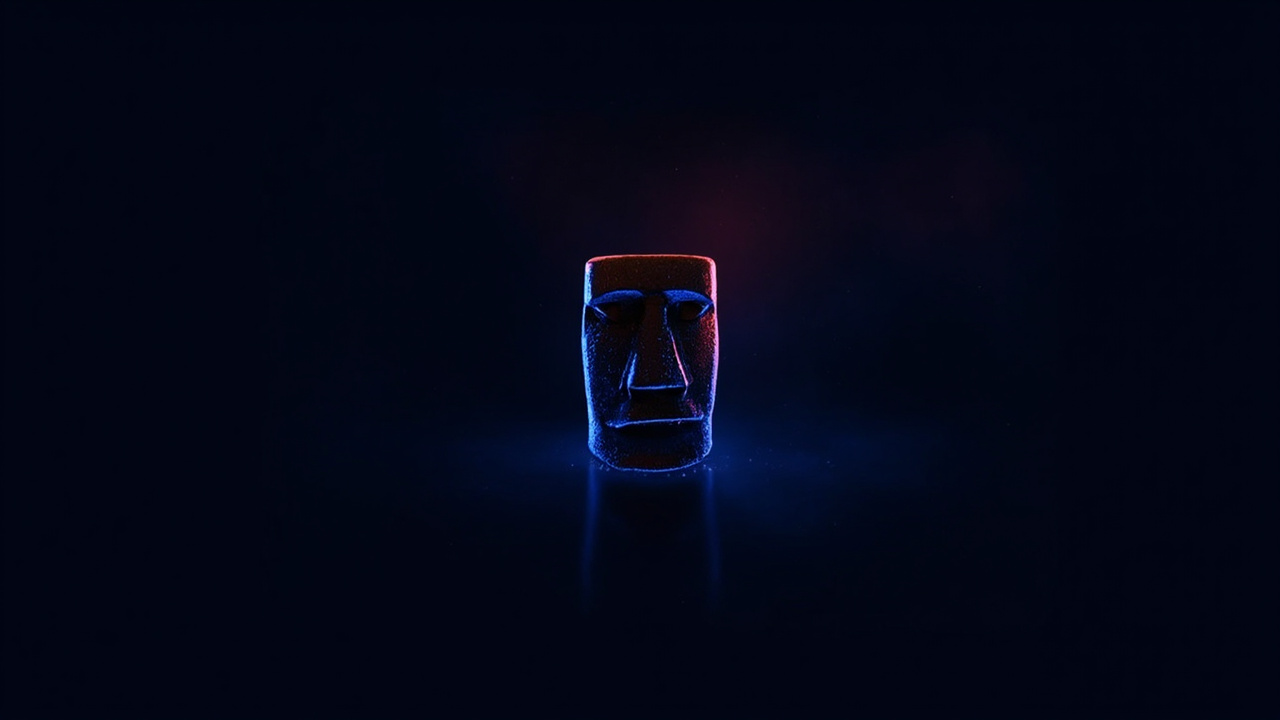
Okay, I have to be honest with you—when I first heard this story, I had to read it twice because I genuinely couldn't believe it.
We're talking about Easter Island here. You know, the remote little triangle of land in the middle of the Pacific Ocean with those famous stone faces that grace postcards, t-shirts, and approximately one million geography classrooms. The experts have been studying these moai for decades. They've mapped them, documented them, analyzed them from every possible angle. There are over 1,000 of these incredible statues, people!
And yet... they missed one.
A Hidden Surprise in the Lakebed
In 2023, researchers discovered a brand-spanking-new moai sitting quietly in what used to be a lakebed. Not in a quarry, not standing majestically along the island's coasts where most of its cousins hang out—just... there, hidden beneath what were once tall reeds growing in the water.
Here's what's wild about this: experts had literally never found a moai in a lake bed before. Ever. So when this little guy turned up, it wasn't just exciting—it was completely unprecedented.
Professor Terry Hunt from the University of Arizona put it perfectly when he told Good Morning America: "We think we know all the moai, but then a new one turns up, a new discovery, and in this case, in the lake, at the statue quarry... there have been no moai found in the dry bed or in what was previously a lake, so this is a first."
First! In all the years of studying this incredible place, nobody expected to find anything like this.
Small But Significant
Now, here's a fun detail that I absolutely love: this newly discovered moai is one of the smallest ever found on the island. While some of its massive relatives weigh a whopping 86 tons and tower over 30 feet tall, this little statue is more on the petite side.
But you know what? I think that makes it even more fascinating. See, those giant moai have been the rock stars (pun absolutely intended) of Easter Island for so long. We always imagine the enormous ones when we think about how the Rapa Nui people transported these heavy behemoths across the island.
But this small statue opens up a whole new question: were there more smaller moai that we just never noticed? Are they hiding in places we never thought to look? The reeds that once covered this lakebed kept it hidden for generations—maybe even centuries. What else might be lurking in similar spots?
Climate Change: The Unexpected Archaeology Helper?
This is where things get a little philosophical, and I promise this isn't me going off on a tangent.
The reason this moai was discoverable now is because the lakebed has dried out. Climate conditions have changed the landscape enough that what was once underwater is now exposed. In a strange way, this environmental shift is revealing secrets that have been buried for ages.
Professor Hunt noted that under these increasingly dry conditions, more discoveries might be possible. "When there's one moai in the lake, there's probably more," he said.
That sentence honestly gives me chills. Hidden beneath the sediments, potentially surrounded by centuries of accumulated earth and vegetation, could be more of these ancient statues just waiting for someone to find them.
More Than Just Big Stone Heads
Before I wrap up, can we take a moment to appreciate how incredible these statues actually are?
The Rapa Nui people carved these moai from volcanic tuff—that's basically compressed volcanic ash and dust that hardens into rock. About 95% of the moai are made from this material, though a few stubborn ones are basalt. Each statue was uniquely crafted to represent a specific person, usually a chieftain or important leader.
And here's a detail that I find endlessly charming: the eyes weren't added until the statue reached its final resting place. Imagine that—these massive stone figures stood faceless until the very end, only getting their final, special stone eyes once they were home.
There's also a lovely myth that these moai could actually walk to their positions by themselves, imbued with special powers. Whether that's true or not is anyone's guess, but I personally love that we still don't completely understand how the Rapa Nui people actually moved these things. Some mysteries are meant to stay mysterious, right?
The Real Surprise
Perhaps the most touching part of this story comes from Salvador Atan Hito, vice president of Ma'u Henua (the group that manages the island's national park). When he talked about the discovery, he said something that really stuck with me:
"It's here in the lake and nobody knows this exists... even the ancestors, our grandparents don't know [about] that one."
Can you imagine? Something that existed for centuries, maybe even longer, completely unknown to the people who lived there generation after generation. It's a humbling reminder that there's always more to discover, always something new hiding in plain sight if we just look a little differently.
So the next time you see a picture of those famous stone faces on Easter Island, remember: you might not be seeing the full picture. There could be more waiting to be found, quietly sitting in places no one thought to look.
And honestly? That's pretty wonderful.
SOURCE: https://www.popularmechanics.com/science/archaeology/a71536193/new-statue-discovery-easter-island-mystery