
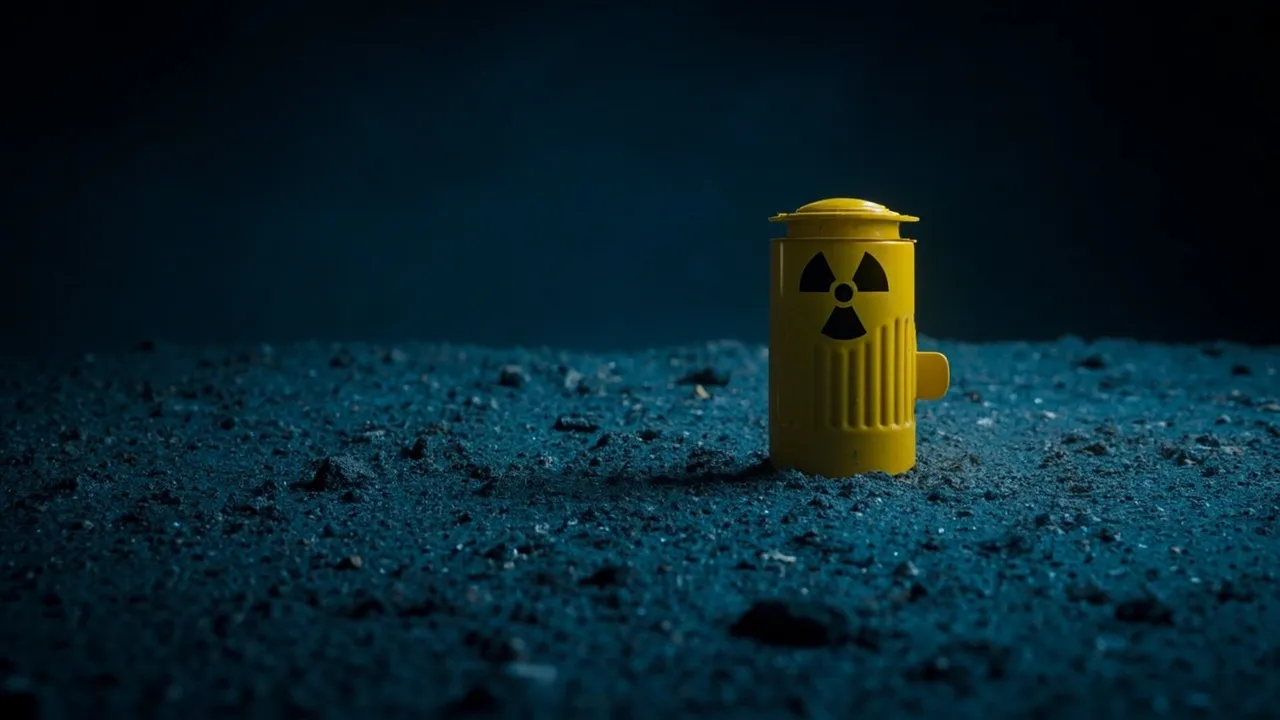
Okay, let me ask you something: where would YOU put 200,000 barrels of radioactive waste?
Ideally? Nowhere near anything living, right? Somewhere incredibly stable, incredibly secure, somewhere that absolutely nothing could go wrong.
Now imagine someone said, "How about... the ocean floor?"
That's basically what happened between 1971 and 1982, when several European nations apparently decided the Atlantic Ocean was a perfectly reasonable place to dump their nuclear waste. Not metaphorically "dumped" — we're talking actual barrels, lowered into the water, and left there forever. And by "forever," I mean until now, when scientists are finally starting to understand what exactly they've done.
The Ocean's Best-Kept (and Worst) Secret
Here's what blows my mind: these barrels have been sitting down there for over 40 years, and we've had basically no idea what was happening to them. The waste site covers about 14,500 square kilometers of the North Atlantic floor. That's an area larger than some countries, just... sitting there with who-knows-how-much radiation seeping out.
Recently, a team of researchers from the French National Center for Scientific Research ( CNRS for short) decided to take a look. And when I say "take a look," I mean they sent an autonomous robot to dive nearly 20,000 feet below the surface. That's deeper than most of the ocean exists. It's basically another planet down there.
What They Found
The robot managed to map only about 2% of the entire dumping site. Two percent! And in that tiny area, it found 3,500 barrels.
Let that sink in for a second.
If the pattern holds (and scientists have no reason to think it won't), we're potentially looking at tens of thousands of these things scattered across the seafloor. And here's the part that really got me: the barrels aren't just sitting there in isolation. They've become... habitat. Sea sponges, anemones, crabs — all kinds of creatures have colonized these things.
Now, on one hand, it's kind of fascinating. Life finds a way, right? Even in the most inhospitable places, creatures adapt and make homes.
But on the other hand... these are animals living on containers of radioactive waste. The researchers noted that the barrels "alter the environment by providing a hard substrate that becomes colonized, potentially facilitating the transfer of radionuclides to living organisms." In plain English? The stuff inside those barrels might be making its way into the creatures living on them. That's not great.
Why Does This Even Matter Now?
You might be thinking, "Okay, but this happened decades ago. What's done is done, right?"
And that's fair... except for one thing: we still don't fully understand what radiation does in deep-sea environments over long periods of time. We know it's dangerous, obviously. But how exactly does it spread through sediment? Through water? Through the food chain?
That's exactly what this research aims to figure out.
The team collected samples from about 50 barrels across five different areas, gathering sediment, water, and even microbial communities. Scientists from France, Norway, Germany, and Spain are now analyzing everything in what's being called one of the most comprehensive deep-sea radioecological studies ever attempted.
Think about that for a moment. We're essentially doing a science experiment that nature has been running for 50 years, and we're finally paying attention to the results.
The Bigger Picture
Here's what strikes me about this whole story: it reflects a particular kind of thinking that was disturbingly common in the 20th century. The "out of sight, out of mind" approach to waste management. Dump it somewhere nobody goes, and hope it just... goes away.
It didn't work with DDT in the ocean. It didn't work with radioactive waste in Washington State's Hanford site. And apparently, it didn't work in the Atlantic either.
The good news? We're better at monitoring and understanding these messes now. Projects like this one won't undo the past, but they will help us understand exactly what our grandparents' generation left behind — and hopefully, learn from it.
Sometimes the ocean keeps our secrets. But sometimes, eventually, those secrets surface.
Source: https://www.popularmechanics.com/science/environment/a73467447/north-atlantic-radiation-barrels