
Okay, I need to tell you about something that just made me nerding out HARD, and I think you'll feel the same way.
Picture this: You're walking near the Aga Khan Mausoleum in Aswan, Egypt, minding your own business, and you decide to check out what looks like just... an old staircase. Nothing special, right? Wrong. SO wrong. Because underneath that unassuming staircase? A freaking ancient tomb with a six-foot limestone sarcophagus covered in hieroglyphic prayers and inscriptions.
The Discovery That Stopped Everyone in Their Tracks
When an Egyptian-Italian archaeological team descended nine steps into the earth near Egypt's famous Aga Khan Mausoleum, they had no idea what they were about to find. But there, tucked away more than six feet underground, was what the Ministry of Tourism and Antiquities called "one of the most architecturally impressive and well-preserved tombs unearthed to date."
The centerpiece? A gorgeous limestone sarcophagus sitting pretty on a rock-carved platform. And here's where it gets really cool: running the length of that sarcophagus are vertical columns of hieroglyphic text. We're talking prayers to local deities and a clear record identifying the tomb's owner as someone named Ka-Mesiu — a high-ranking official from ancient times.
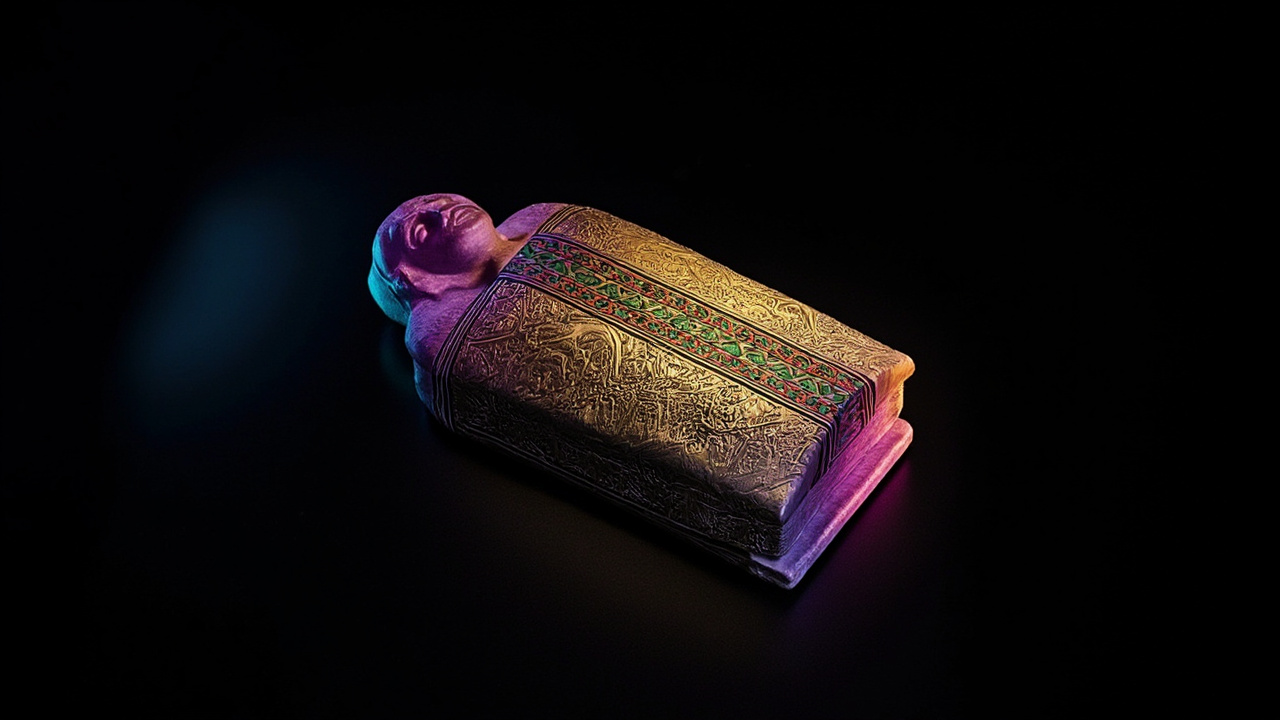
The sarcophagus even has an anthropoid lid with a "finely detailed human face adorned with a decorative wig and remarkable painted features." I don't know about you, but I'm already imagining what that looked like when it was first painted thousands of years ago.
But Here's the Plot Twist
Now, this would already be an incredible story on its own. But get this: Tomb No. 38 (yes, it has a number, because of course it does) isn't alone.
New research shows this Aga Khan necropolis is absolutely ENORMOUS. We're talking over 400 tombs that have been mapped across more than 75,000 square meters — and the full necropolis might stretch across roughly 200,000 square meters. That's like... a city of the dead that went on for centuries.
The team from the University of Milan has been piecing together this massive burial landscape, and it's revealing something fascinating: this wasn't just for one group of people. The area around ancient Aswan (which sat near Elephantine and Syene) was what researchers call a multicultural frontier society. Egyptians, Nubians, Persians, Phoenicians, Greeks, and Romans all lived there — and apparently, they all buried their dead in this same general neighborhood.
The Social Dynamics of Death
What really gets me about this story is how it reveals the class system of ancient Egypt through burial practices.
Mohamed Ismail Khaled, secretary general of the Supreme Council of Antiquities, put it this way: the elite were buried up on the plateau in fancy tombs, while middle-class folks ended up along the slopes near the Aga Khan Mausoleum. Different strokes for different folks, even in the afterlife.
And the tombs weren't just used once and done. Many were reused across centuries — especially during the Ptolemaic and Roman periods. So that sarcophagus Ka-Mesiu was placed in? His great-great-grandkids might have rearranged things a few hundred years later.
The Mummies Tell Their Own Stories
Speaking of rearrangements, the team has been doing CT scans on mummies from other tombs in this necropolis, and the results are honestly a little haunting. In one case, two superimposed mummies were originally thought to be a mother and child. The scans? Two children, actually — one around 4 to 6 years old, another around 8 to 9.
The technology also revealed wooden support elements used in the mummification process, damage to internal anatomy that happened after death (probably during those tomb reuse events), and even jewelry like bracelets visible through virtual unwrapping.
Researchers have also found skeletal evidence of tuberculosis and arthritis elsewhere in the necropolis, and they've suggested that contagious diseases might explain some dense burial phases involving family groups or clusters of children. It paints a picture of real people with real lives — and real struggles — that we sometimes forget about when we focus only on the fancy artifacts.
What This All Means
Egypt's tourism and antiquities minister, Sherif Fathy, said this find offers "new insights into the social dynamics of the region during the Ptolemaic and Roman periods." And honestly? I think that's underselling it a little.
What we're seeing here is a snapshot of what a border city looked like thousands of years ago — the way different cultures mixed, traded, and eventually died together in the same place. It's a reminder that ancient Egypt wasn't isolated or static. It was a living, changing, multicultural world just like our own.
The main question now isn't who else is buried there. It's who those people were, how the tombs were reused over centuries, and what their stories can tell us about life in this fascinating frontier city.
And honestly? I can't wait to find out.