
The Island Nobody Expected to Find
Imagine paddling around in mangrove swamps and suddenly realizing the little island in front of you isn't actually made of rock and soil—it's made of shells. Thousands and thousands of shells. That's what happened to researchers near Vanua Levu in Fiji back in 2017, and honestly, it's the kind of discovery that reminds us that archaeology isn't always about digging in dusty tombs. Sometimes the most important findings are just sitting there, camouflaged by nature.
A Landfill 1,200 Years Old
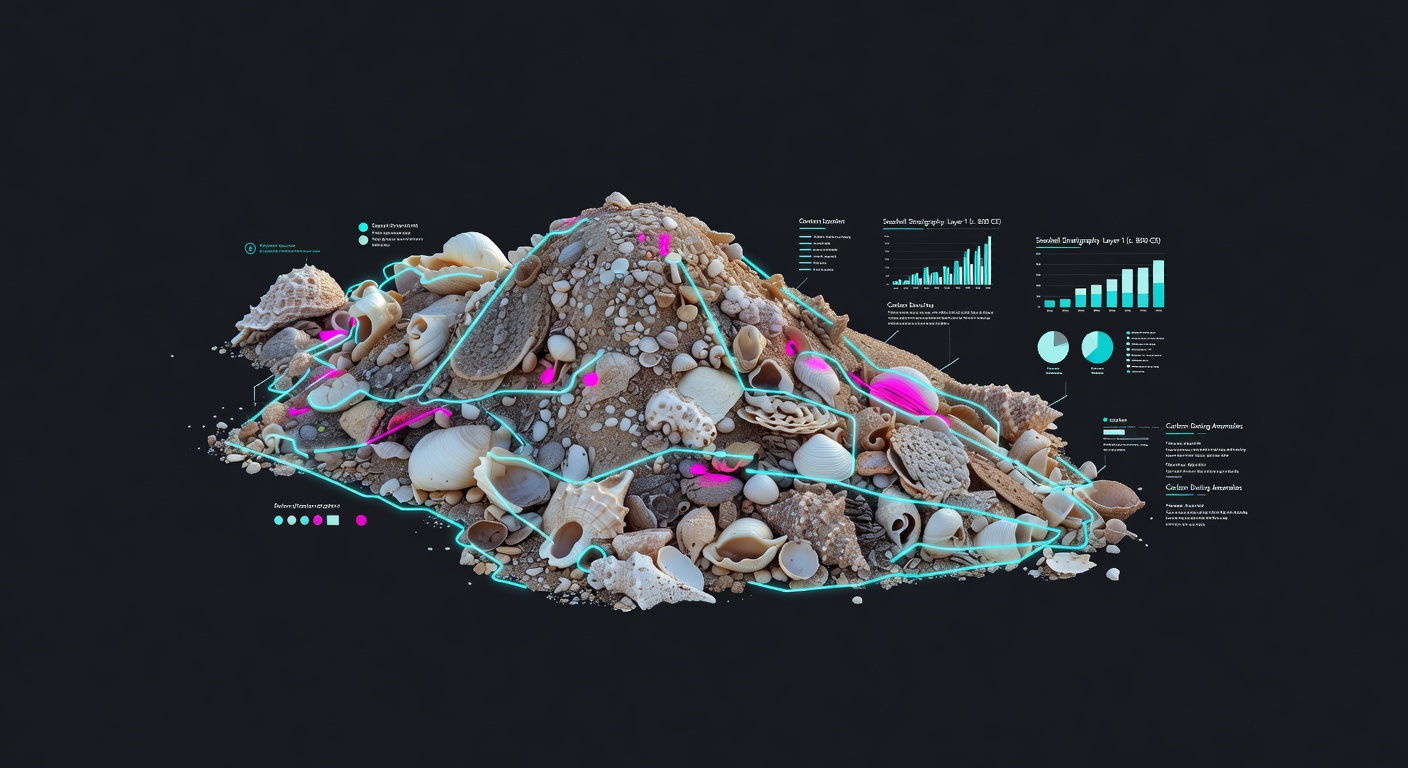
So what exactly are we looking at here? Scientists call it a "shell midden," which is basically the fancy archaeological term for an ancient garbage dump. This particular midden is about 3,000 square meters in size (think of a large backyard, but way bigger), and it's made up almost entirely of shells from edible sea creatures. Radiocarbon dating puts it at around 1,190 years old, which means it was created by some of Fiji's earliest post-Lapita settlers.
What's wild is that this island is only 60 centimeters above sea level at high tide. It's barely sticking out of the water. You could easily miss it if you weren't paying attention.
So... Is This Island Even Natural?
Here's where it gets detective-like. When researchers first found this shell island, they had to figure out what actually happened here. Was this a genuine settlement where people processed and ate shellfish? Or was it just a random pile of shells that got dumped there by a tsunami centuries ago?
The team got to work investigating. If it really was a tsunami deposit, the shells would spread out beyond the island like a fan, getting thinner and thinner the farther away you got. But when they looked at the surrounding sediment layers? Nothing. No gradual thinning. No evidence of wave action.
Instead, what they did find were fragments of ancient pottery and the shells of commonly eaten mollusks. The pattern pointed to one conclusion: this wasn't an accident of nature. This was intentional accumulation.
A Snapshot of Ancient Life
What the researchers are now convinced of is that sometime around 760 CE, a group of early Fijian settlers built their home near this spot—probably on stilts, which was the style back then. For several centuries, they harvested shellfish, ate them, and tossed the shells into a pile. Year after year, decade after decade, century after century, that pile grew. Eventually, water levels shifted, new soil deposits built up, and mangrove forests started growing on top of everything.
Nature basically preserved this ancient trash heap by accident, turning it into something scientists can study today.
Why This Matters
I know what you might be thinking: "Why should I care about an old garbage pile?" But here's the thing—this discovery is genuinely important for understanding how humans spread across the Pacific and how they lived.
Vanua Levu, despite being Fiji's second-largest island, has been massively understudied compared to other parts of the Pacific. This shell midden is the first one ever found in the South Pacific east of Papua New Guinea. That's a big deal. It fills in gaps in our knowledge about ancient Pacific settlements and gives us physical evidence of daily life from over a thousand years ago.
Plus, there's something kind of poetic about it. The choices these ancient people made—where to settle, what to eat, how to organize their community—literally shaped the landscape for centuries to come. Their garbage became an island. Their trash is now an archaeological treasure.
The Bigger Picture
This discovery also reminds us something important: human beings have been reshaping the landscape for a very, very long time. We're not talking about recent history. We're talking about ancient civilizations fundamentally altering their environment through settlement patterns, food sources, and even things as simple as dumping shells. When mangroves grew on top of this midden, they were being fed by sediment from human deforestation inland. Everything is connected.
It's a humbling reminder that our impact on the world isn't new. It's woven into human history itself.
The next time you're traveling and see something that looks like just another island or landscape feature, remember: you might be looking at the accumulated choices of thousands of people separated from you by more than a millennium. And isn't that kind of cool?